The City connector
City exploration for residents: Connecting with your city through new perspectives
Challenge
Design a city exploration experience for residents that helps people rediscover familiar places through new perspectives
Roles
Individual project:
Research
Functional prototyping
Testing
Personal Goals
Turn theoretical and user research into human centered design solutions
Explore AI feature integration meaningfully
Design hybrid system where software and physical space work together in urban context
Timeline
6 weeks
Scope/ Method
User Research
Product & System design
AI Integration
UI/UX Design
LLMs Prototyping
User testing
Tools
Figma
Claude Code
Physical Prototyping
Project summary
Project overview:
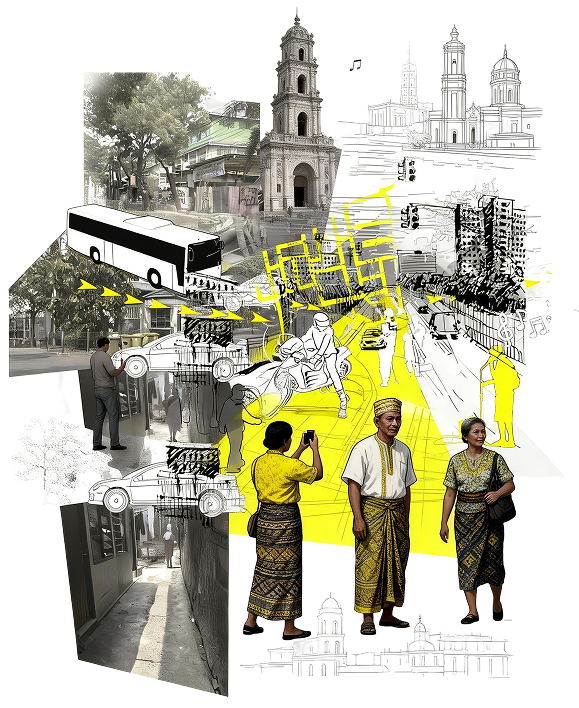
As residents settle into a city, routines solidify and the curiosity to explore fades. Familiar streets become background, and we rarely notice how differently others experience the same places. This project explores how software and physical space can work together to help residents reconnect with their city and recognize the layered stories and emotions that collectively shape the place they share.
I designed City Connector, a hybrid system of a mobile app and public installations. Grounded in urban and psychology theory and interviews with 20+ urban residents, the app guides residents to explore their city in new ways and visualizes their evolving relationship with the city. The perspectives are then integrated onto bus stop screens across the city, bringing these shared city experiences back into public space.
I took the project from research to high-fidelity prototype and a working bus stop screen prototype running on a live API and tested it with passerby to see how it operates in the real world.
Process highlights
Understanding the phenomenon & Problem
Phenomenon: The more familiar a city becomes, the less we notice
Research & Insights
Understanding residents’ relationship with their city
How do we form and evolve relationships with cities?
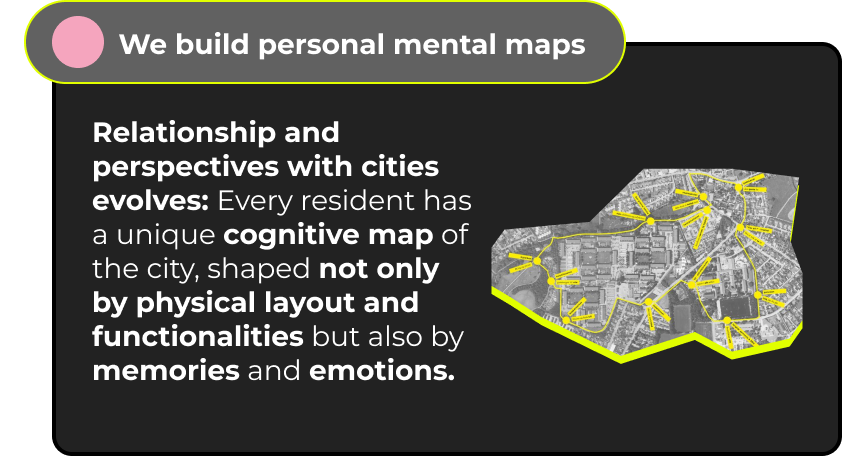
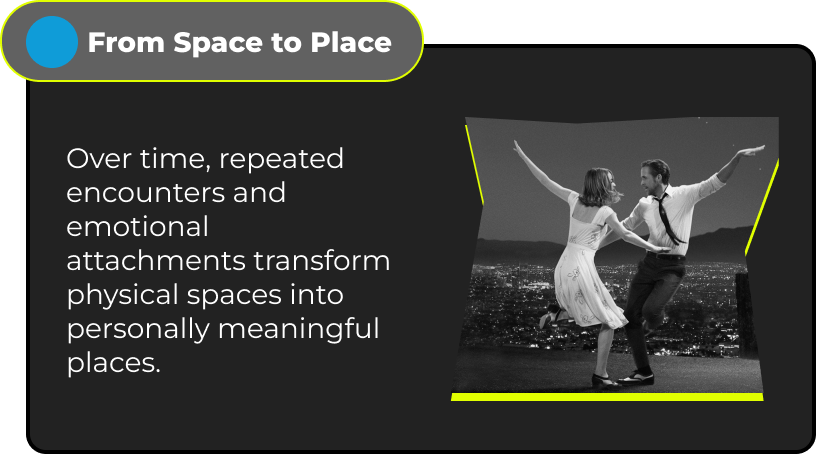
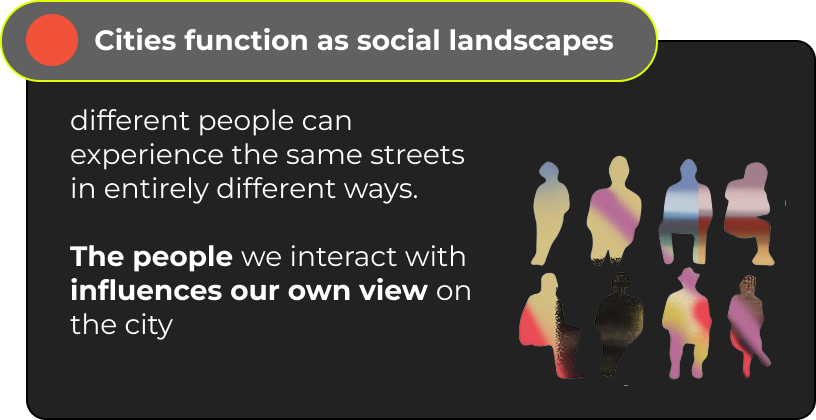
Emperical research reveals that relationship with a city is built through experience, emotion, and other people. A city isn't one shared experience, it is thousands of overlapping versions of the same place.
Moving between cities, I noticed how curiosity gradually gives way to routine. Familiar places gain personal meaning, but we often stop noticing new details or considering how others experience the same streets.
I want to validate my observation and ask: does familiarity change the way residents experience their own city?
User Research
What exactly stops residents from exploring and what help motivates them?
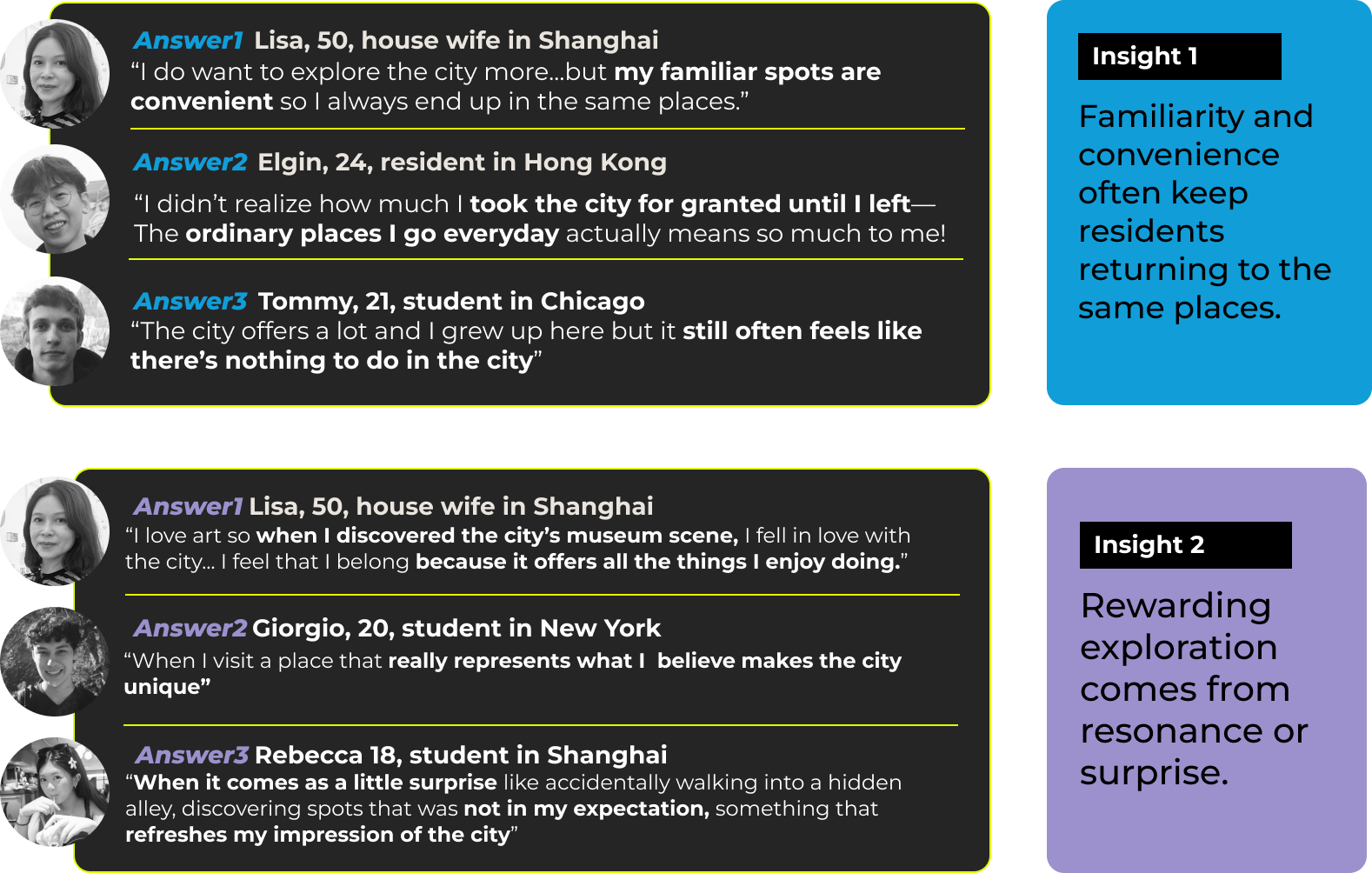
To further validate and understand such behavior and the motivation behind it, I spoke with 10 urban residents to further validate my theoretical research and understand why exploration fades over time, and what makes a new discovery feel worth pursuing.
Opportunity discovery
Residents don't necessarily need more places to explore. They need new reasons to see their city differently!
User personas
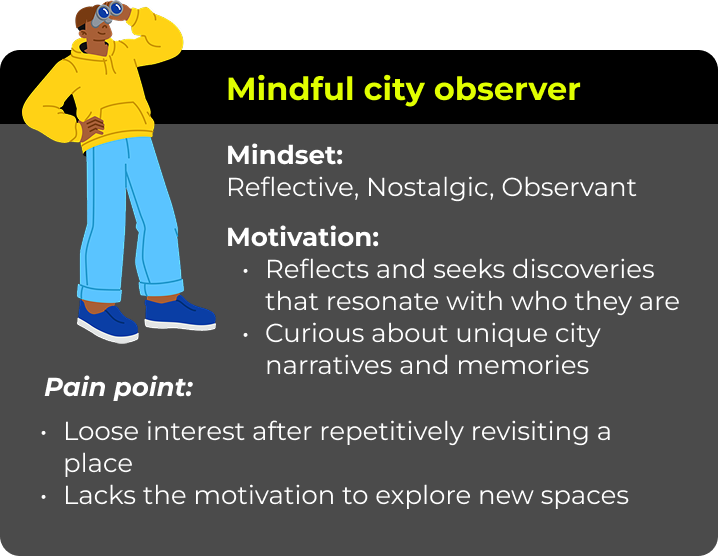
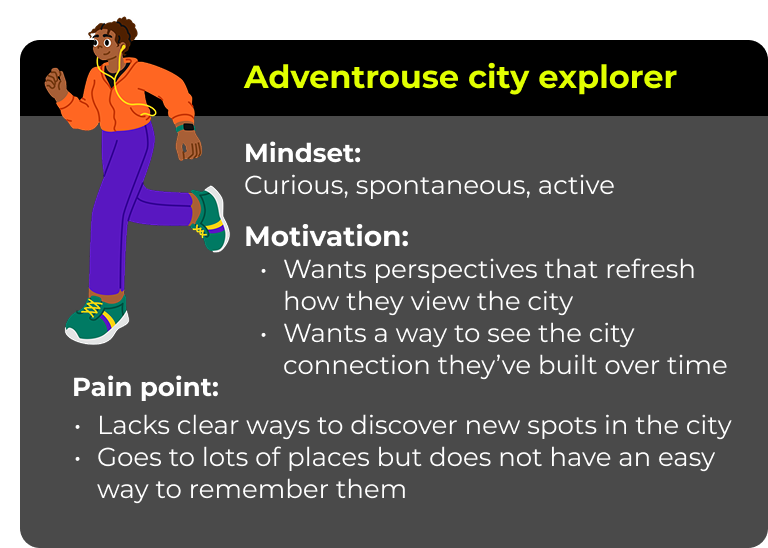
Through the interview, I also saw that there are two main types of city explorer
Refined design goal:
Help residents break routine through personally meaningful discoveries and the experiences of others.
Ideation: Product strategy
DESIGN question
How might we help residents rediscover their city through their own experiences and the perspectives of others?
Ideation
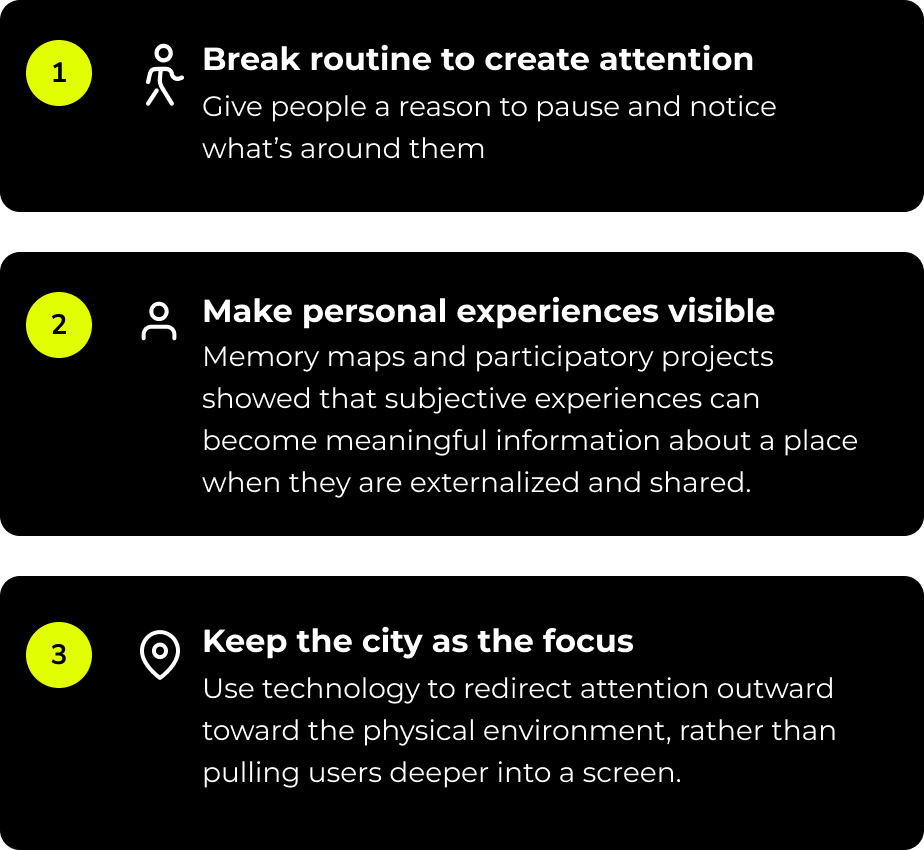
I referenced across Psychogeography, smart city research, memory mapping, and city exploration exercises to understand how design might help residents reconnect with familiar places.
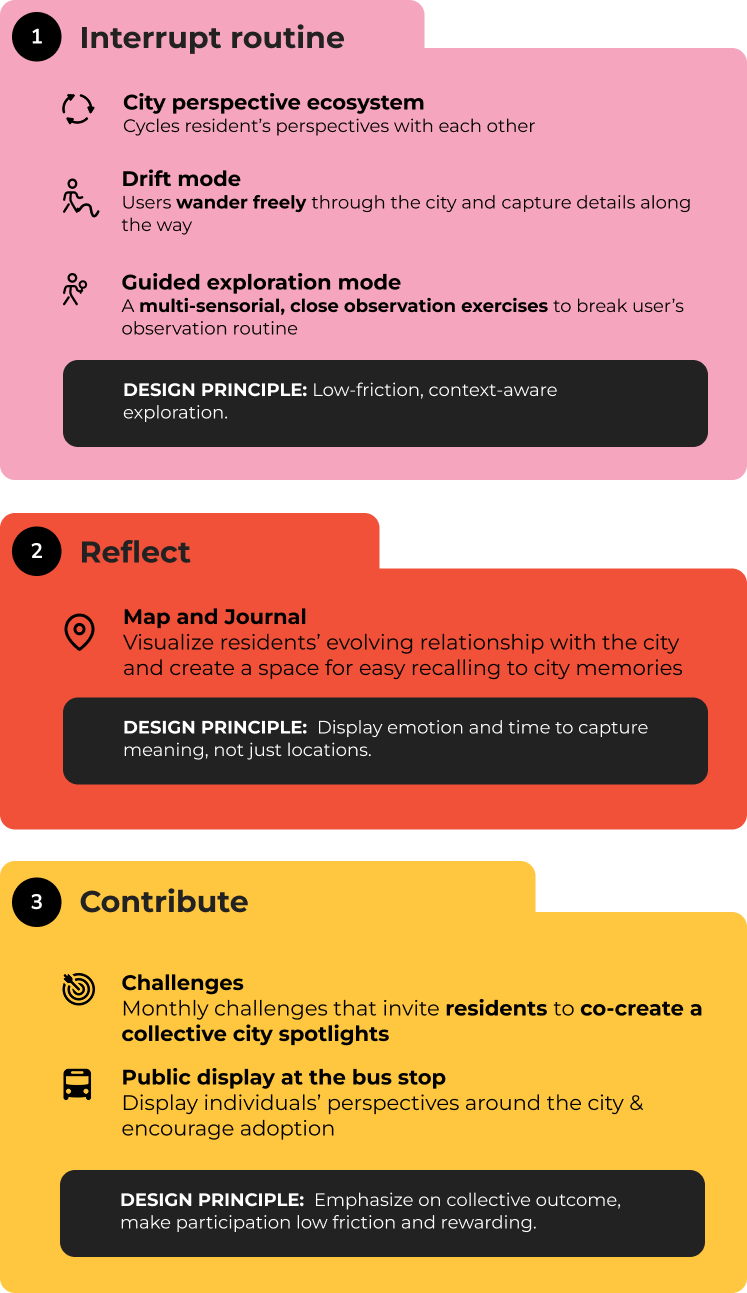
I synthesized recurring patterns across them into three design synthesis:
Design Synthesis
From individual discovery to collective connection:
To support the goal of helping residents discover new perspectives, I designed 3 interconnected experiences to help residents break routine, reflect, and contribute to a collective understanding of their city
Ecosystem architecture: One connected physical-digital experience
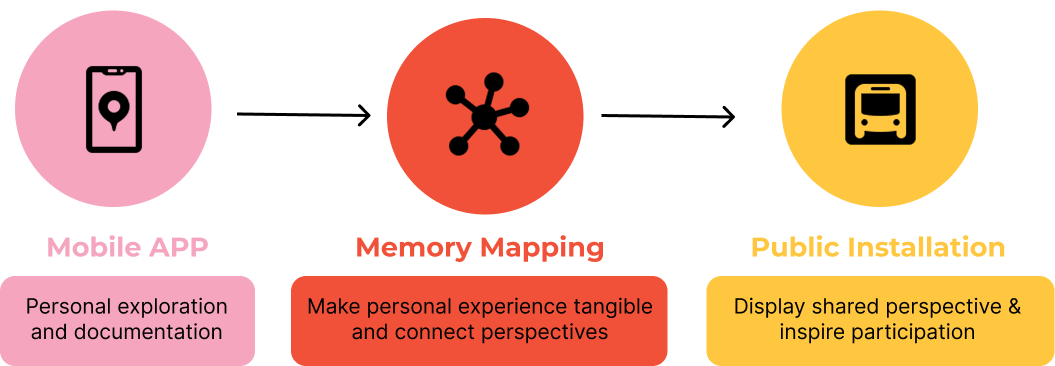
Why a connected physical-digital ecosystem?
Mobile app (personal depth): supports deeper, private exploration
Public installation (Collective reach): bring perspectives back into everyday spaces where people can discover and contribute without starting a full exploration session
Mapping the user flow
Turning strategy into intuitive interactions
Design iteration: One exploration mode couldn't meet every need
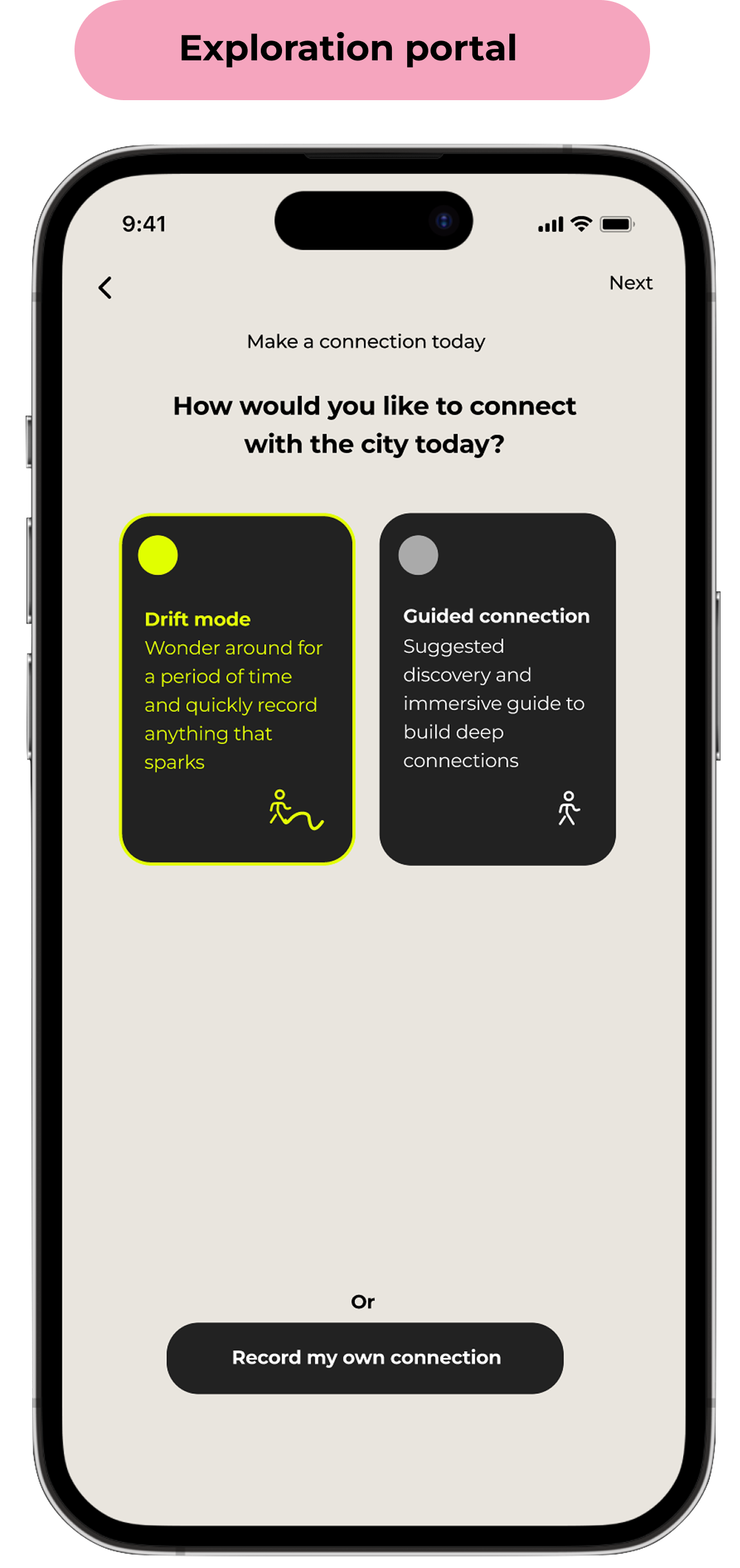
I initially only designed Guided Mode to help residents discover new perspectives through intentional exploration.
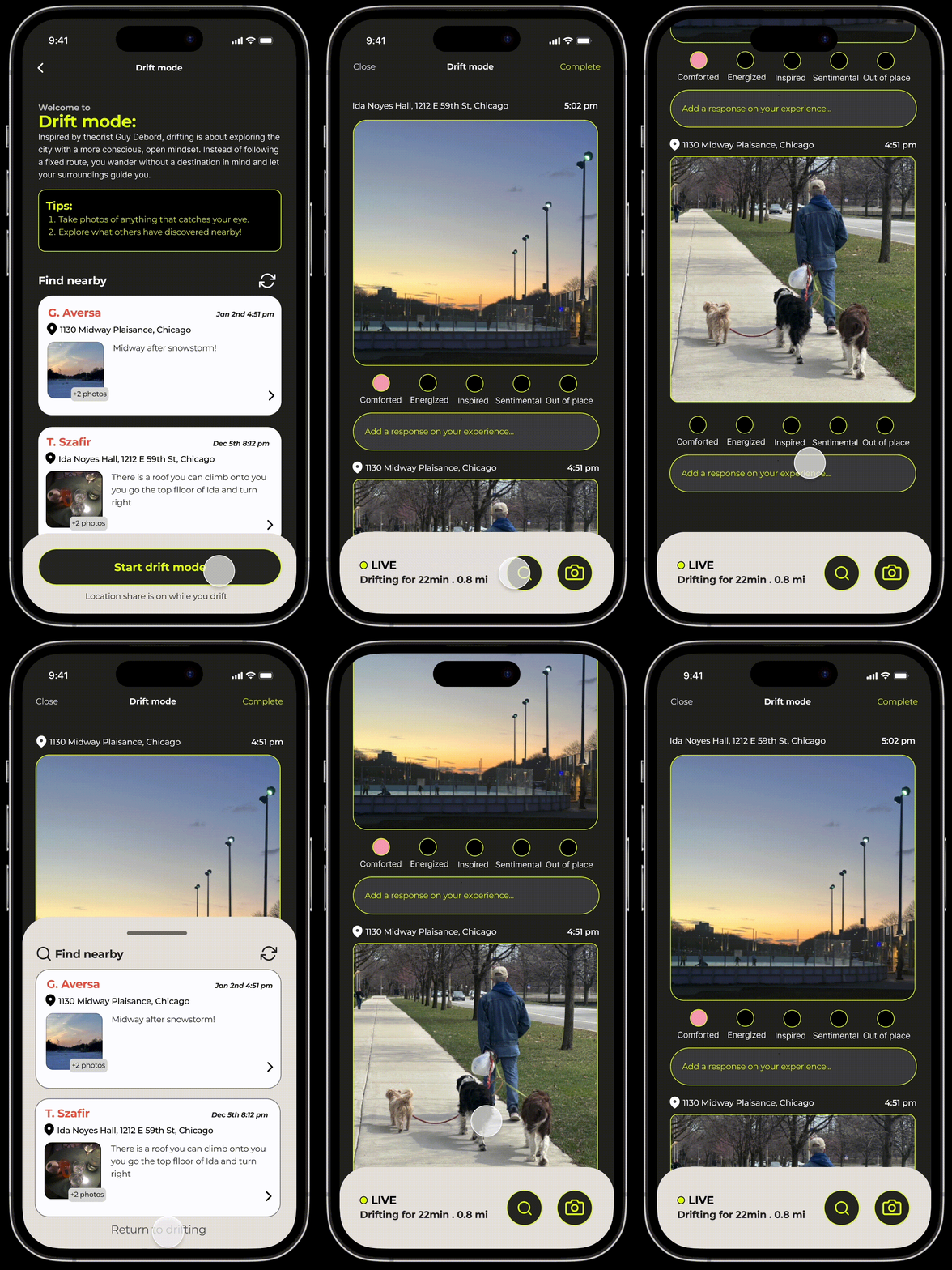
However, initial user conversations revealed the opportunity for spontaneous discovery, which led to me designing Drift Mode.
Together, the two modes support both user groups: Adventurous Explorers and Mindful Observers.
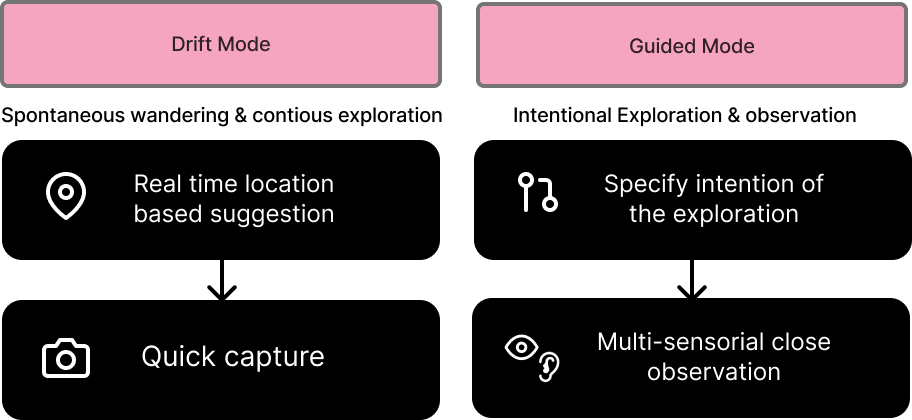
Together, the final flow allowed:
Flexible exploration - Different levels of guidance for different motivations
User to stay present - Quick capture and skippable prompts minimize screen distractions
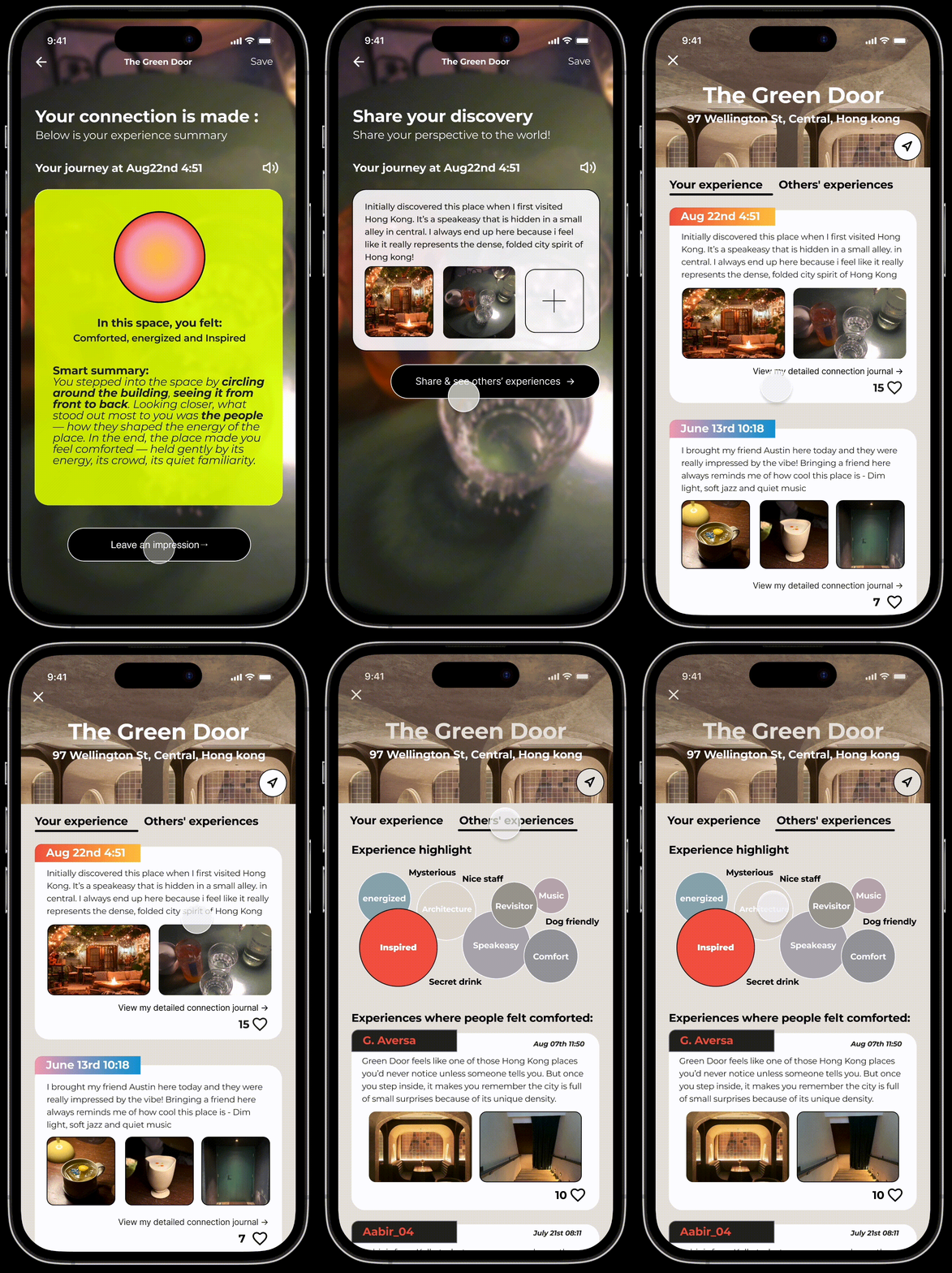
Meaningful reflection - Organize memories by location, time, and emotion
Wire-framing
I mapped out the wireframe to understand how all the features and connected system come together through intuitive navigation
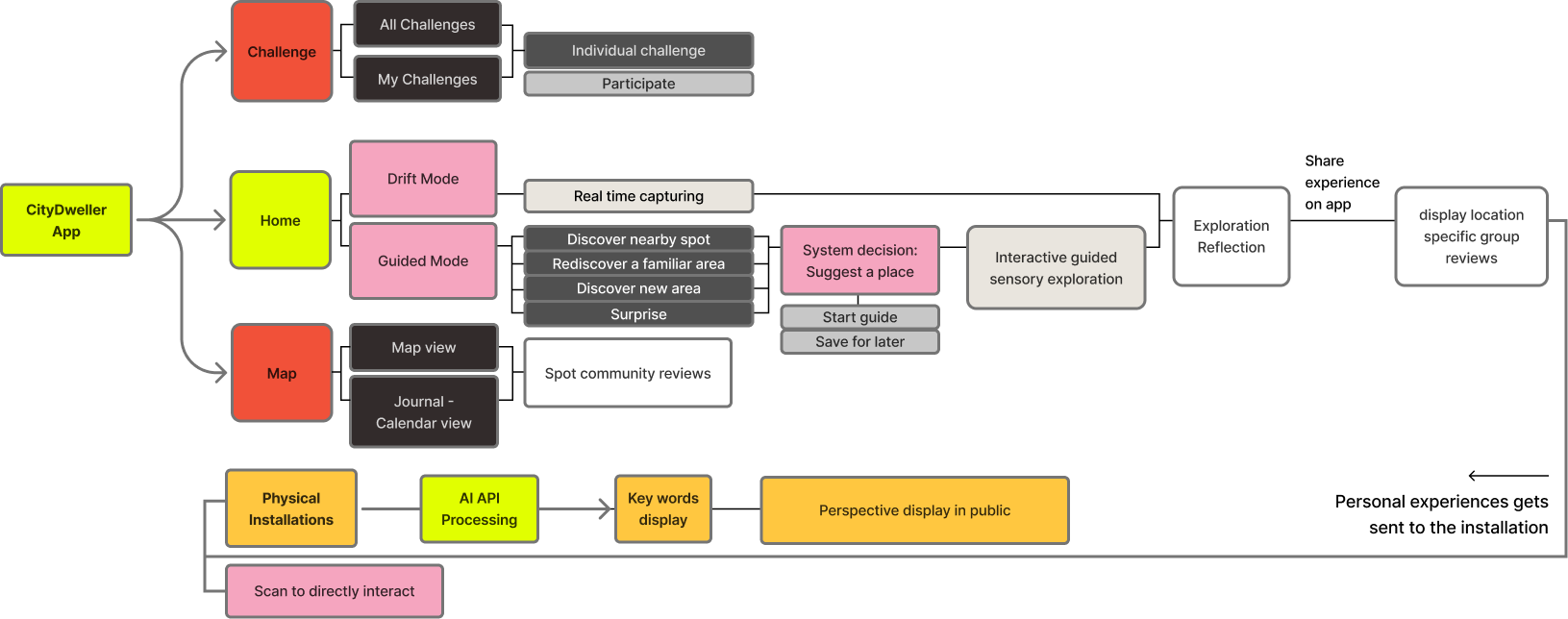
Connecting the Digital to the physical
Bus stop display
Turning individual observations into a living collective memory
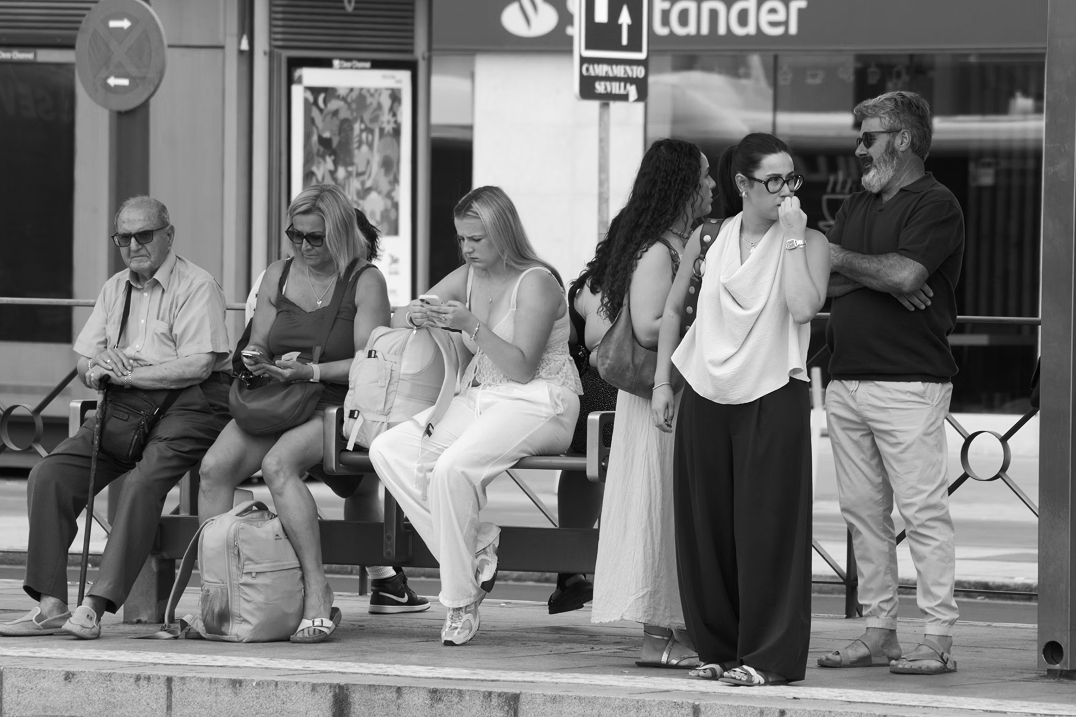
Why?Bus stops offer a natural moment to engage residents within their daily routines. This enables opportunities to encounter different perspectives without seeking them out.
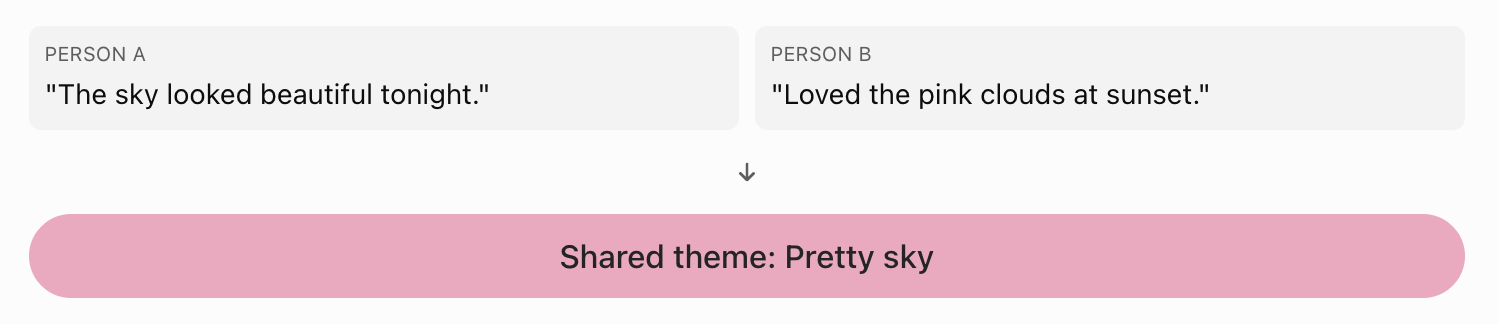
AI API Integration: Turning individual observations to reveal collective perspectives
Why AI?
Through user interviews, I realized that many people describe similar moments in different ways. I integrated AI API to recognize shared themes across residents' responses
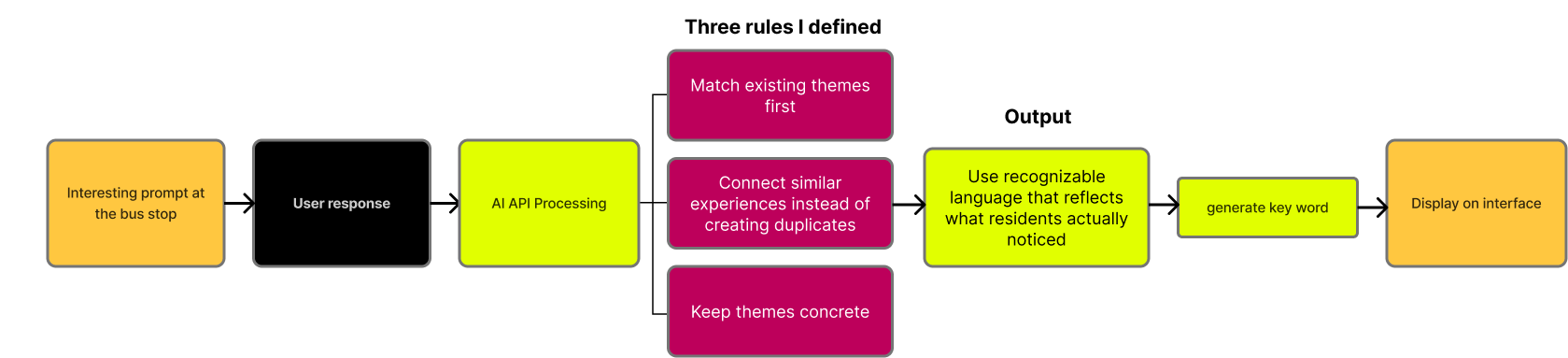
User centered prompt design: Making AI responses actually meaningful for residents
Displaying meaningful outputs that showcases relevant and clear resident perspective to spark curiosity and participation is the core goal of this public display. Through testing in the claude playground, I refined the AI prompts to prioritize recognizable, relevant themes over abstract interpretations.
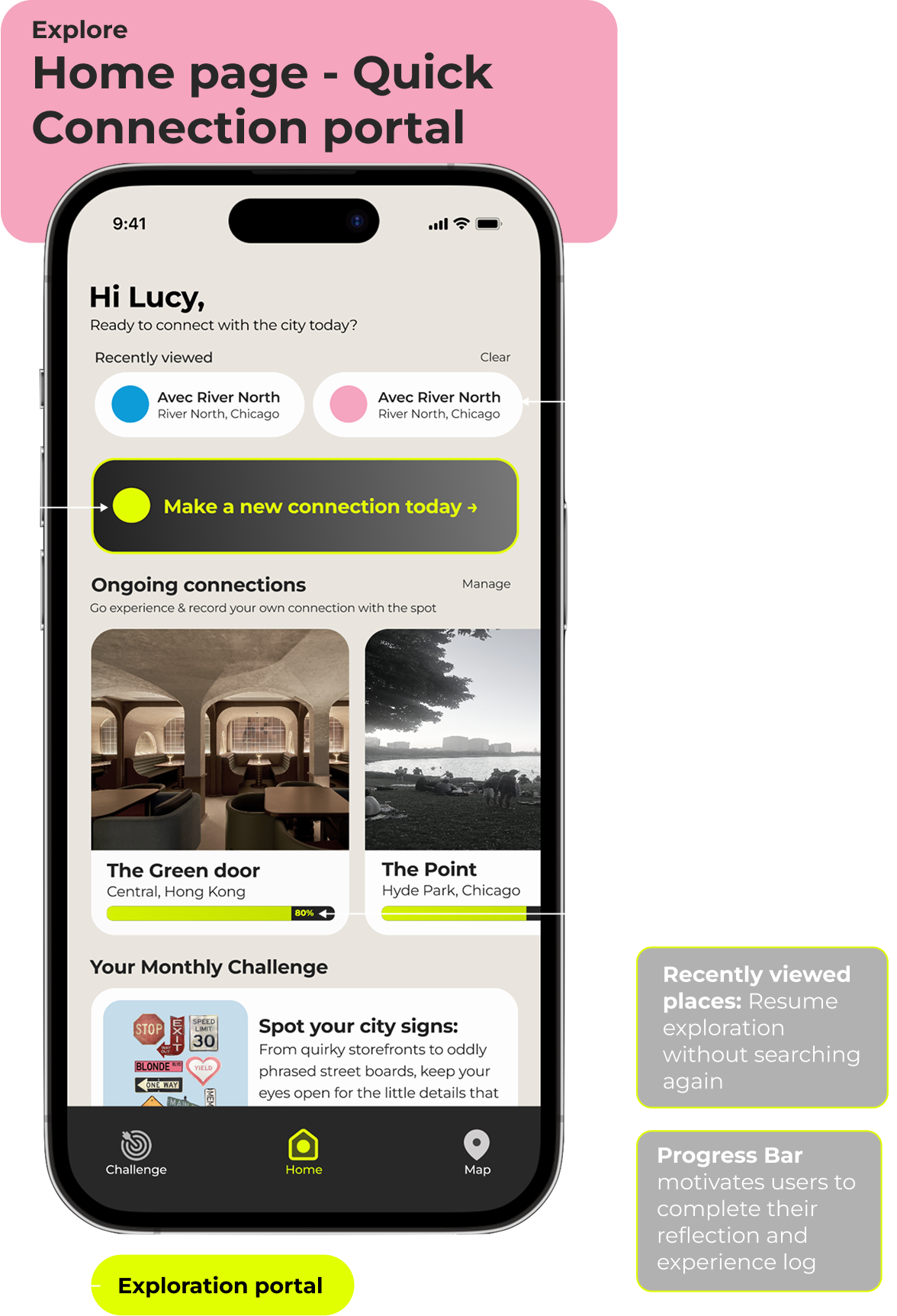
Hi-fidelity
Explore the city, Revisit memories, Discover new perspectives
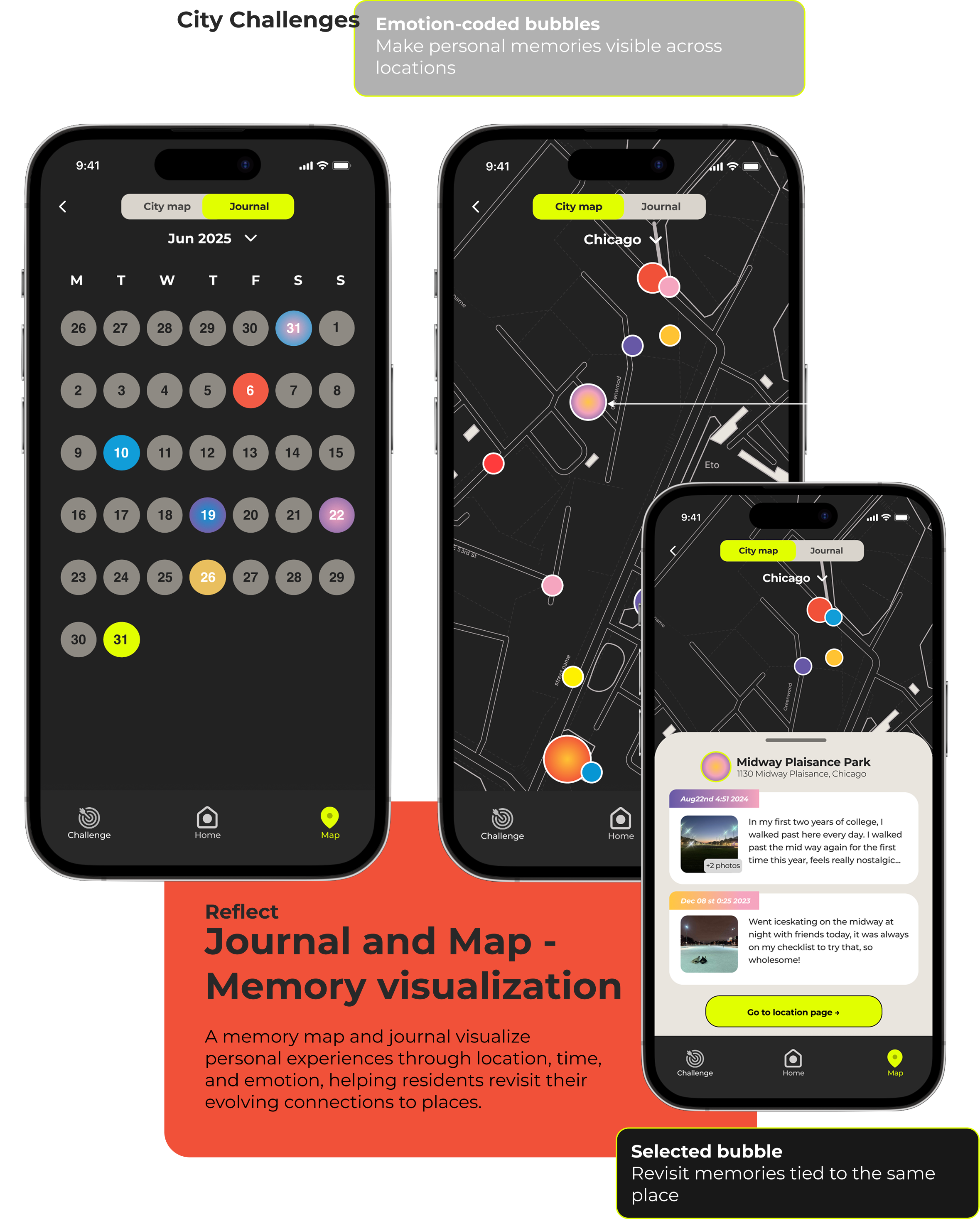
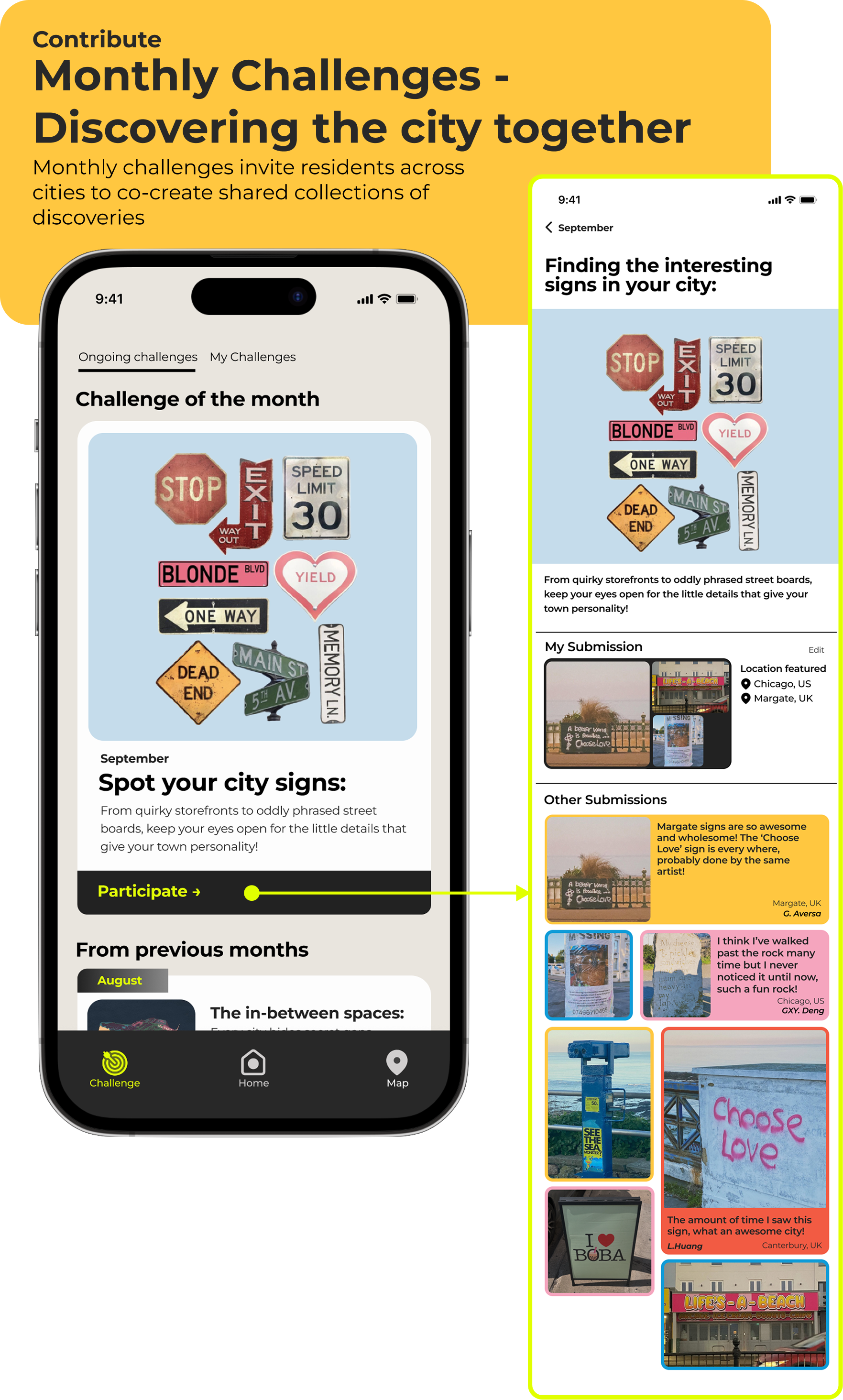
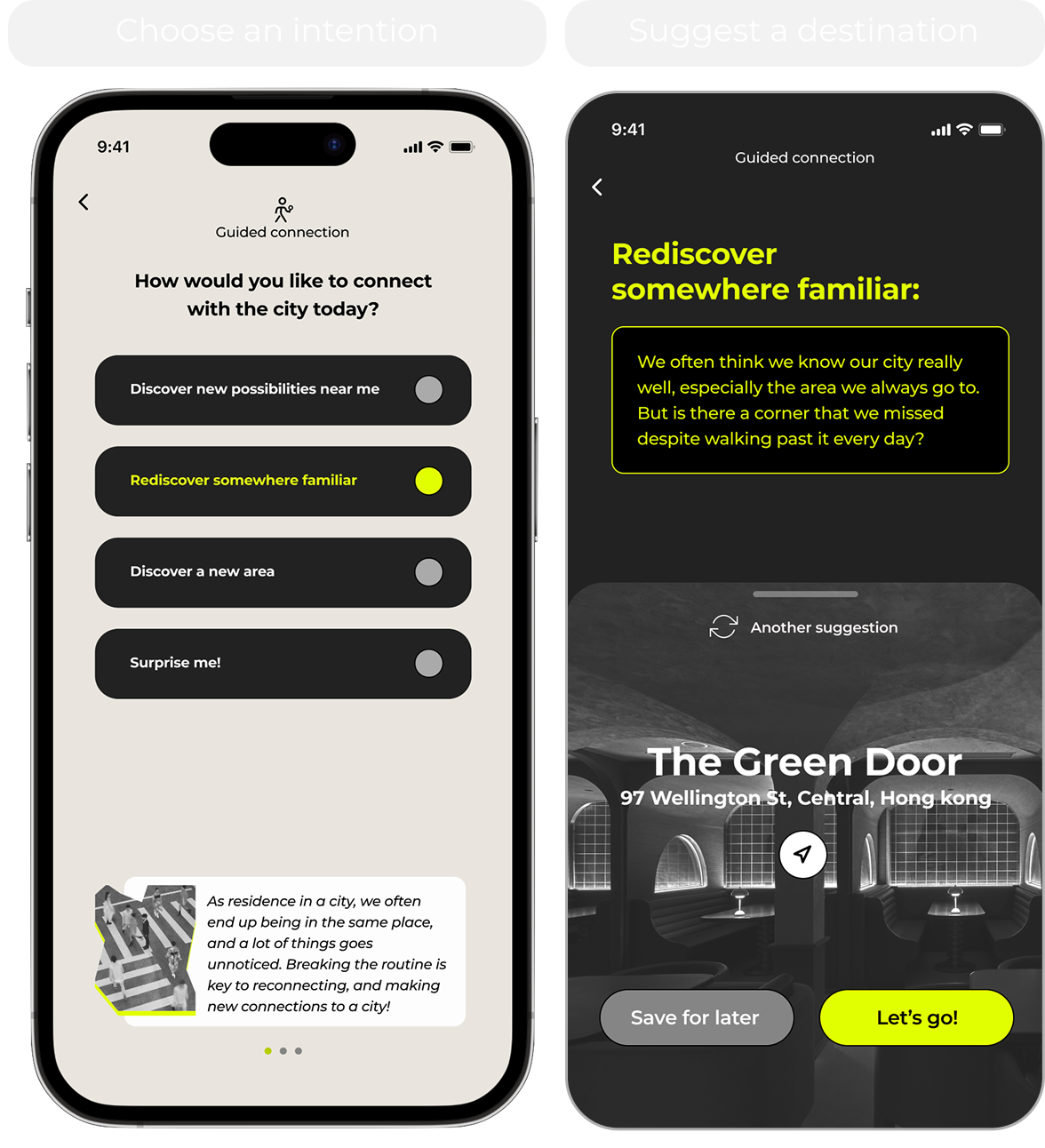
Explore with guidance or follow your curiosity
Guided connection mode
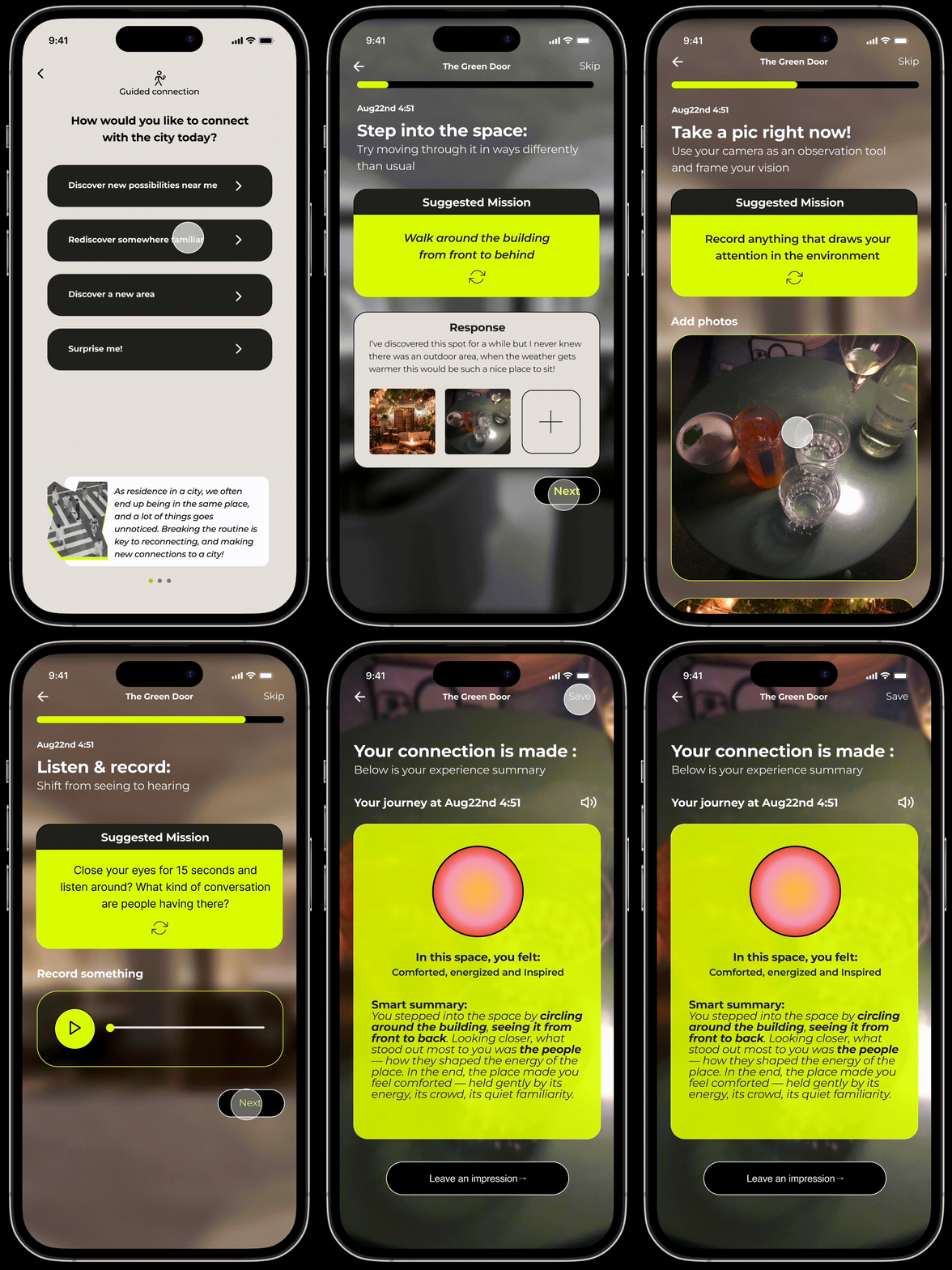
Results & record
Public Installation: Live city perspective display
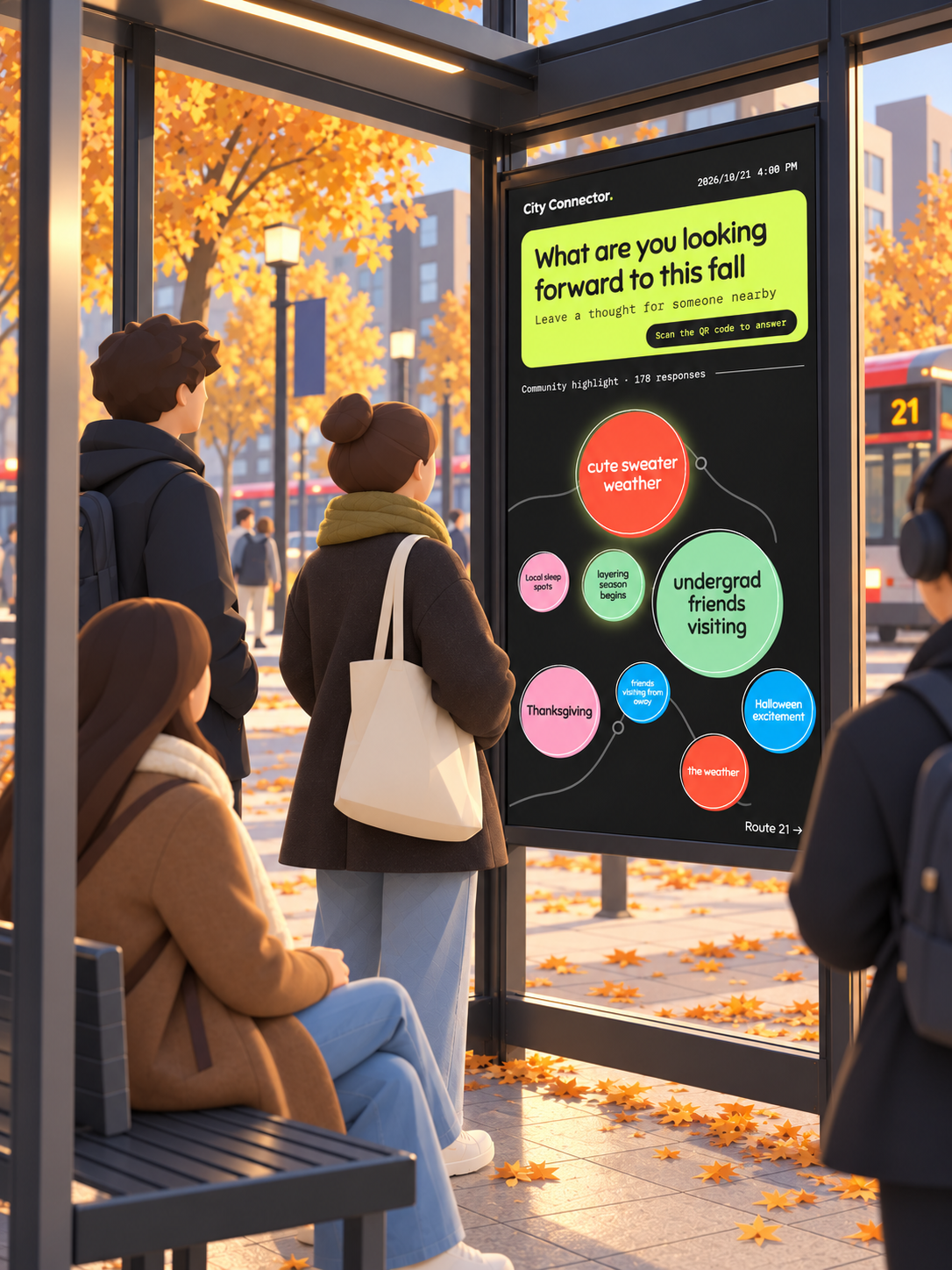
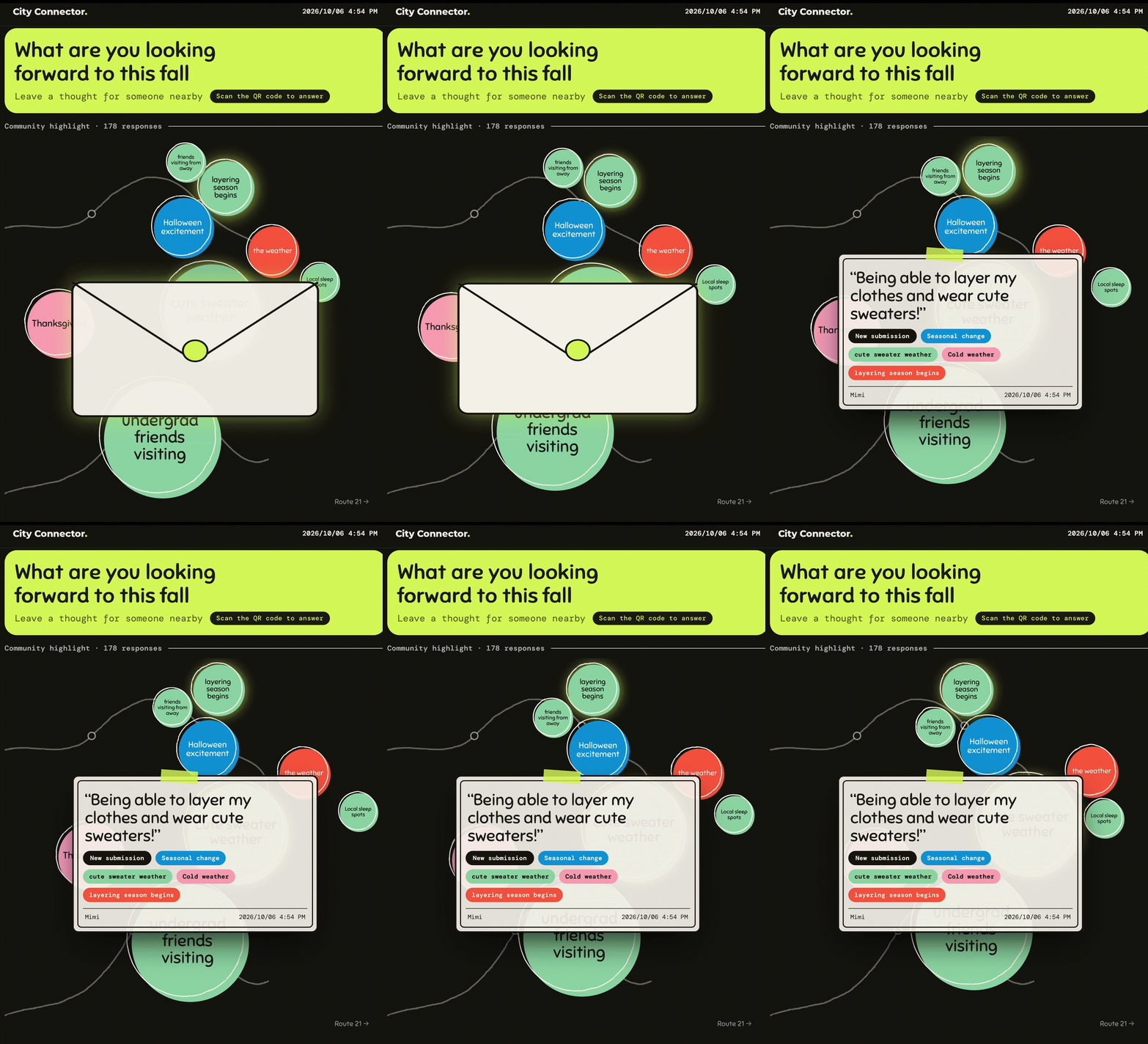
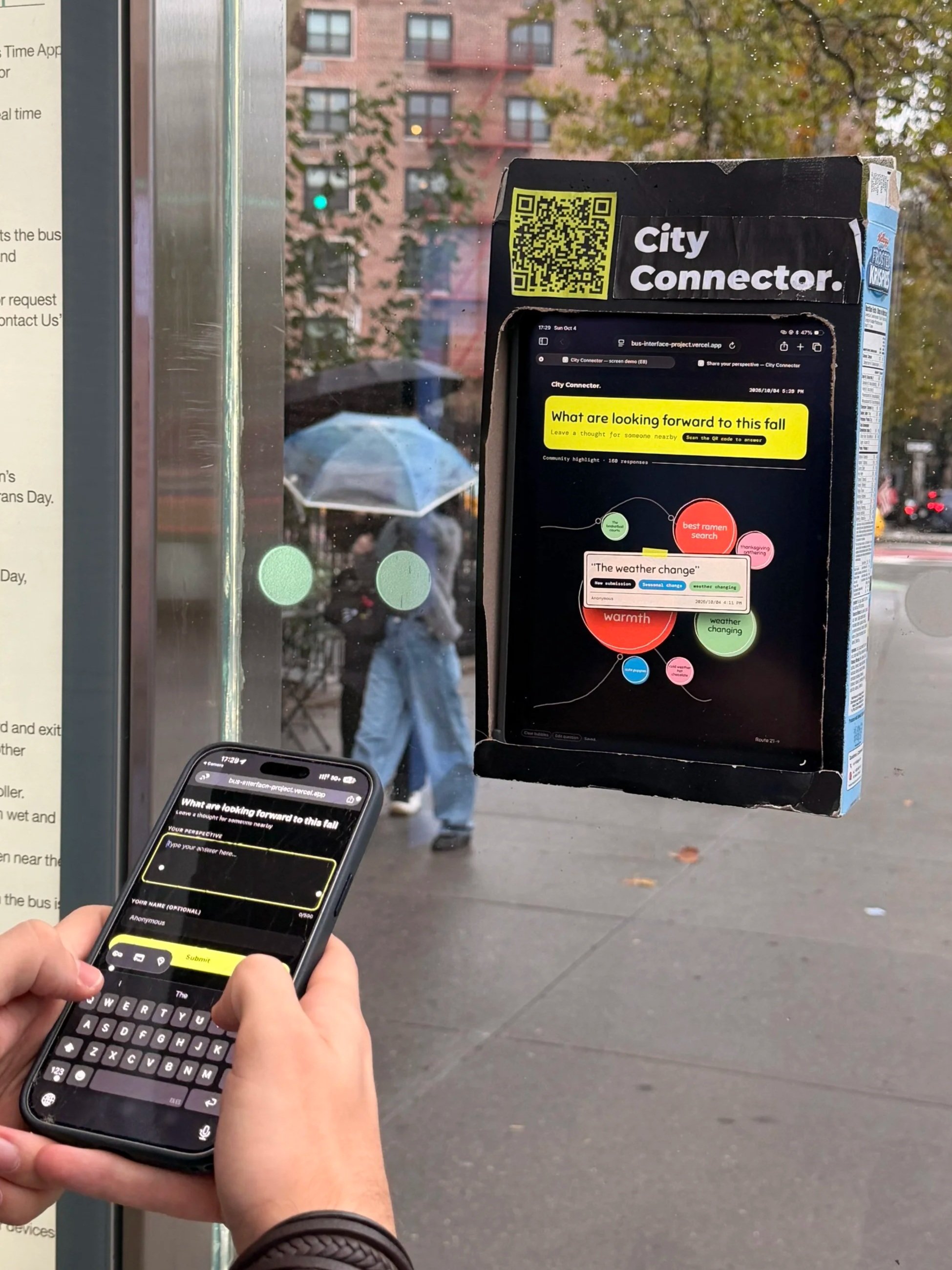
Invites riders to share personal thoughts through playful prompts, live displaying respond summaries through colored bubbles
Drift Mode
Prototyping, testing and Validating
Bringing the concept into the real world
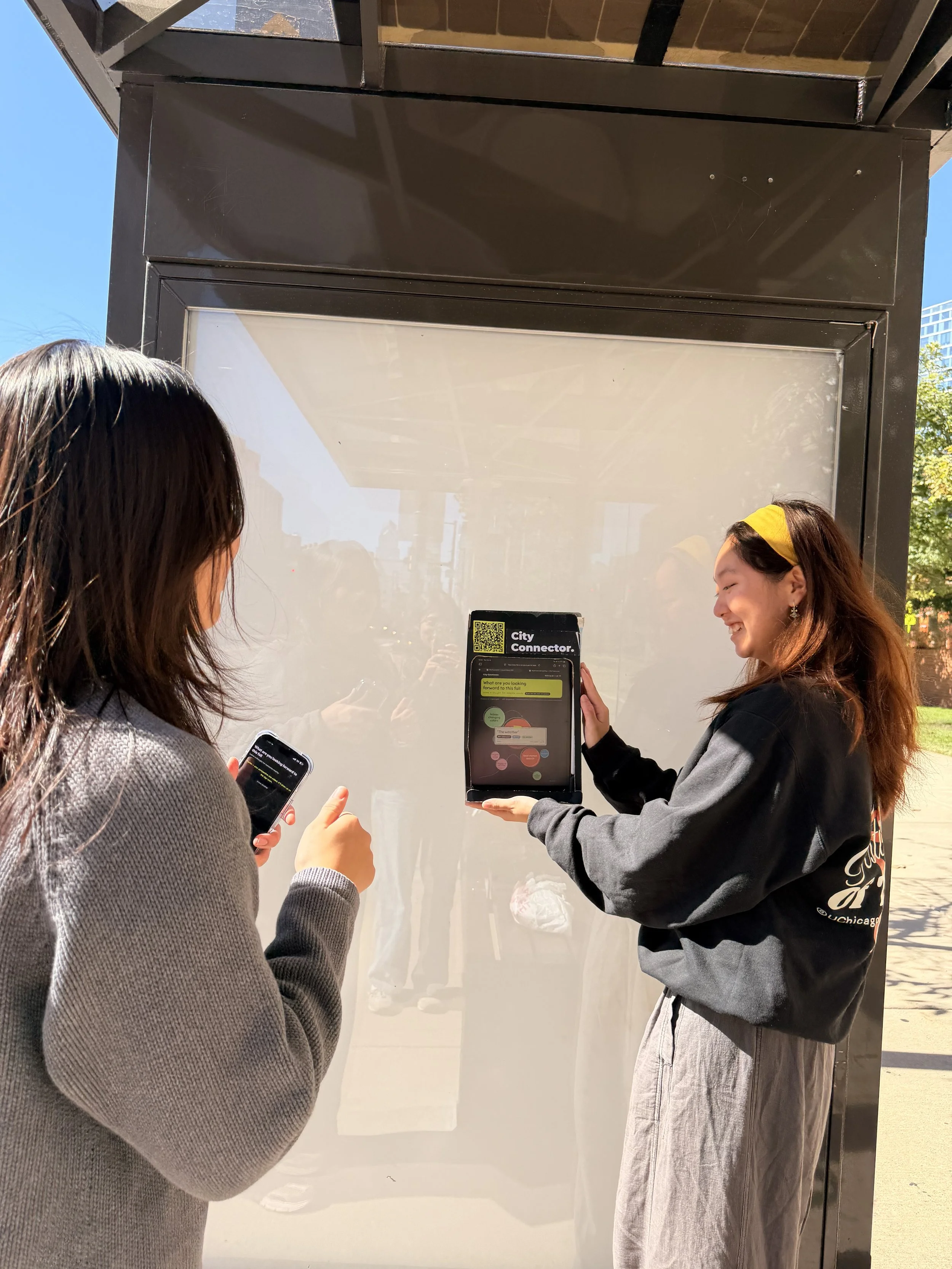
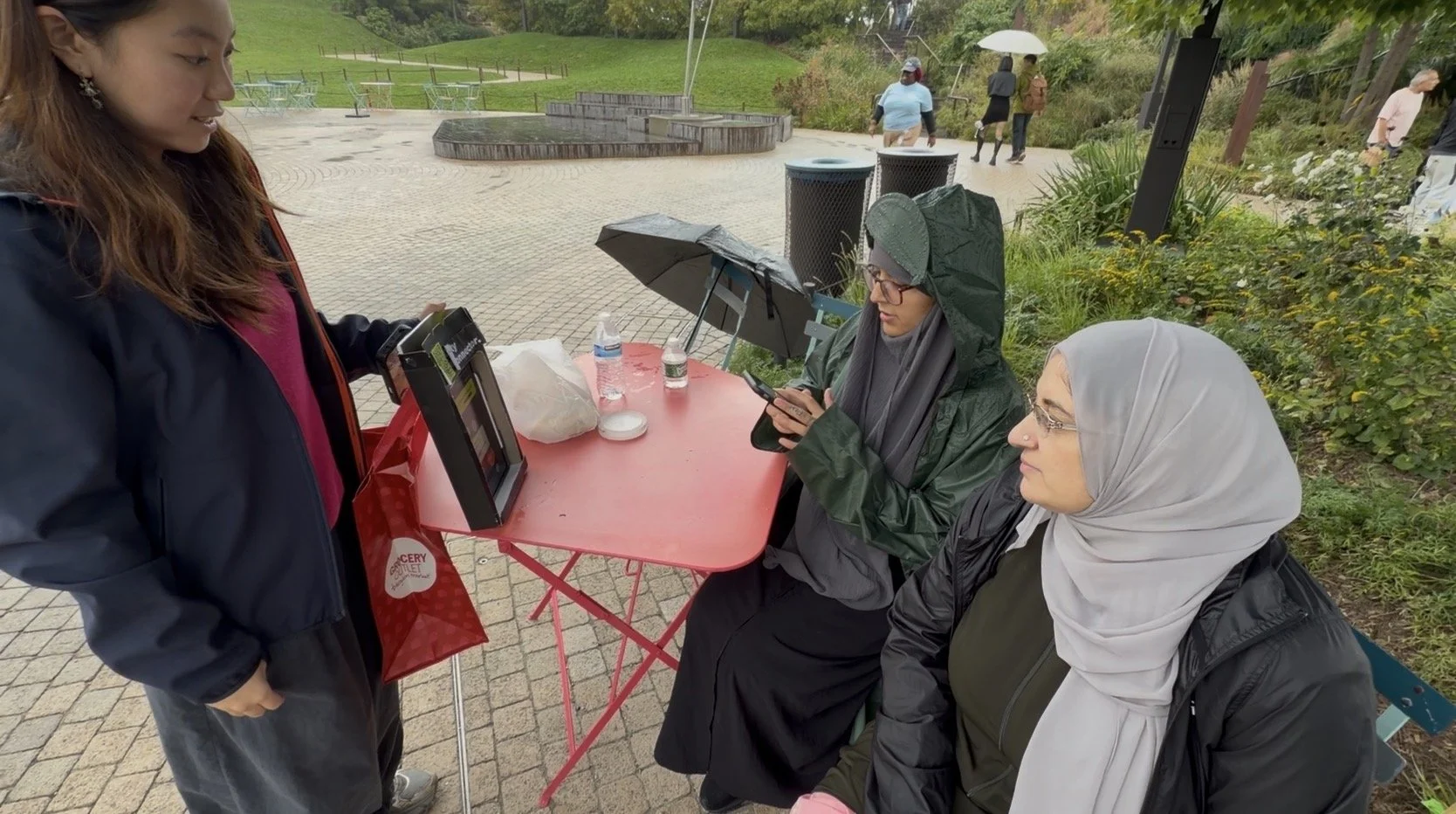
With the help of Claude Code and physical prototyping, I built a functional AI-powered prototype that transforms residents' responses into an evolving collective display to test in its intended environment.
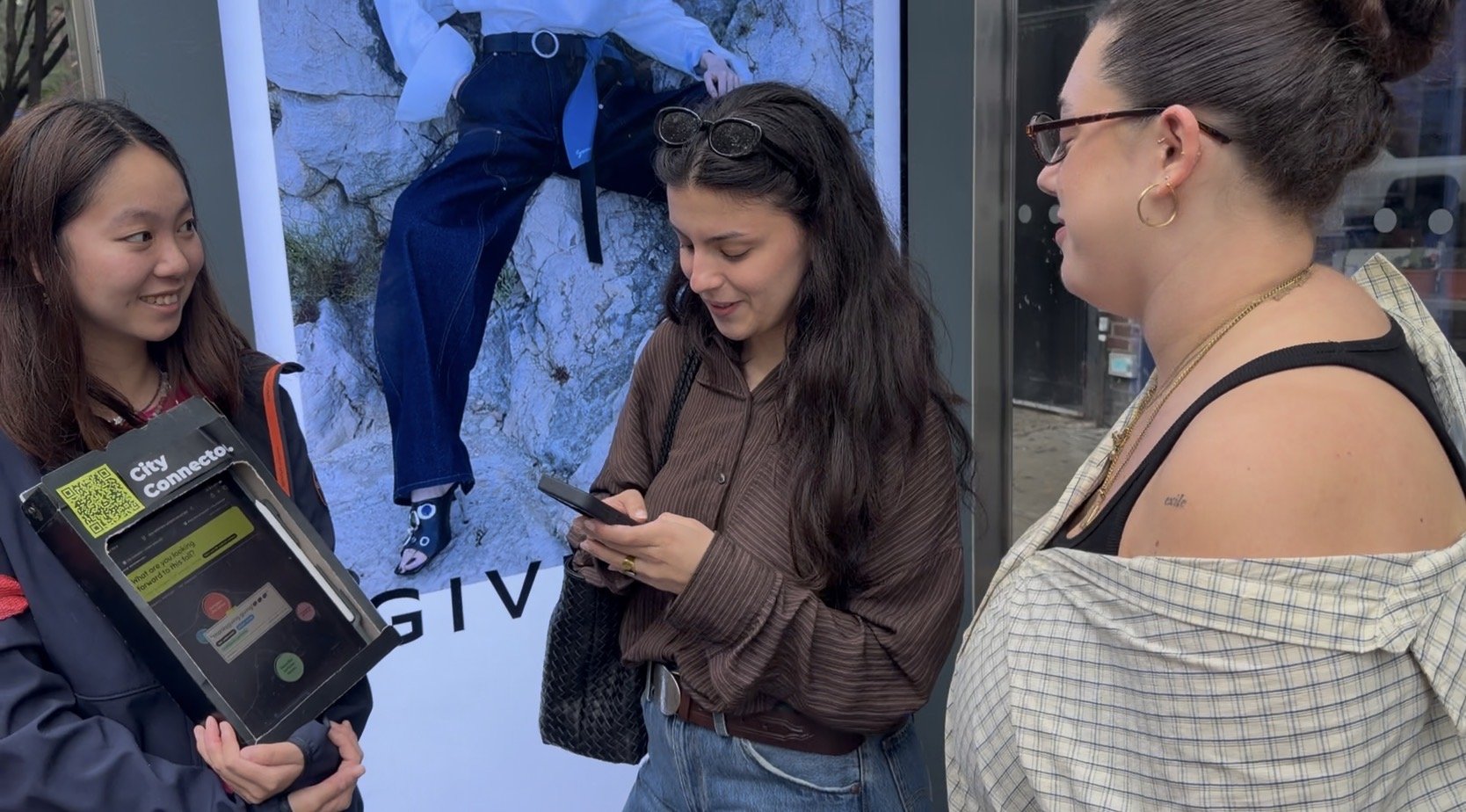
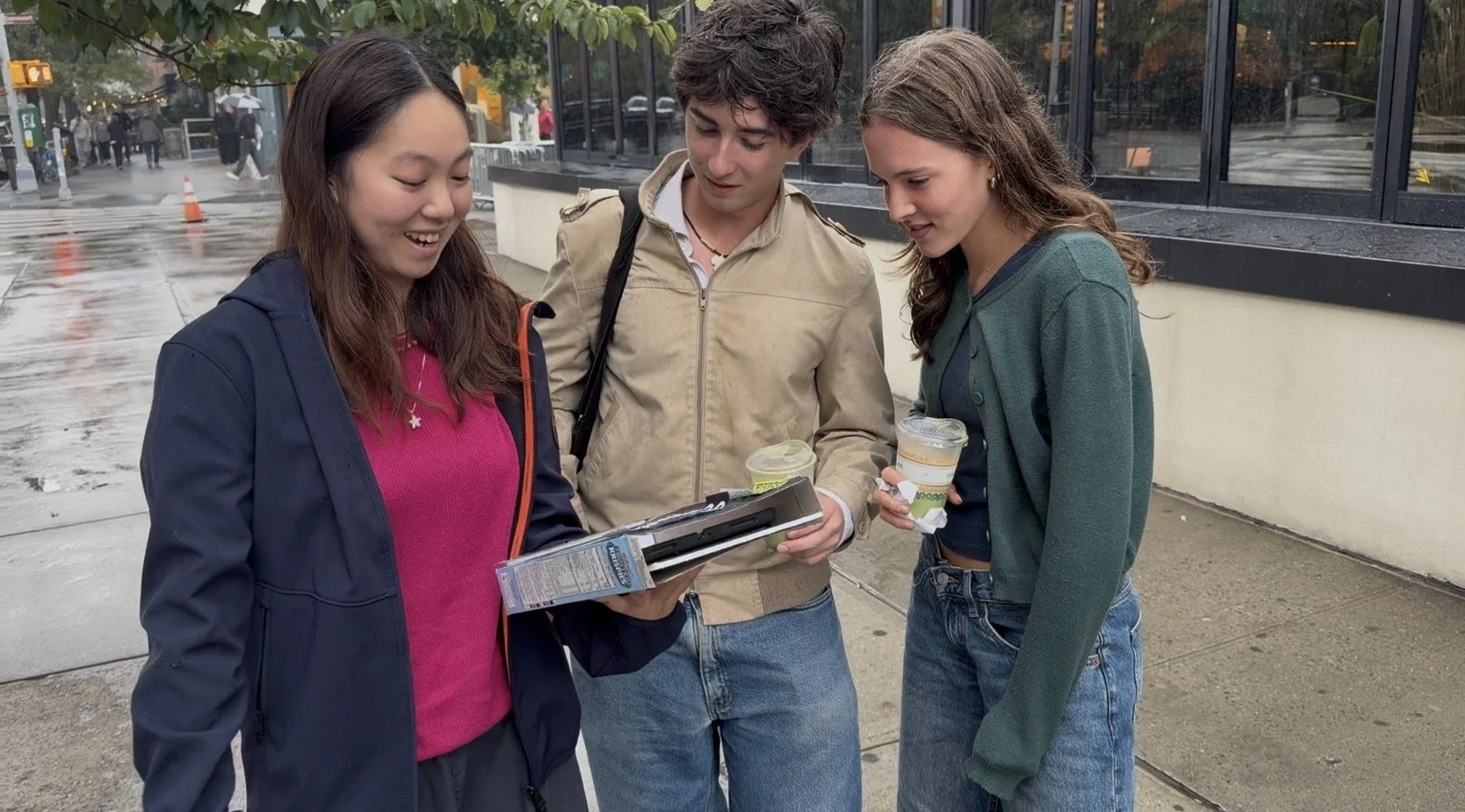
What 20 + onsite user testing reviewed:
Insight 1: Minimize friction
People are impatient in public. Any extra steps discourage user from interacting. The QR code was validated as a low friction interaction
Insight 2: Make collective result the emphasis
People are drawn to discovering what others have shared than a single narrative, this validates our research and highlight that we should emphasize on the collective result more rather than individuals
Insight 3: Feedback is the wow factor
Every user tested smiled when they saw their response appears on the screen. Immediate, tangible feedback turns a simple submission into a memorable, rewarding experience.
Reflection
Wishes
Strengthen cross-space awareness: Make the presence of the CSIL side more immediately visible from the Arts Lab
Balance participation across both sides: Add richer Arts Lab inputs, such as gesture control, so both communities have equally meaningful influence
Design for long-term use: Explore how the installation could become permanent and evolve through continued community participation
What I learned
Human-centered iteration is essential: Smooth interactions emerge through repeated testing with the people who will actually engage with the experience
Changing user behavior requires clear motivation: Design can disrupt existing spatial habits, but users need clear, attractive incentive and visible reward
Real time feedback motivates engagement: Real-time responses incentivize more and longer engagement because it makes interactions feel understandable and rewarding