The Campfire Project
Two-Sided Site Specific Interactive Installation
Challenge
Design a public interactive system that bridges two disconnected communities within a shared physical space
Roles
Solo senior capstone project: concept through build
Personal Goals
Design a responsive spatial experience that challenge users’ existing perceptions and spark new interactions & reflection
Creating a public piece that is human centered: ensuring that the piece is effective both conceptually and functionally
Timeline
15 weeks
Scope/ Method
Prototyping & Iteration
Spatial Interactive System design
Spatial Experience Design
Responsive Projection
Tools
Isadora (Interactive Projection software)
Figma
Shadertoy
Project summary
Project overview:
UChicago's MADD Center brands itself as a transdisciplinary crossroads of arts and computing, but the two spaces it houses: the Arts Lab and the computer science lab almost never interact. As a member of both communities, I wanted to create an opportunity for the two to build meaningful interactions again and view the space as one connected, collaborative space.
After interviewing the space managers and students that regularly occupies the two spaces, I discovered that the physical wall diving the two spaces was a core barrier for natural interaction. With experience in expanded cinema and interactive projection, I leveraged my expertise to build a interactive “third space” that acted as a physical portal between the two spaces: synchronized projections on two sides of the dividing wall, where each community are invited to co-create a shared campfire in real time, with their inputs resolving into a single collective moving image. Using a interactive projection software called Isadora, I ran rounds of user testing to iterate on an experience that successfully drive engaging interaction between both sides.
Outcome:
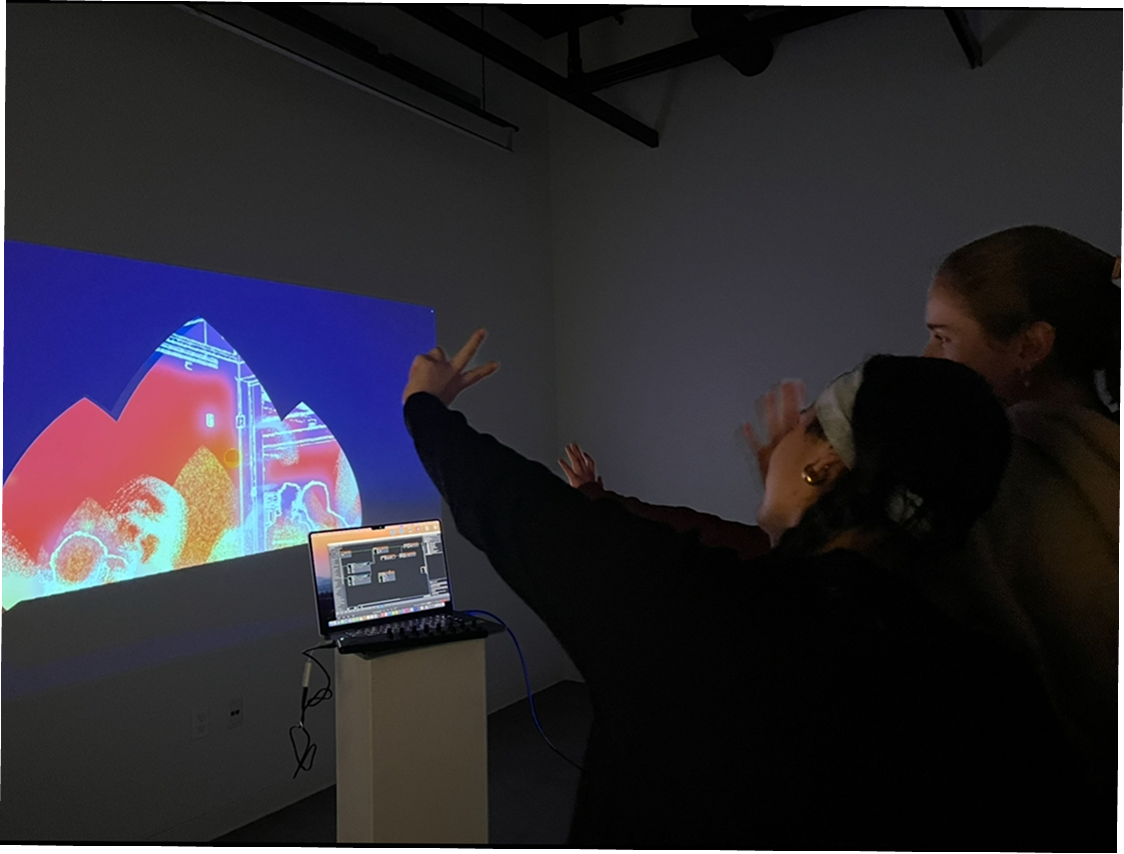
The day when the projection was activated, participants stayed for hours, moved between the two sides, and even invented their own ways to communicate through the fire, dancing and hanging out together across the wall.
Process highlights
Understanding the phenomenon & Problem
Introducing the space
When you enter the MADD center from the front door, you are immediately faced with two choices:
go or left to csil or right to the Arts Lab.
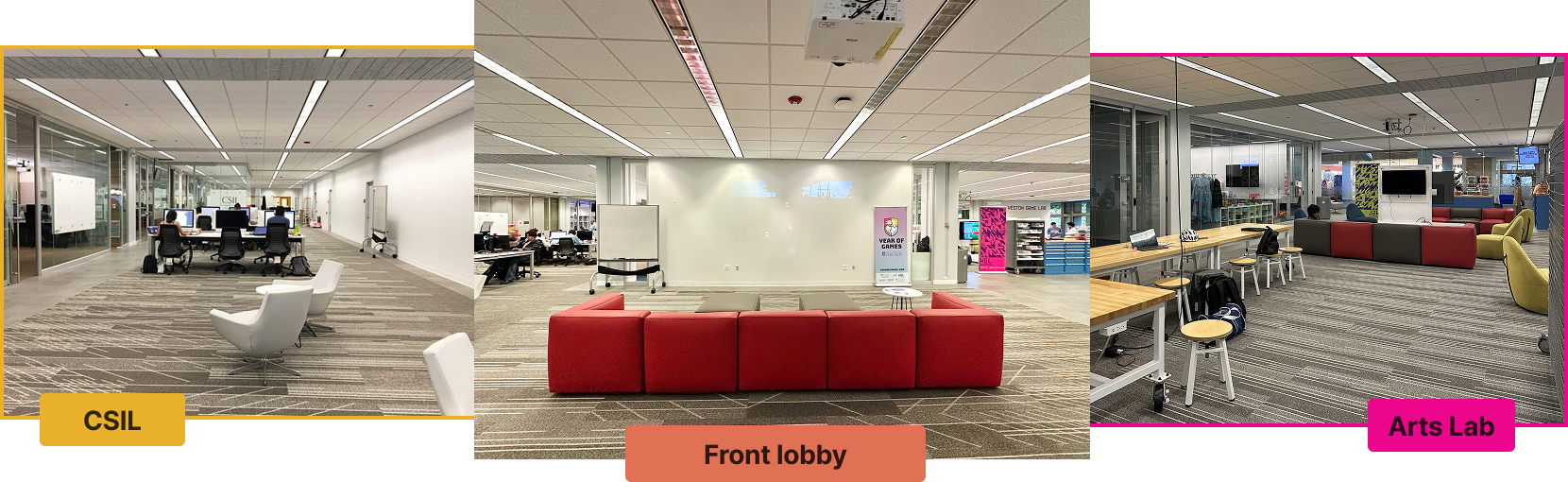
The MADD center describes itself as a “collaborative space for inquiry and experimentation” and a “transdisciplinary crossroads” on their webiste.
However: The space didn’t actually work this way. People on each side almost never interact!
HOW DID THIS HAPPEN?
To validate my observation and fully understand the cause of the phenomenon, I conducted interviews with 5 students from each space and the two space managers.
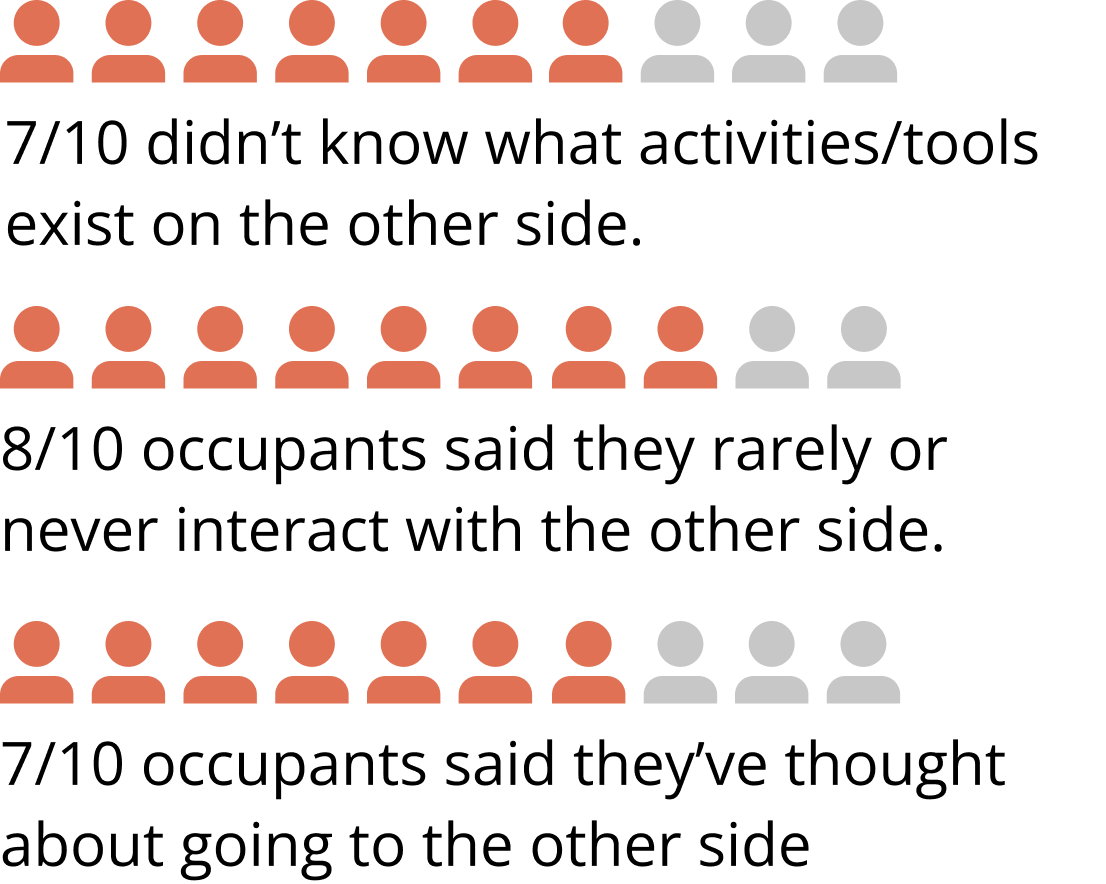
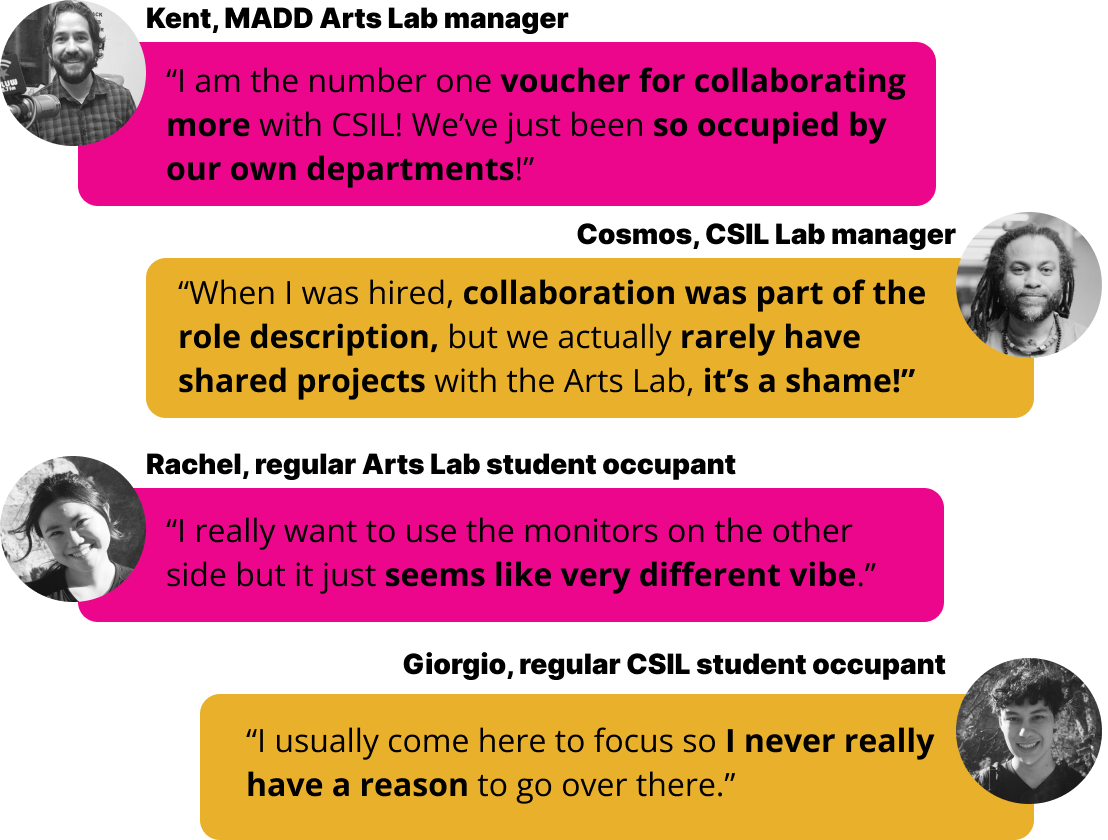
PROBLEM DEFINED: the desire exists but OPPORTUNITies for interaction do not!
Insight from the interview and research reveals 3 core barriers that limits interaction:
Functional: “The two spaces do different things”
CSIL has individual monitors, and Arts Lab have open spaces for game play and group work, the utility of both spaces drive people to different spaces.
Structural: “We have to prioritize our separate departments”
The Arts Lab and CSIL operate under different academic divisions, each with its own priorities. As a result, neither side has a clear incentive or structure for collaboration.
Physical: “There’s a literal wall between us!”
Despite the open area at the entrance of the MADD center, the two spaces are also divided by a row of classroom, limiting visibility and movement between them despite their proximity.
Identifying design opportunity
Of the three core barriers, physical barrier offered the most immediate design opportunity.
Functional and organizational barriers were deeply embedded in the institution, while spatial design and interactive technology provided a more flexible way to create opportunities for connection.
Ideation: Methodology & prioritization
methodology research
I researched public projects & artworks to explore how others drives interaction between people within & across physical spaces
Method #1: Spatial Branding Moderate fit
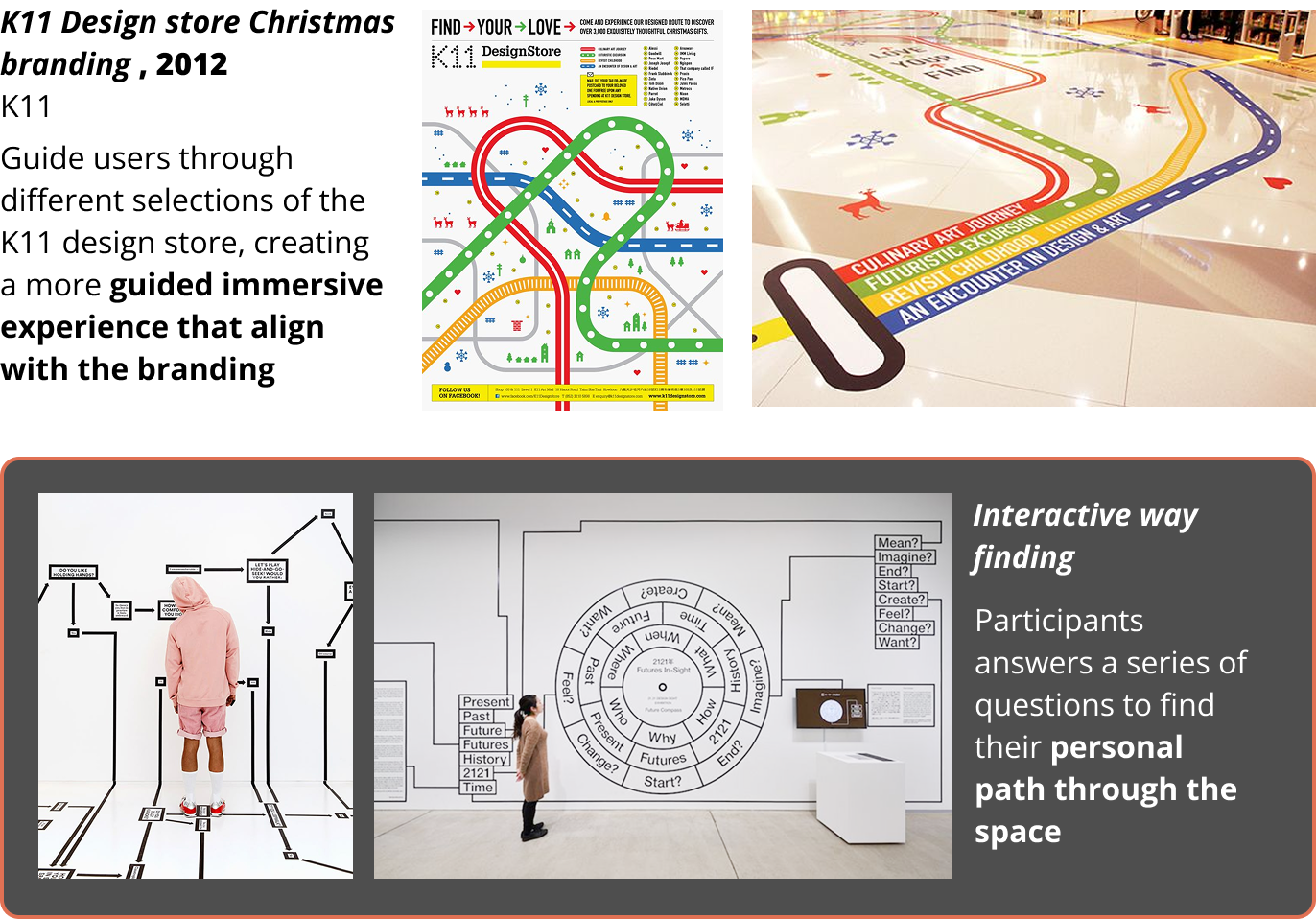
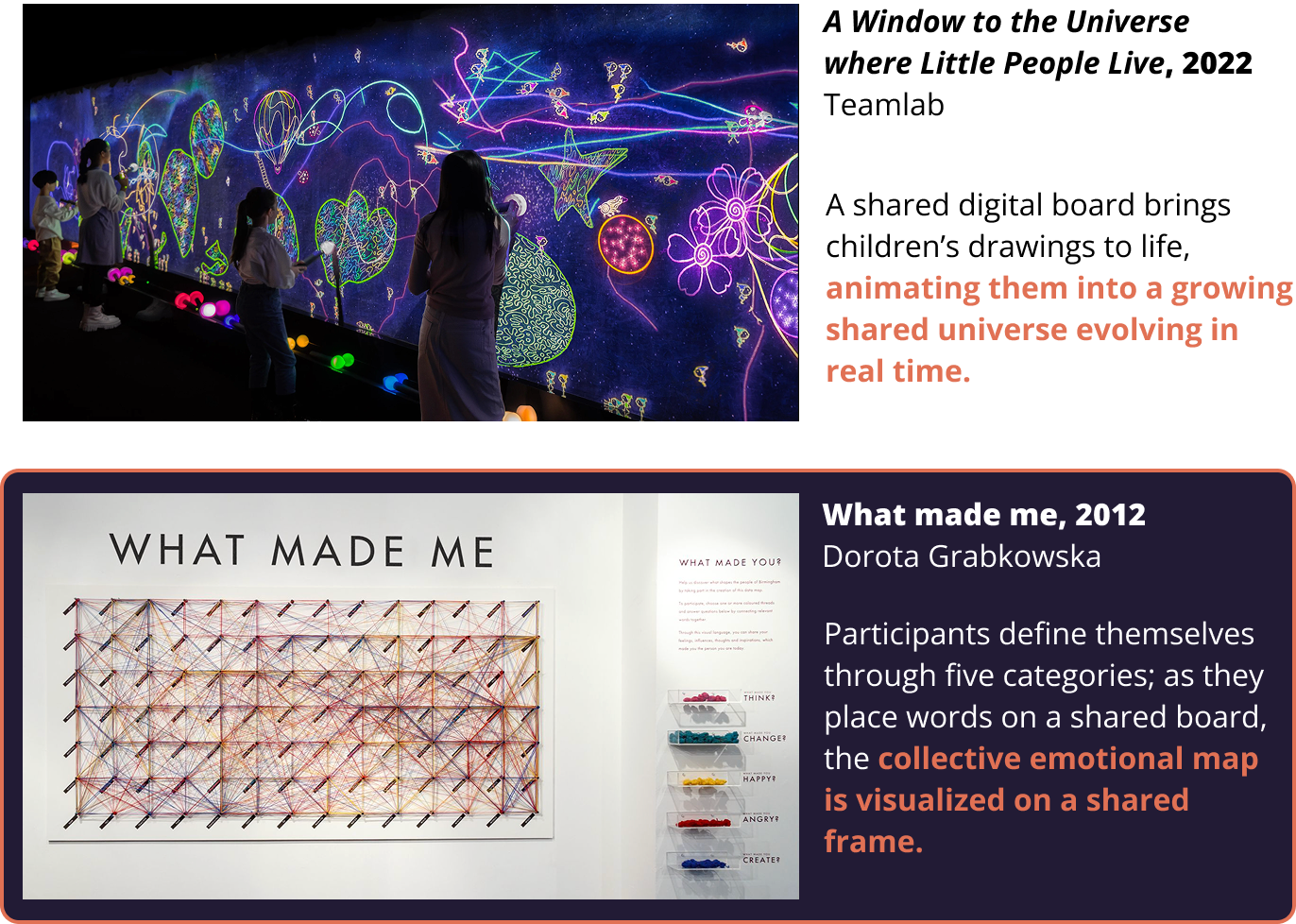
Key takeaways
Wayfinding can disrupt habitual movement and visually unify the center
Limitation
Passive branding is limiting and self categorization could reinforce the divide
Method #2: Responsive environment Strong fit
Key takeaways
Instant visual feedbackencourages interaction and makes the other side’s presence and actions visible
A two-part installation can intensify feedback when both sides participate to make interaction feel consequential
Method #3: Participatory art/ Co - creation Strong fit
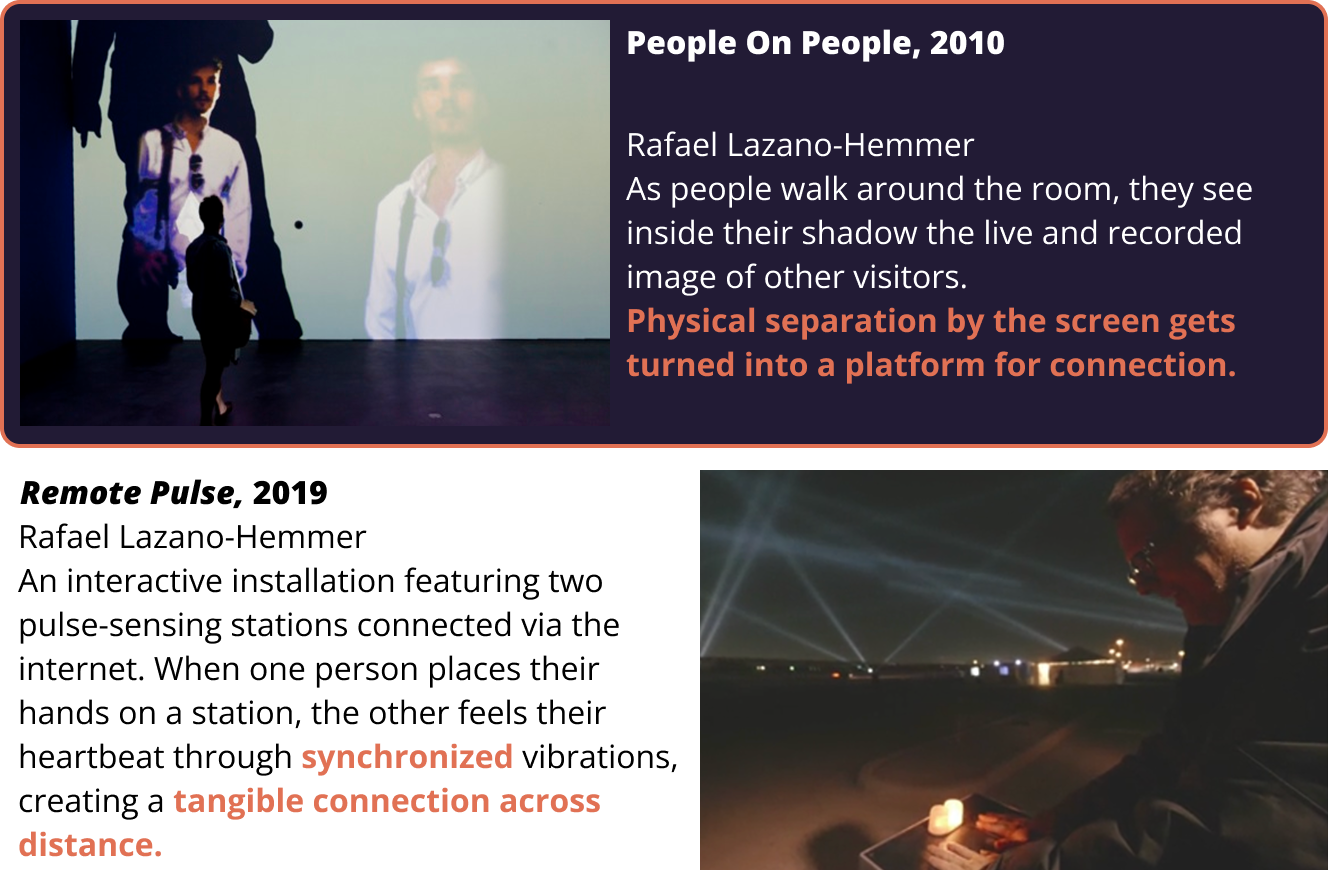
Key takeaways
Participatory art invites participants into collective creation, guided by a framework established by the artist.
A sense of community is created while individual differences are highlighted
Synthesis: Create a responsive installation with participatory co-creation
A co-creation installation creates a new opportunity for the two communities to collaborarte
To overcome the physical barrier: Each side contributes to the same system in real time, senses the presence of the other, and unlocks a stronger shared outcome when both participate.
How can I design a spatial experience that encourages two physically separated communities to connect & interact?
Core goal: Spark movement, curiosity, and meaningful interaction between the two communities
Design synthesis
1. Shared participation
Both communities contribute to one experience in real time.
2. Cross-space awareness
Each side can sense the presence and actions of the other.
3. Low-friction interaction
Participation feels immediate, intuitive, and inviting.
4. Visible collective reward
The experience becomes more dynamic when both sides engage, display clear visual reward through collaboration
Ideation
Concept: A digital campfire
2-sided participatory bonfire connecting CSIL & the Arts Lab
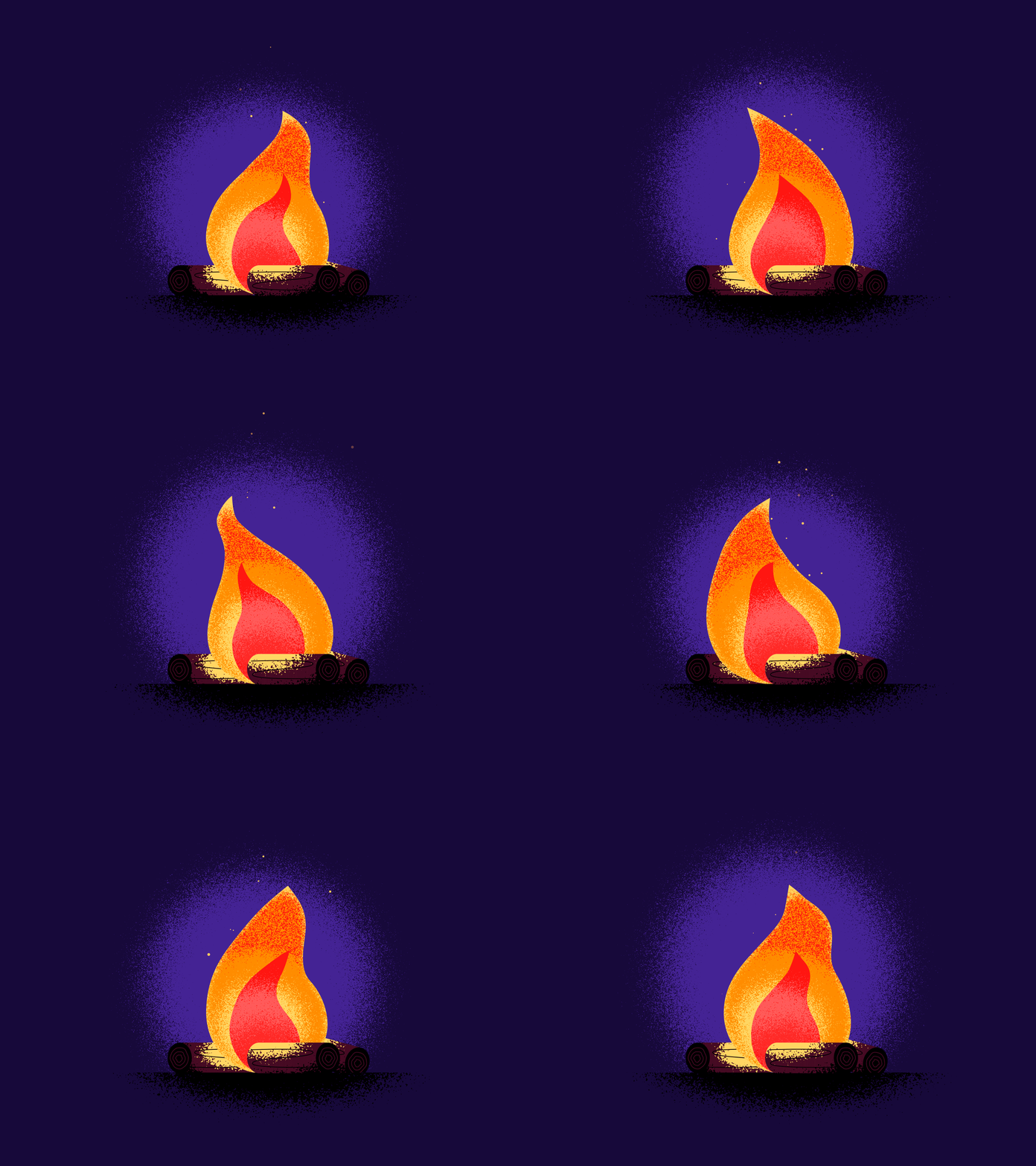
Why Campfire?
A universal symbol of gathering — it creates warmth, closeness, fosters meaningful conversations and deep connections
How does it work?
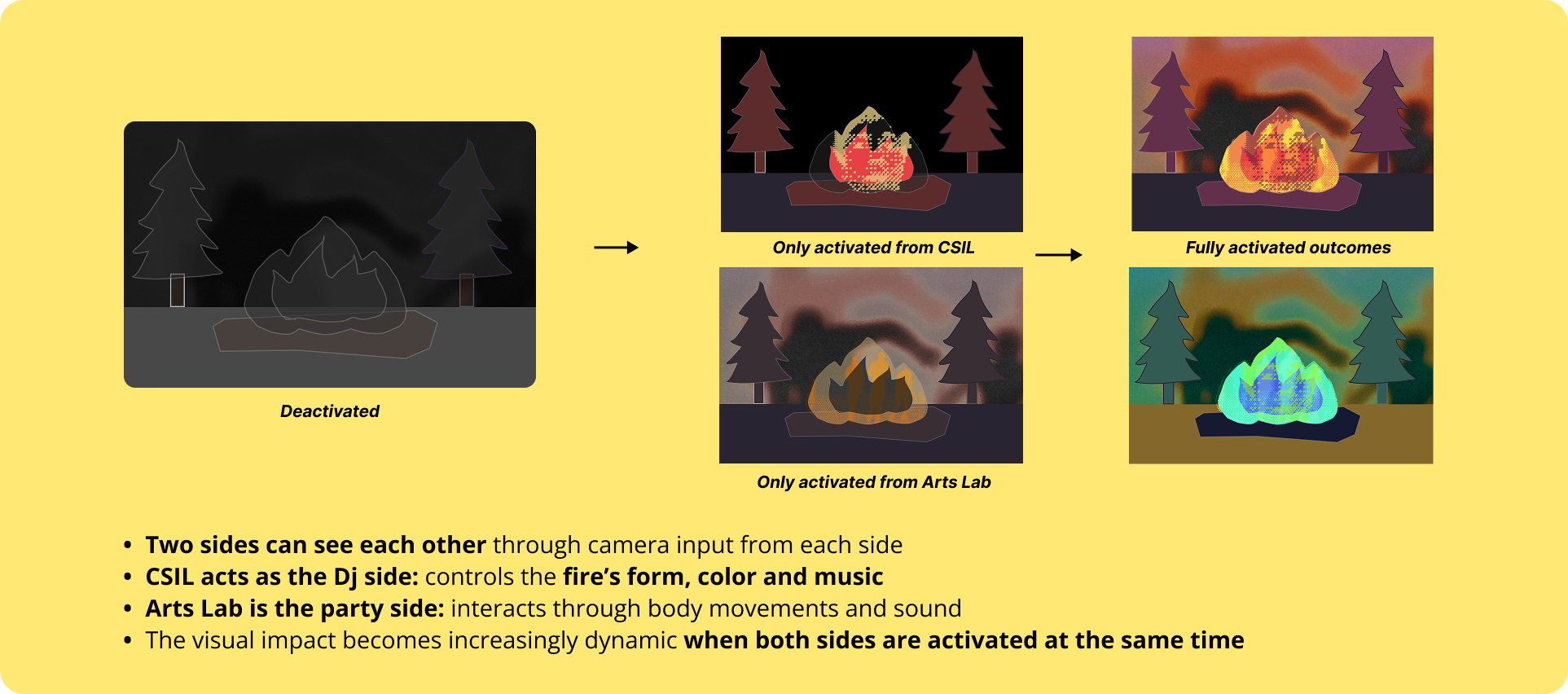
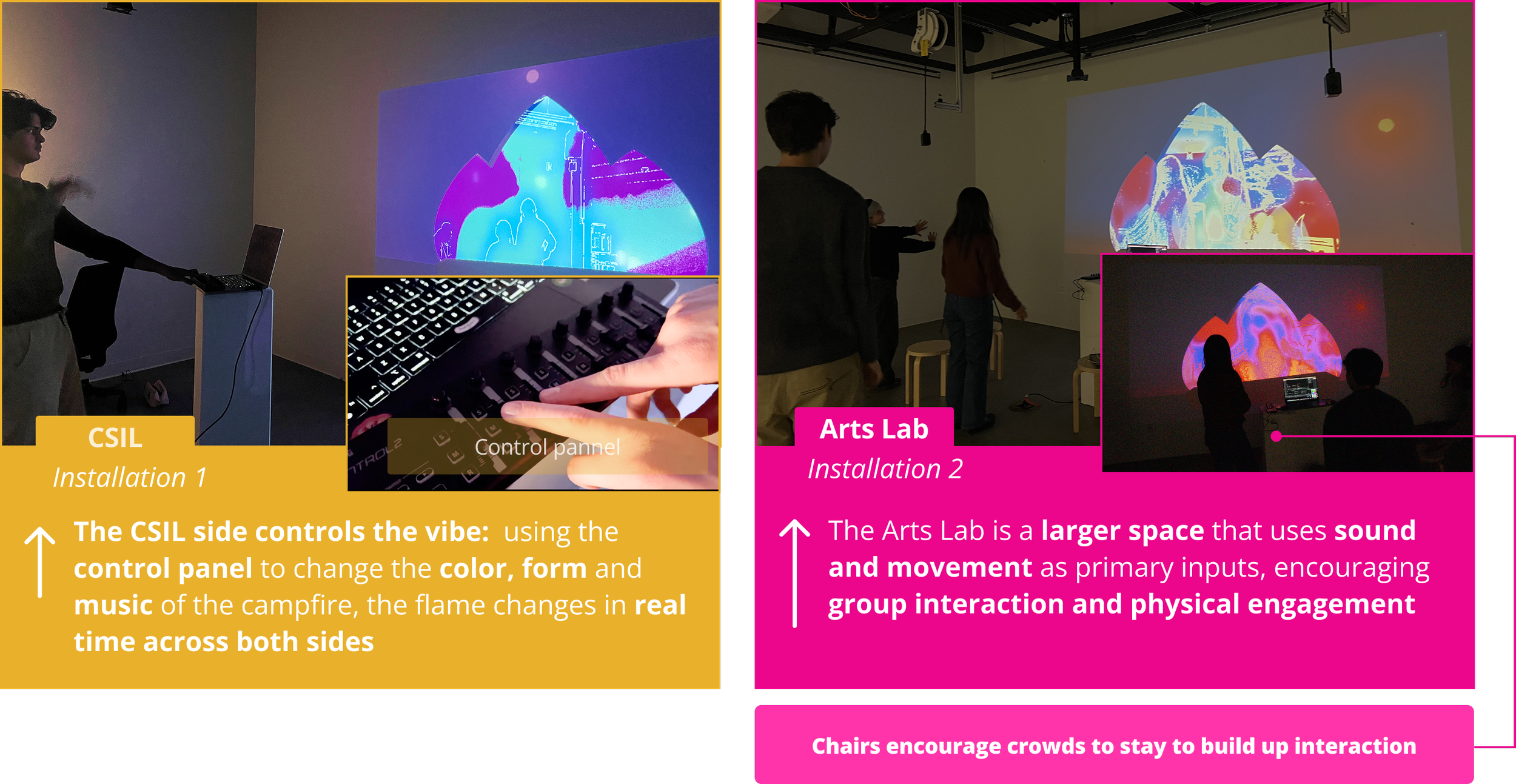
Each community controls a different part of the campfire
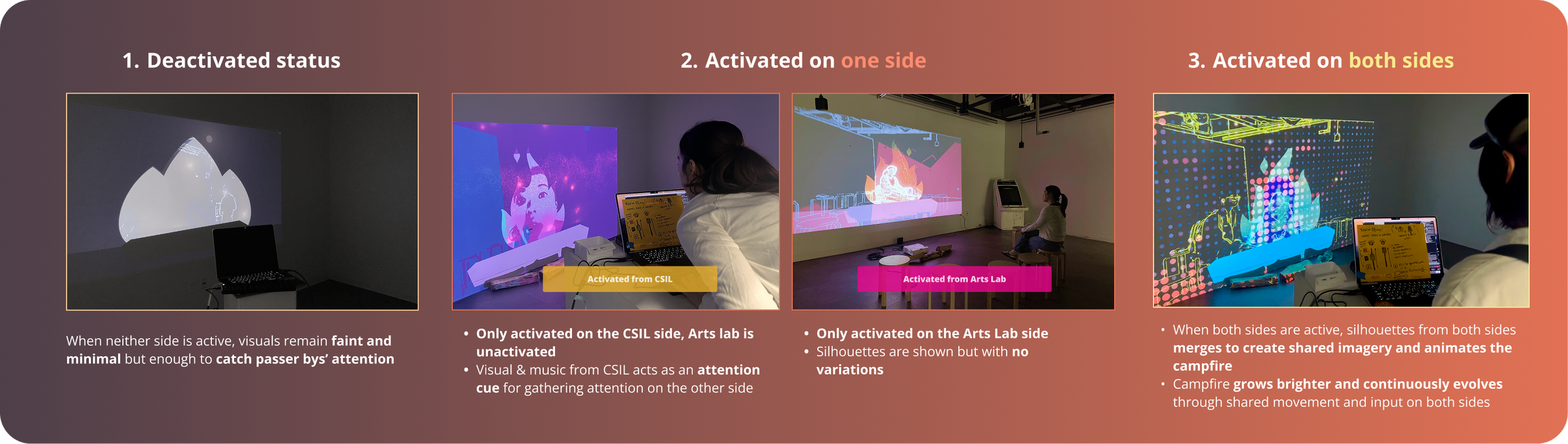
When both sides participate simultaneously, the installation becomes fully activated, turning separate actions into one collective outcome.
Working with the existing architecture
A row of classrooms physically separates CSIL and the Arts Lab, so I selected two open areas positioned on opposite sides of the divide that are highly accessible from both side.
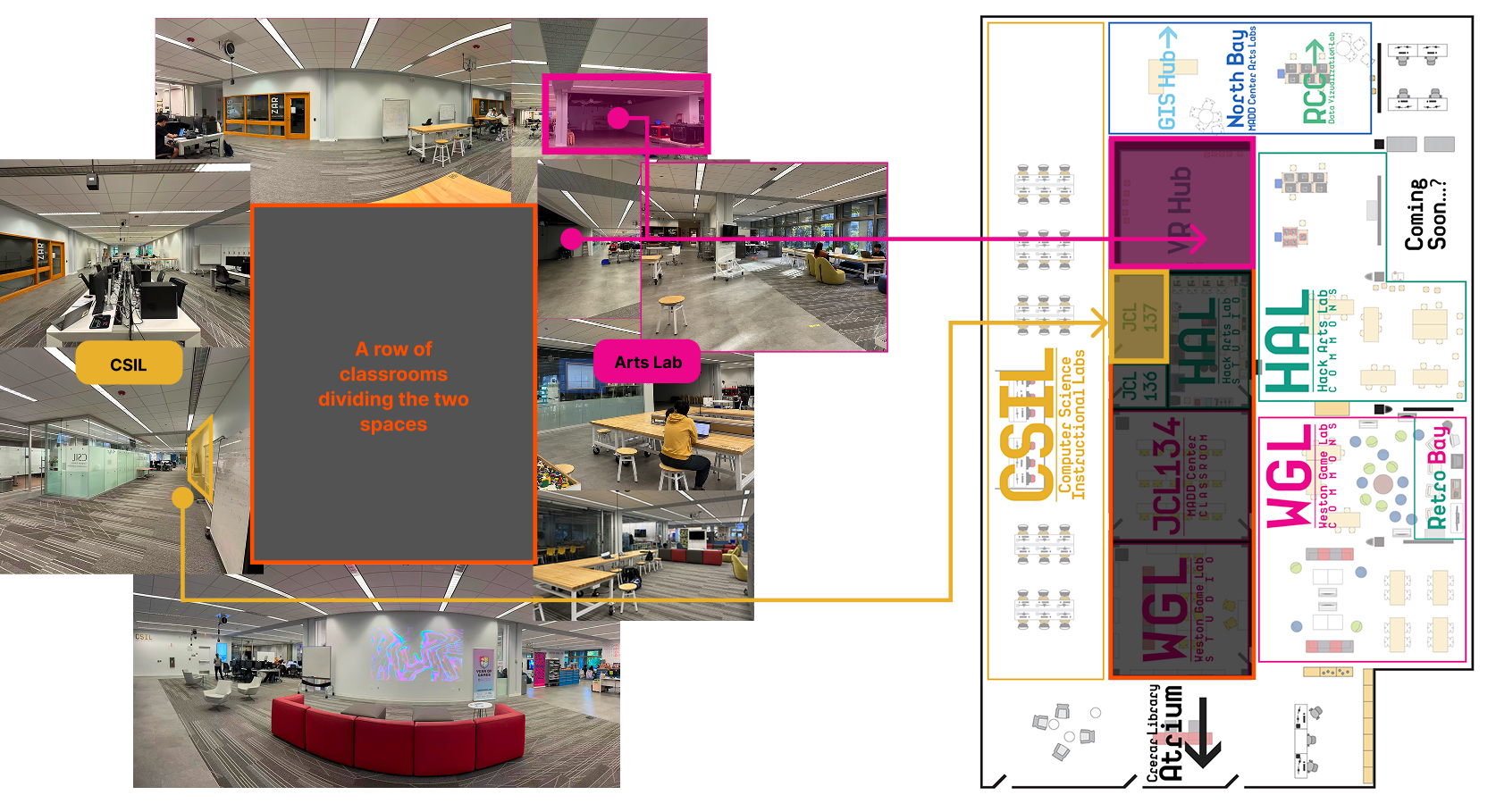
High visibility within each community’s existing gathering space
Large projection surfaces and room for interaction
Close proximity, making movement between two sides easy
Two synchronized projections would function as a visual portal across the dividing wall.
Designing for co-creation: The coloring book mechanism
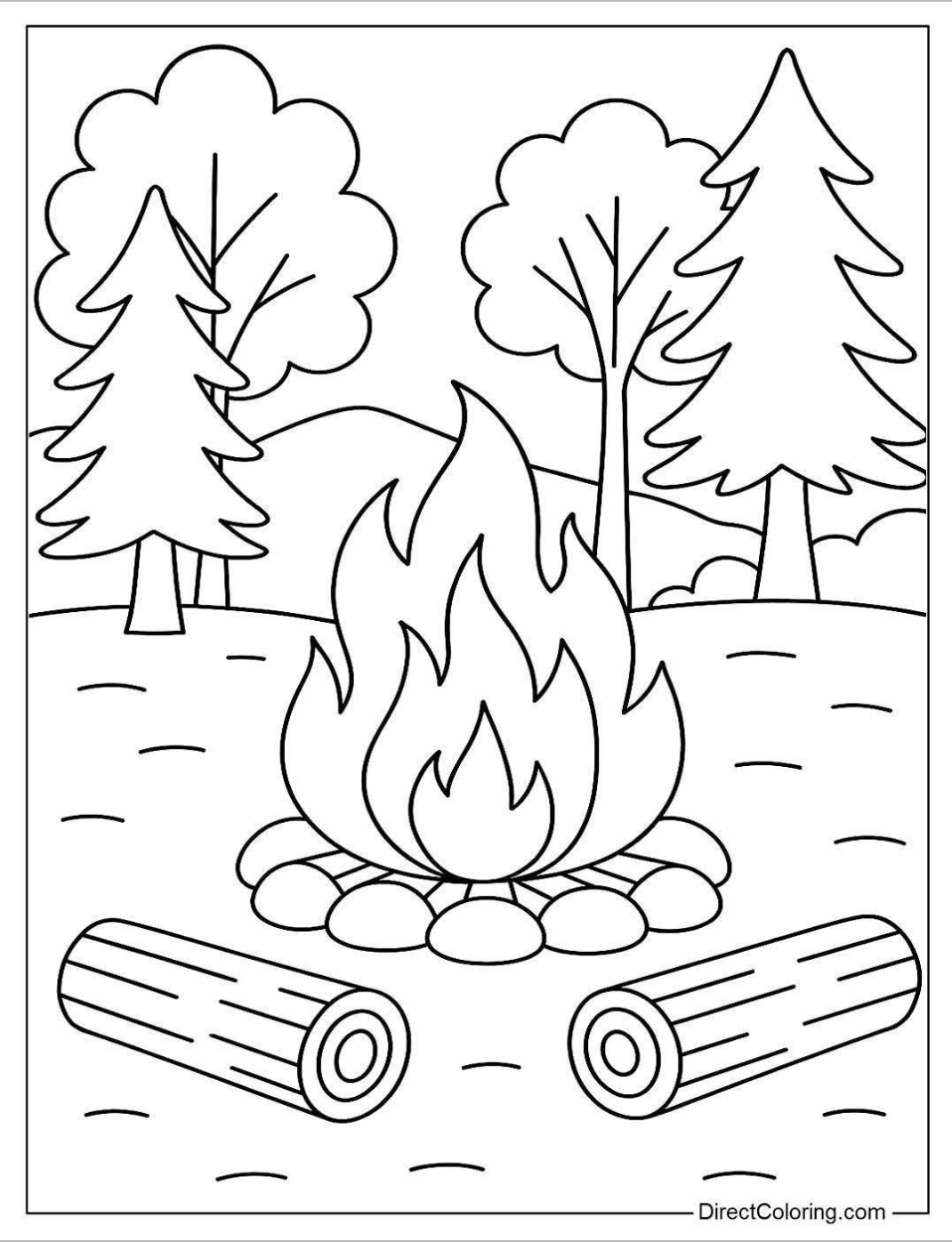
I was inspired by the mechanism of coloring books to achieve shared creation: multiple people contribute to different parts of one image and completing a collective visual.
Using masking and projection mapping, each side of the installation controls a different layer of the campfire scene.
Their separate inputs combine into one shared visual outcome.
Visual mechanism:
Designing the interaction system
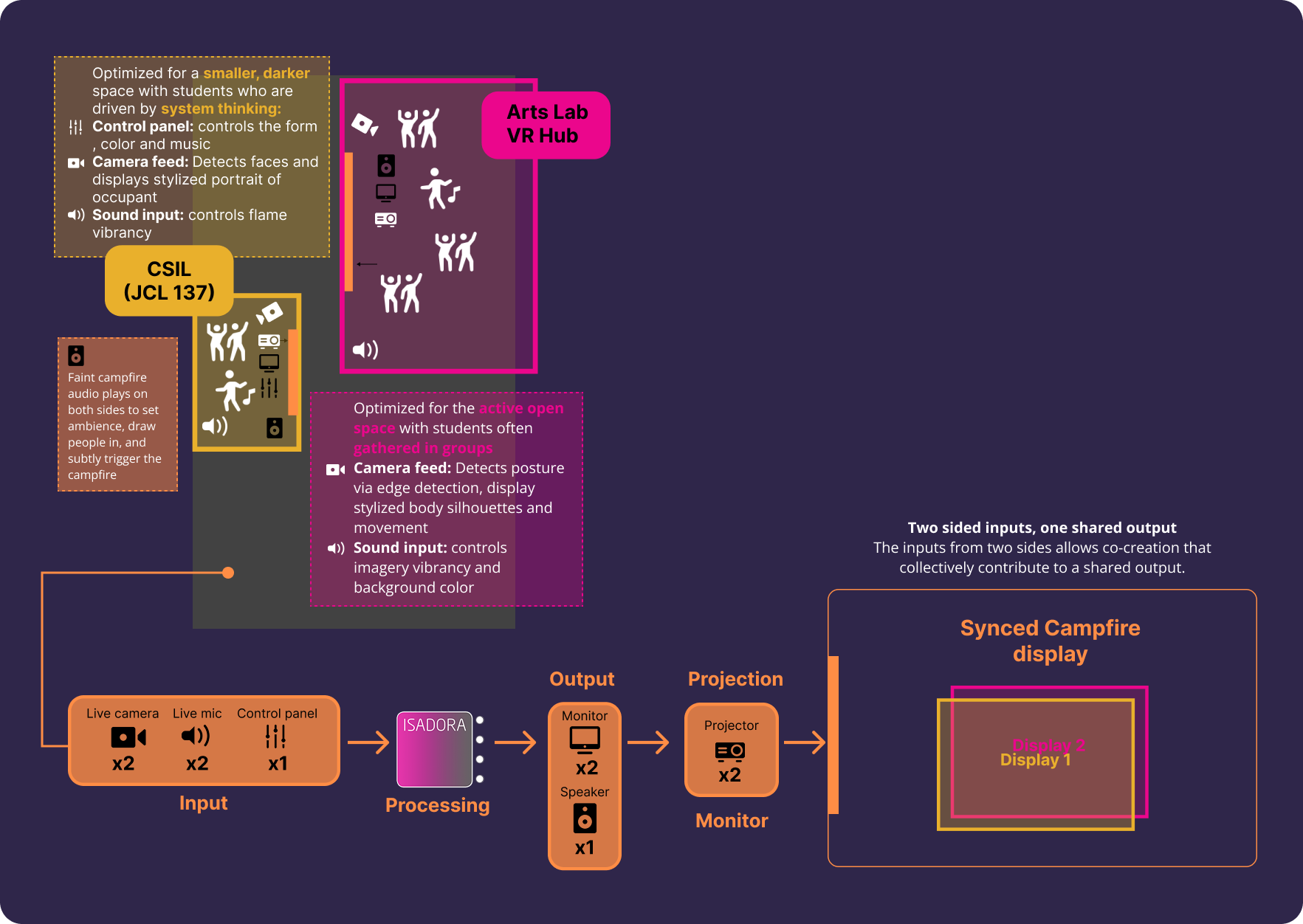
I then mapped the technical inputs required to make each community’s contribution visible in real time.
The system is designed to ensure smooth intuitive play to minimize the barrier of interaction, and catered to each space and the people occupying them
Prototyping and iteration
Going back to the users
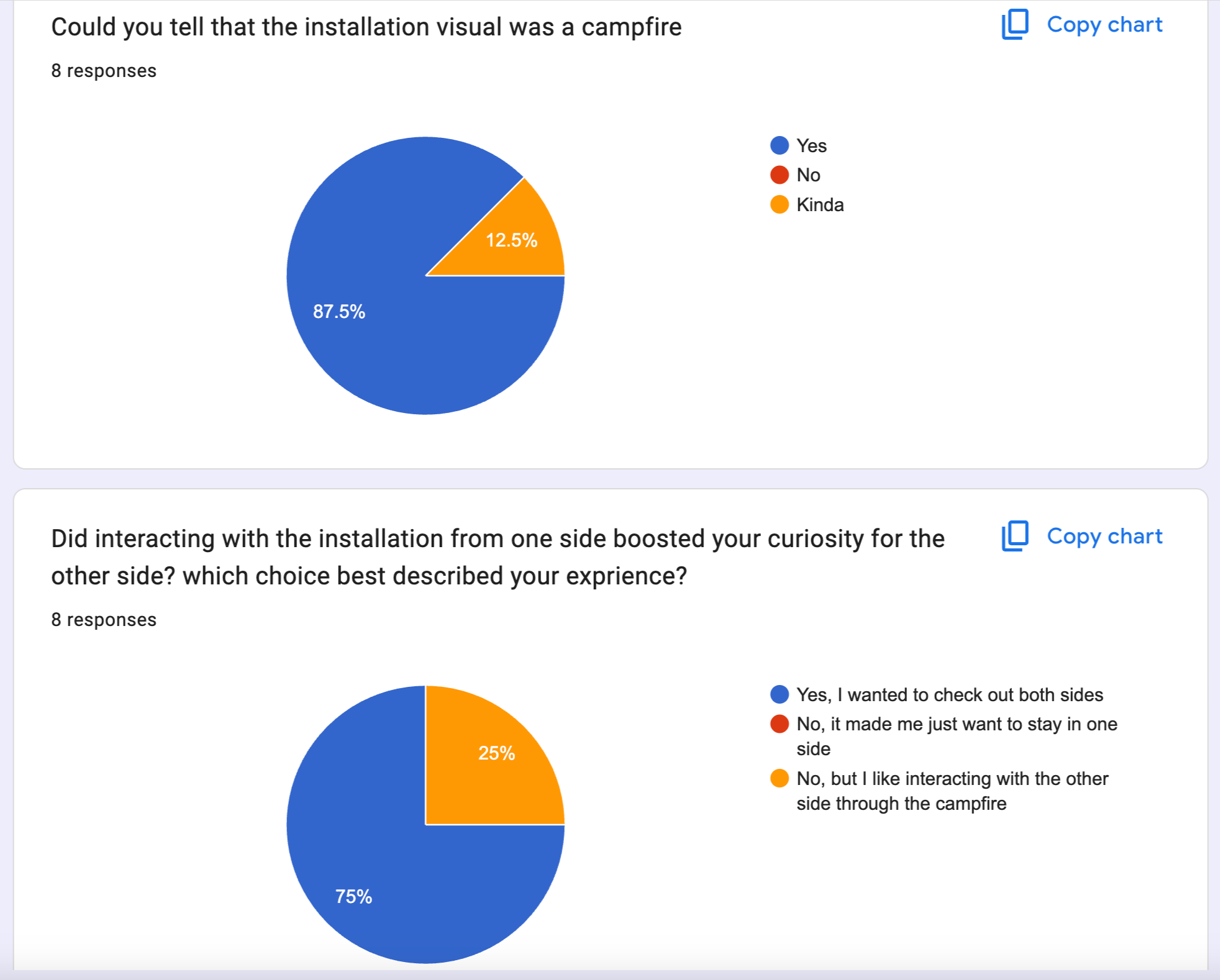
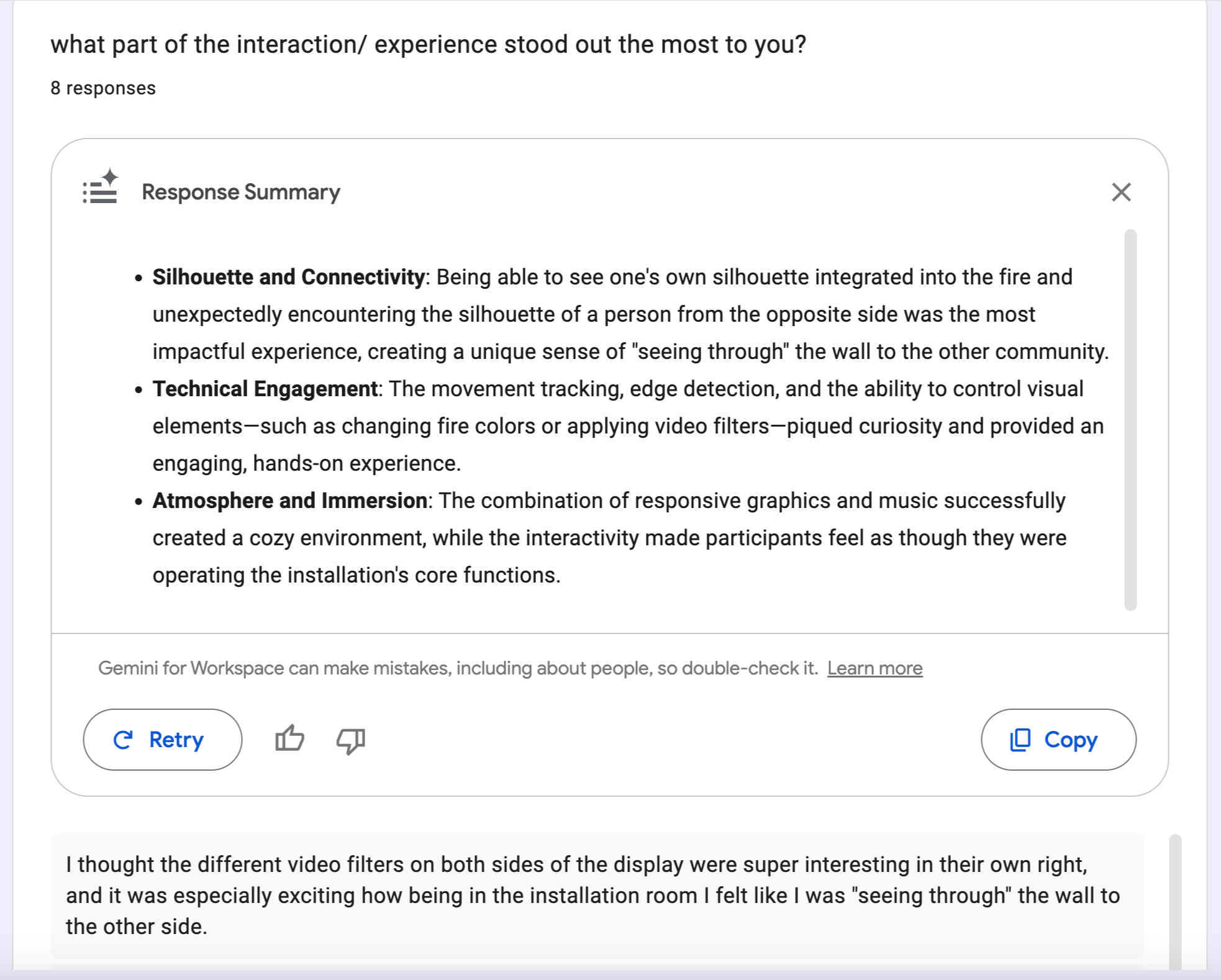
Once the MVP was functional, I invited participants from both CSIL and the Arts Lab to test the installation and complete a short post-test survey.
Since the installation was designed for the people who occupy these spaces, their feedback are essential in shaping the next iteration.
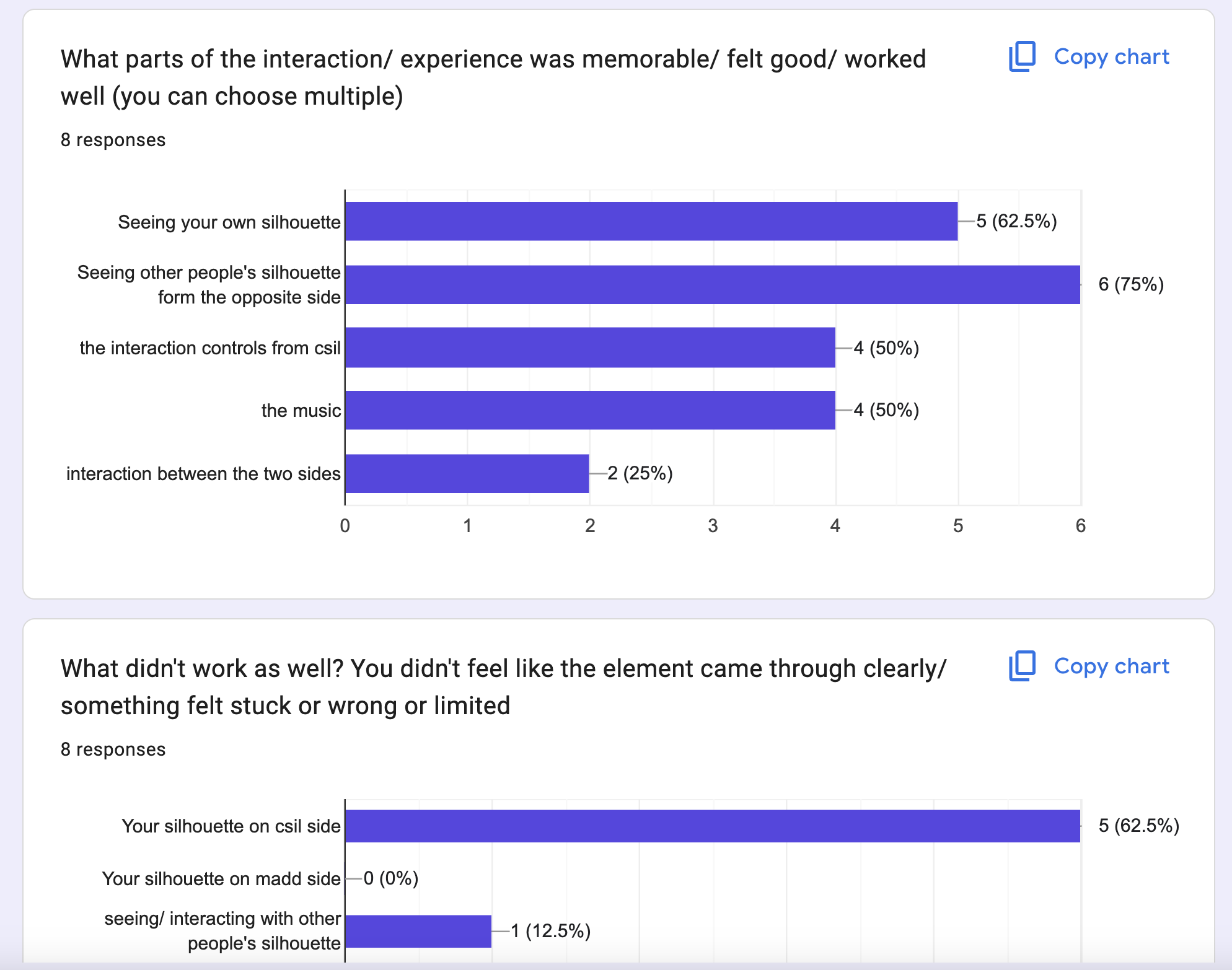
The survey evaluated whether the installation achieved its core goals: making the other side feel present, sparking curiosity, and clearly communicating the shared campfire concept. It also revealed points of friction to address in the next few iterations.
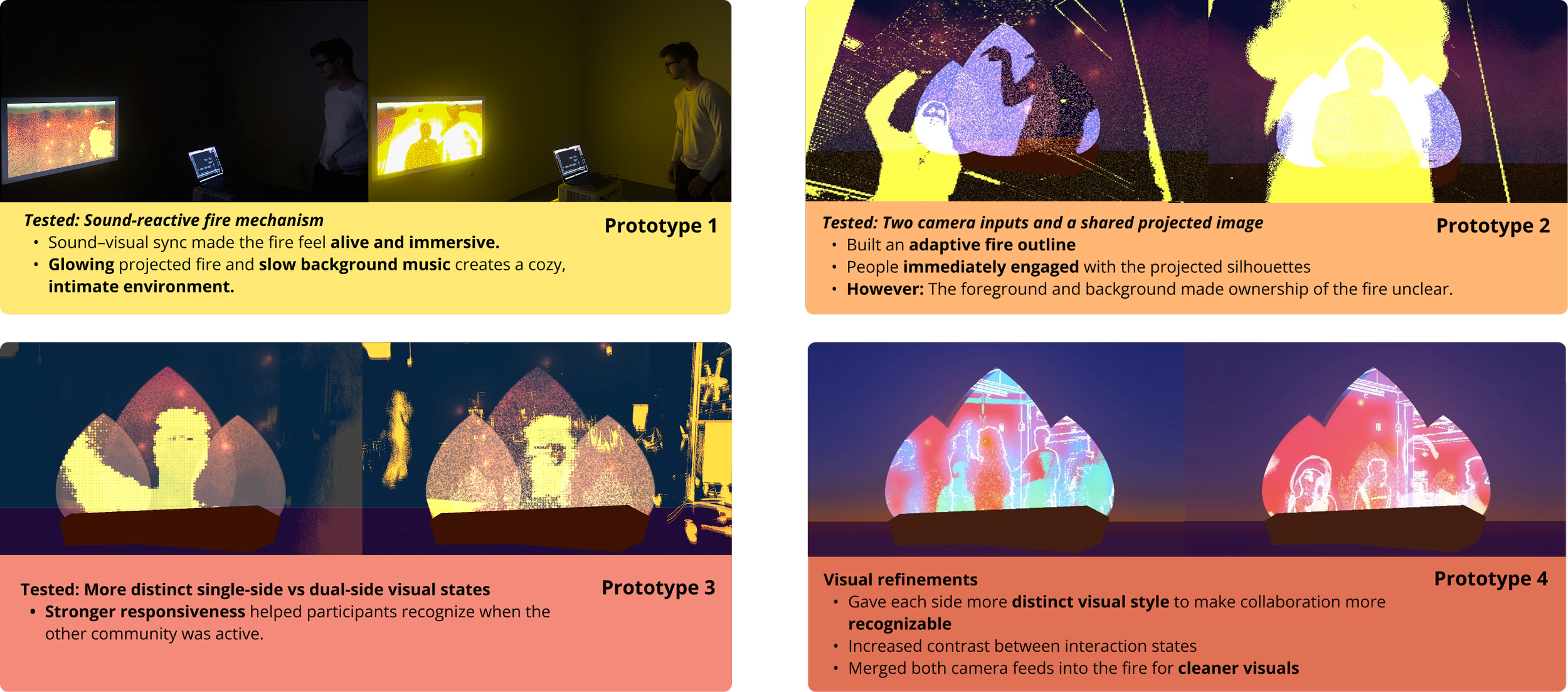
I created rounds of prototypes: from first breaking down each central element, to refining the user experience
User surveys
FInal outcome
Interaction flow & Setup
OUtcome
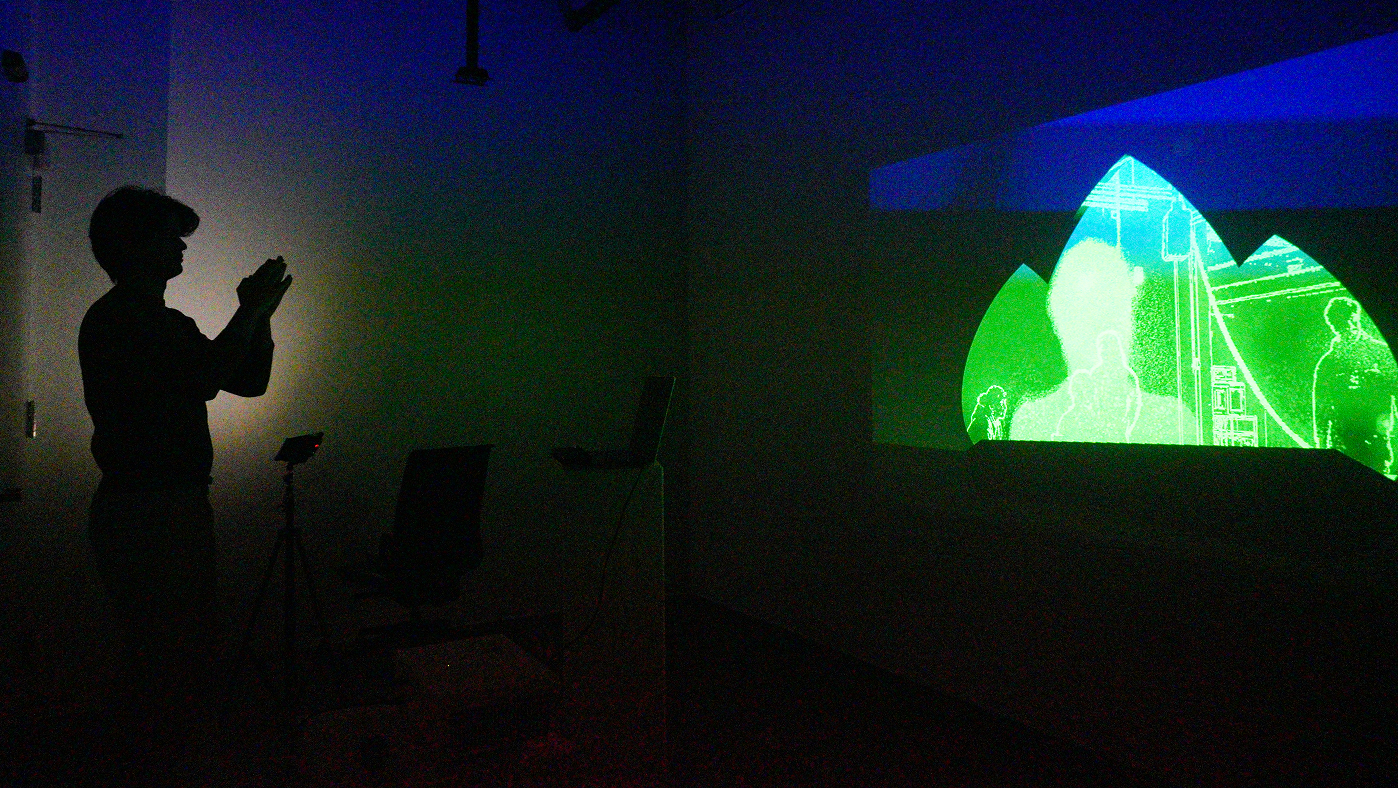
Two-side interaction through the fire
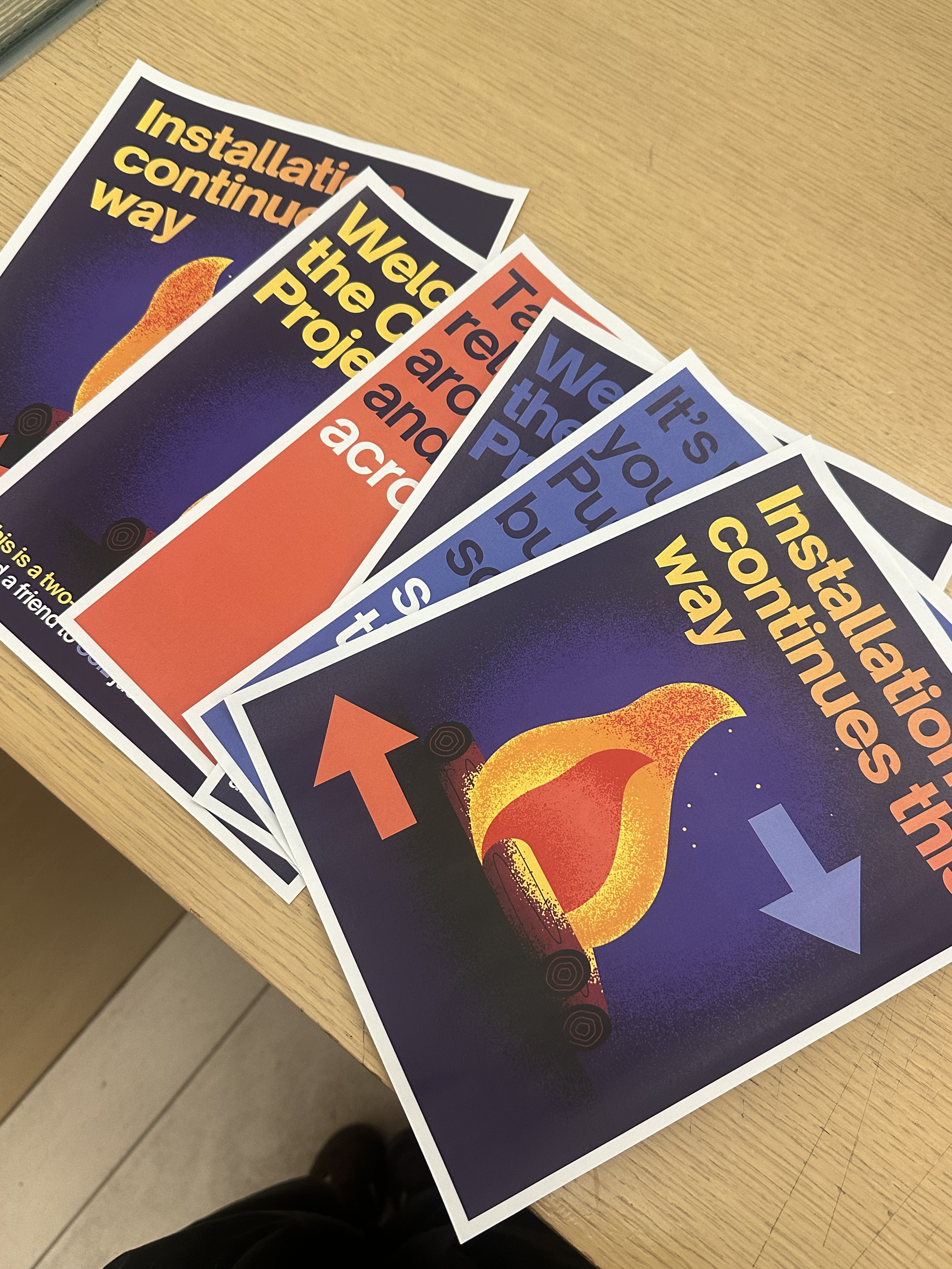
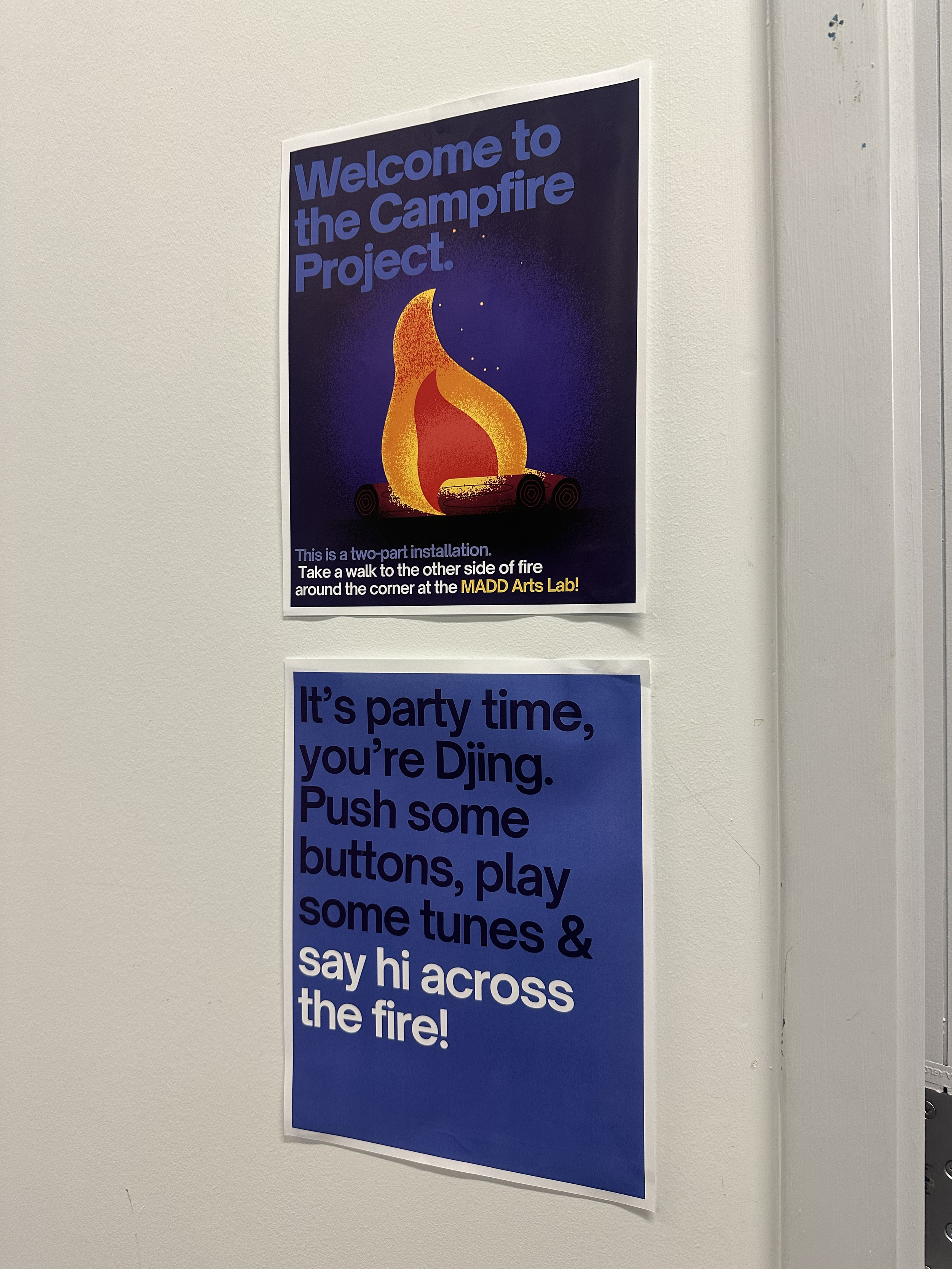
Signs are made to guide user to the two sides
The installation attracted different people on both sides. finding creative ways to interact & communicate with one another through the fire
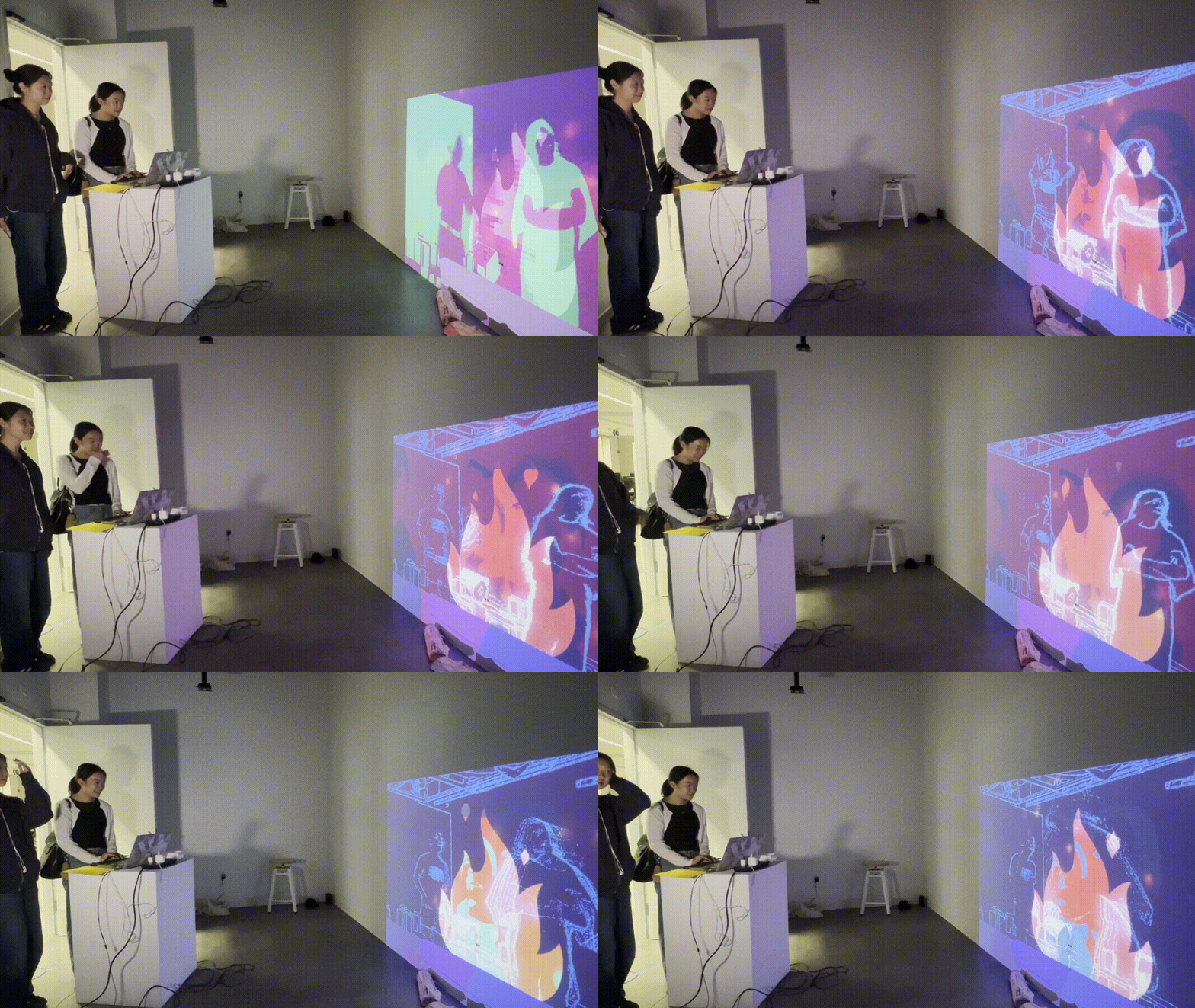
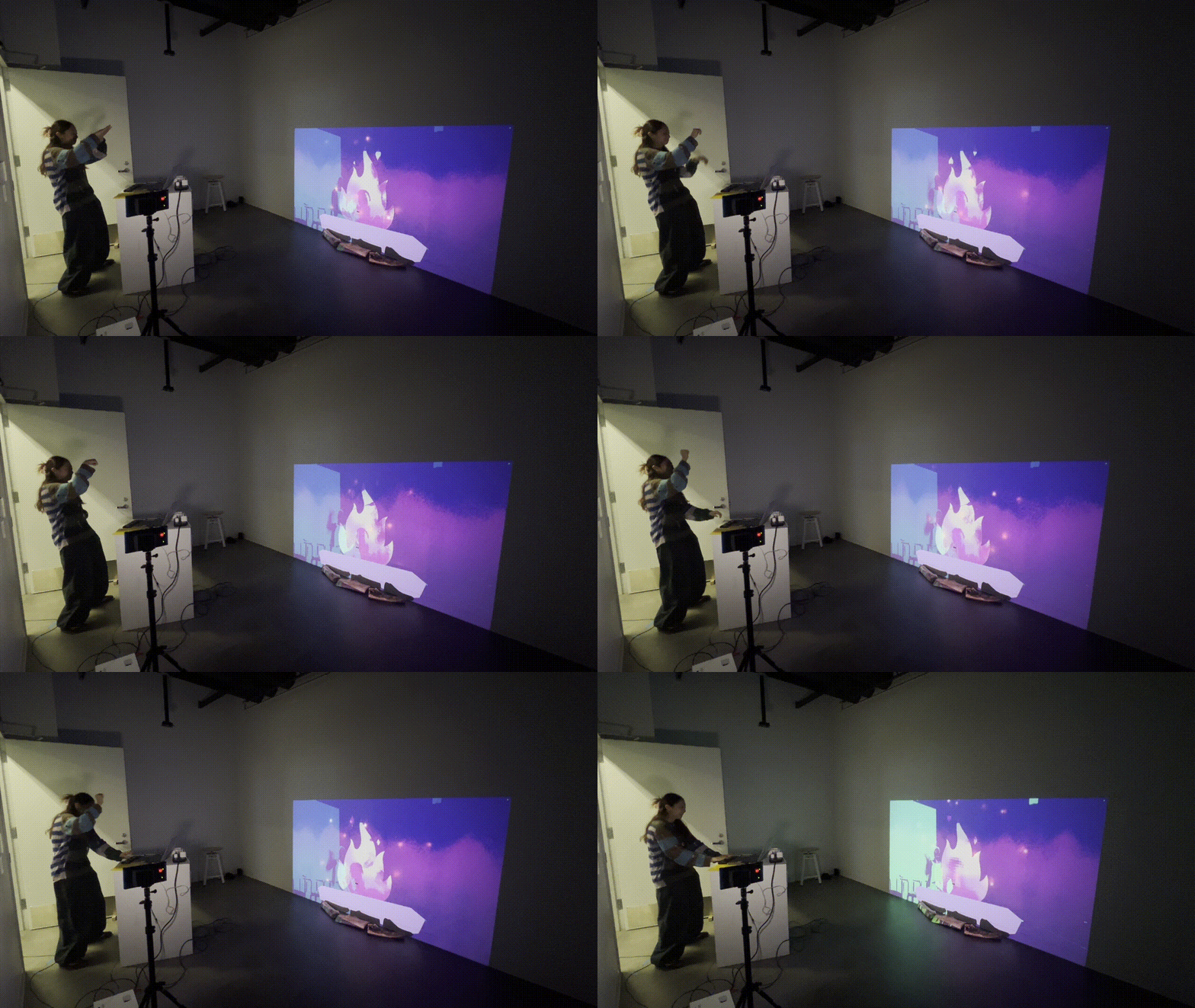
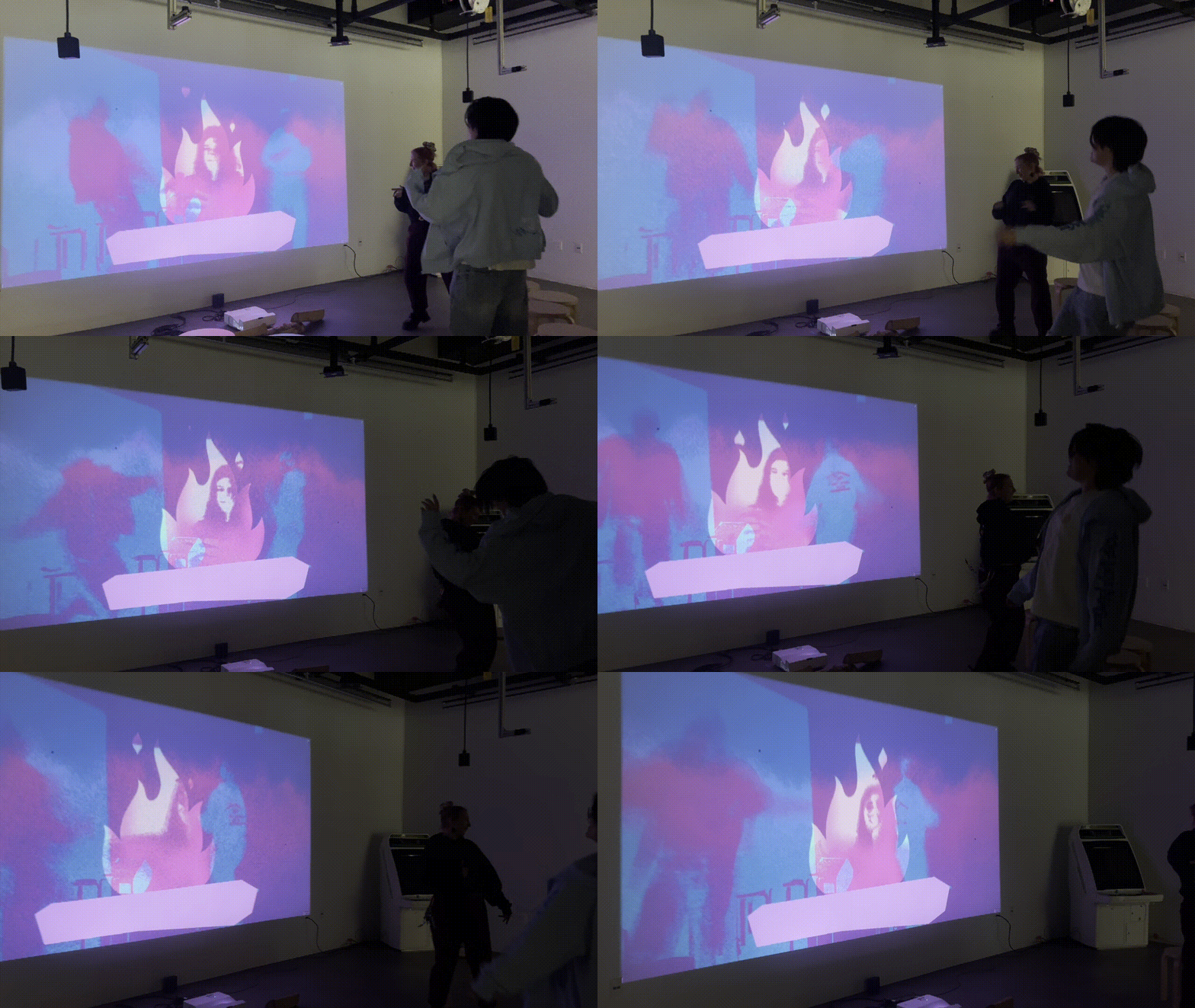
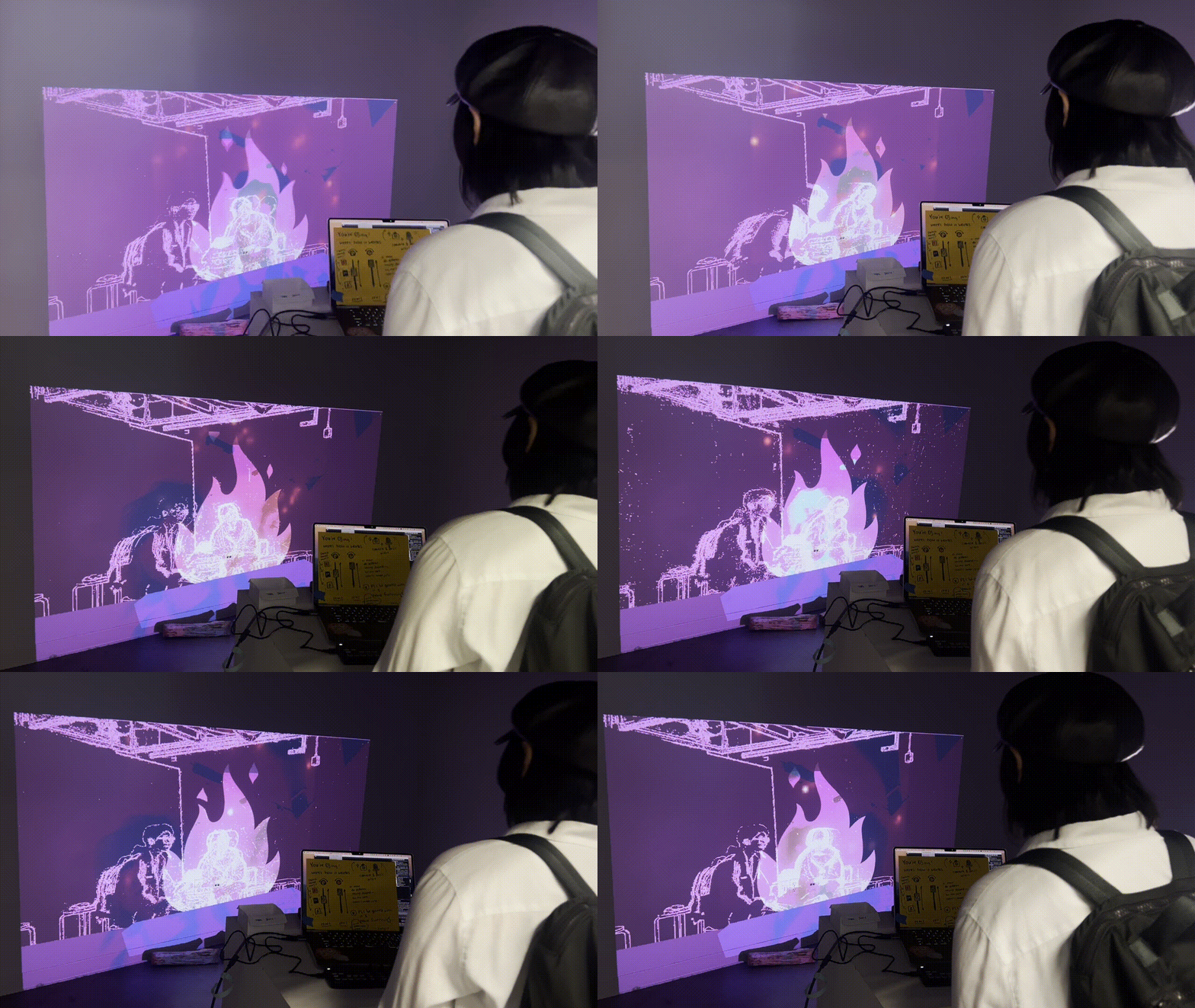
Beyond interacting with other through the fire, participants were also highly engaged with the fire itself. Some stayed for hours exploring various way they can interact and shape the fire, others jumped between both sides.
The bonfire successfully engaged occupants on both sides, and allowed more interaction to happen.
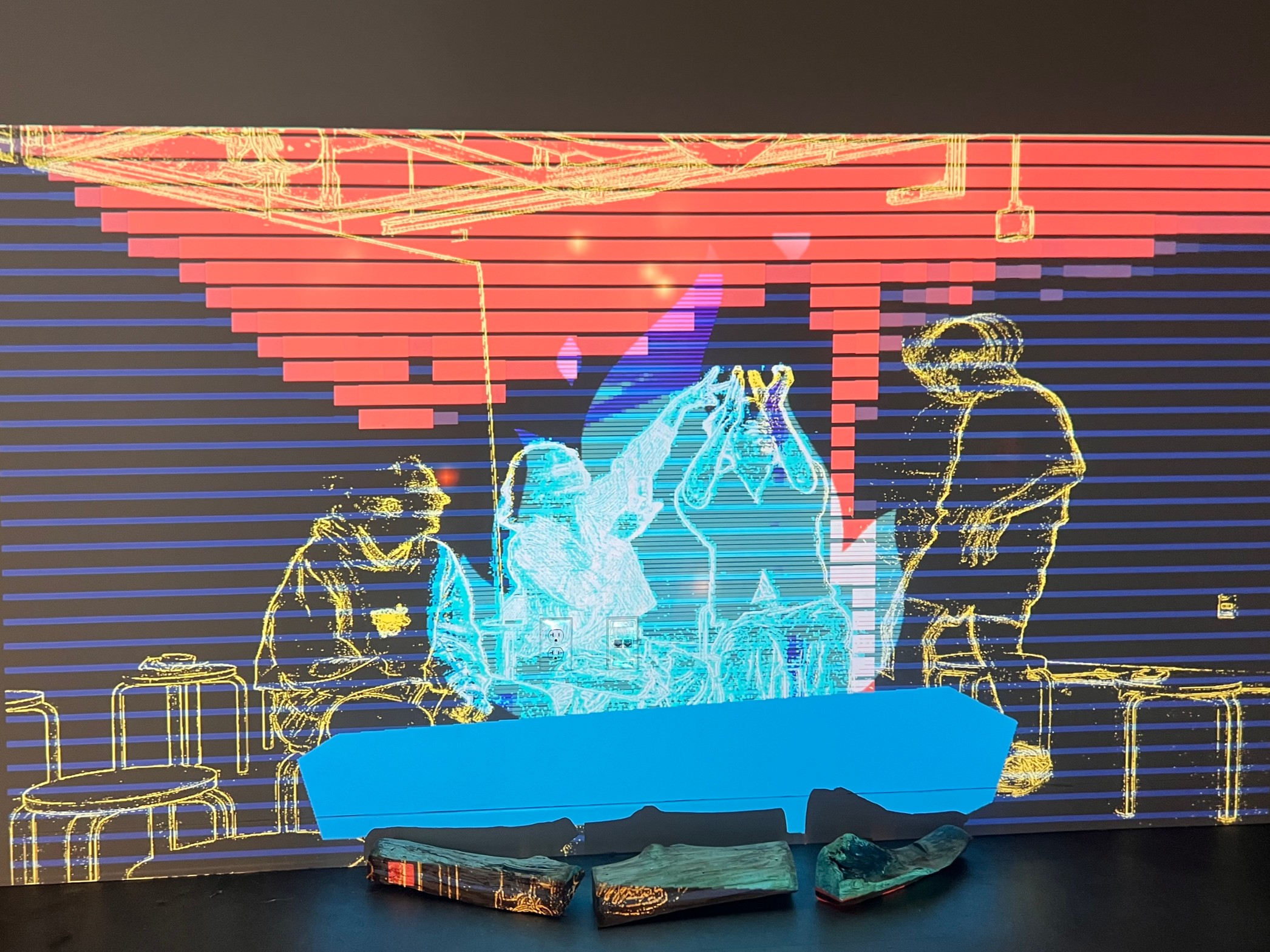
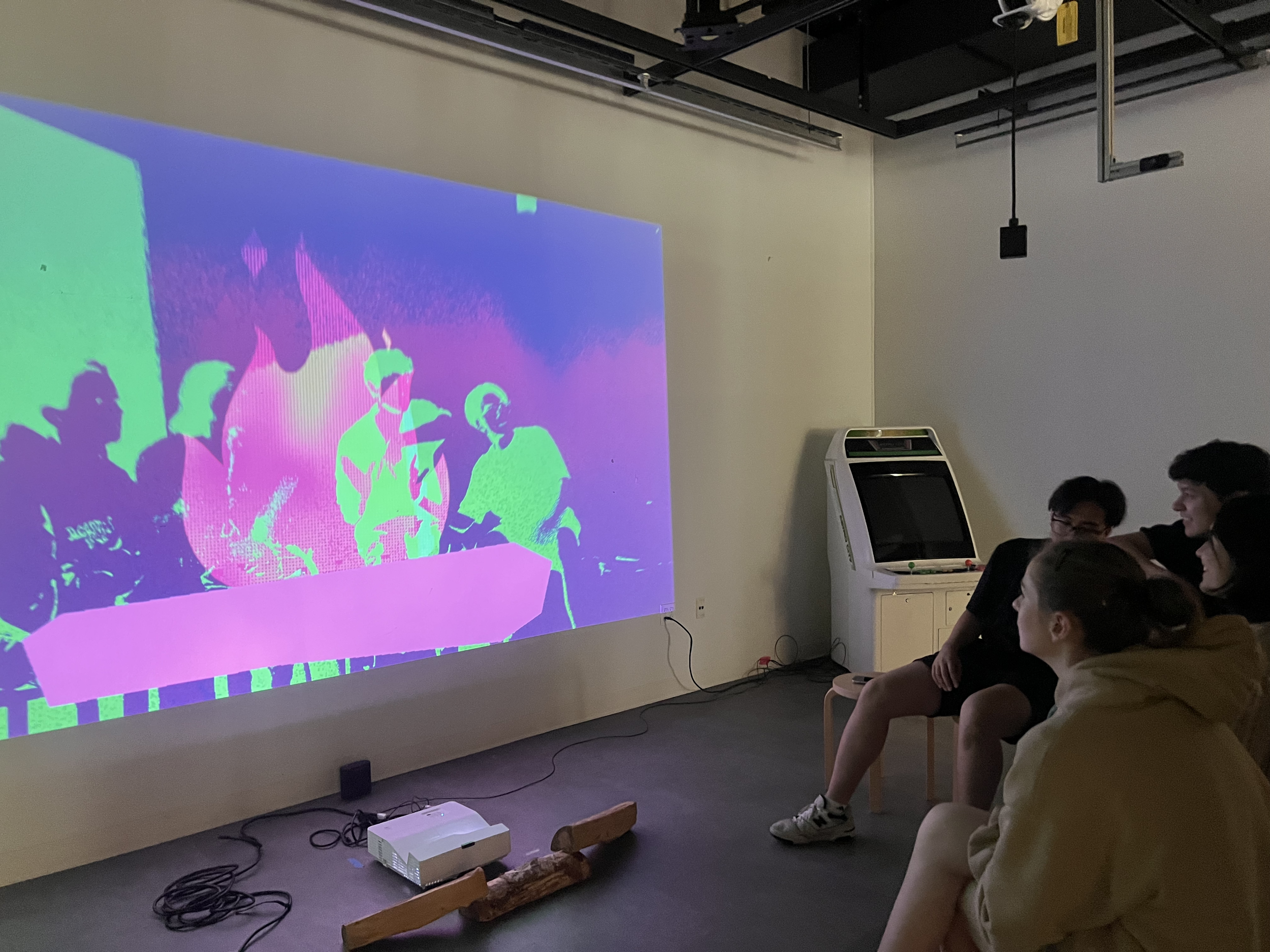
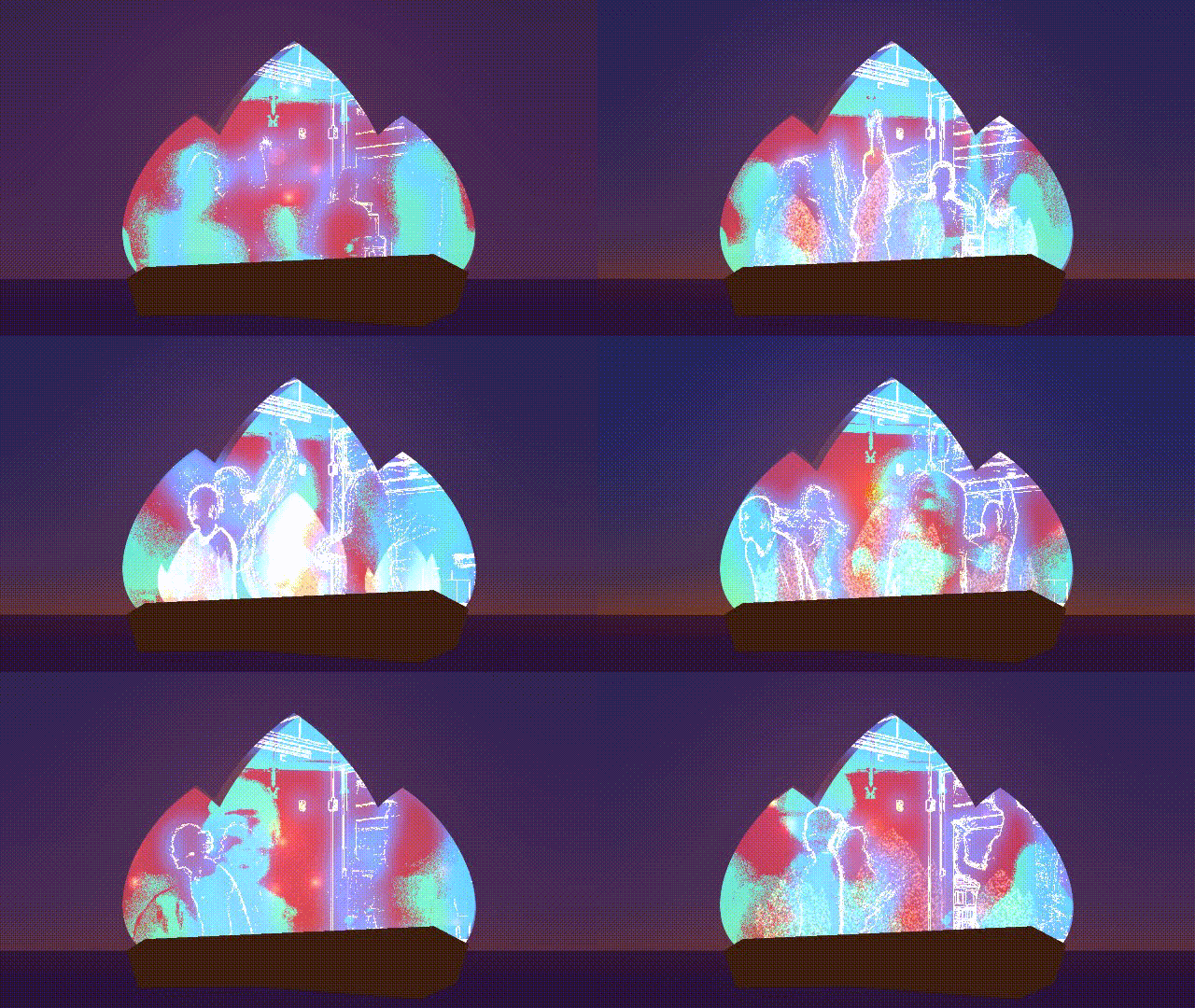
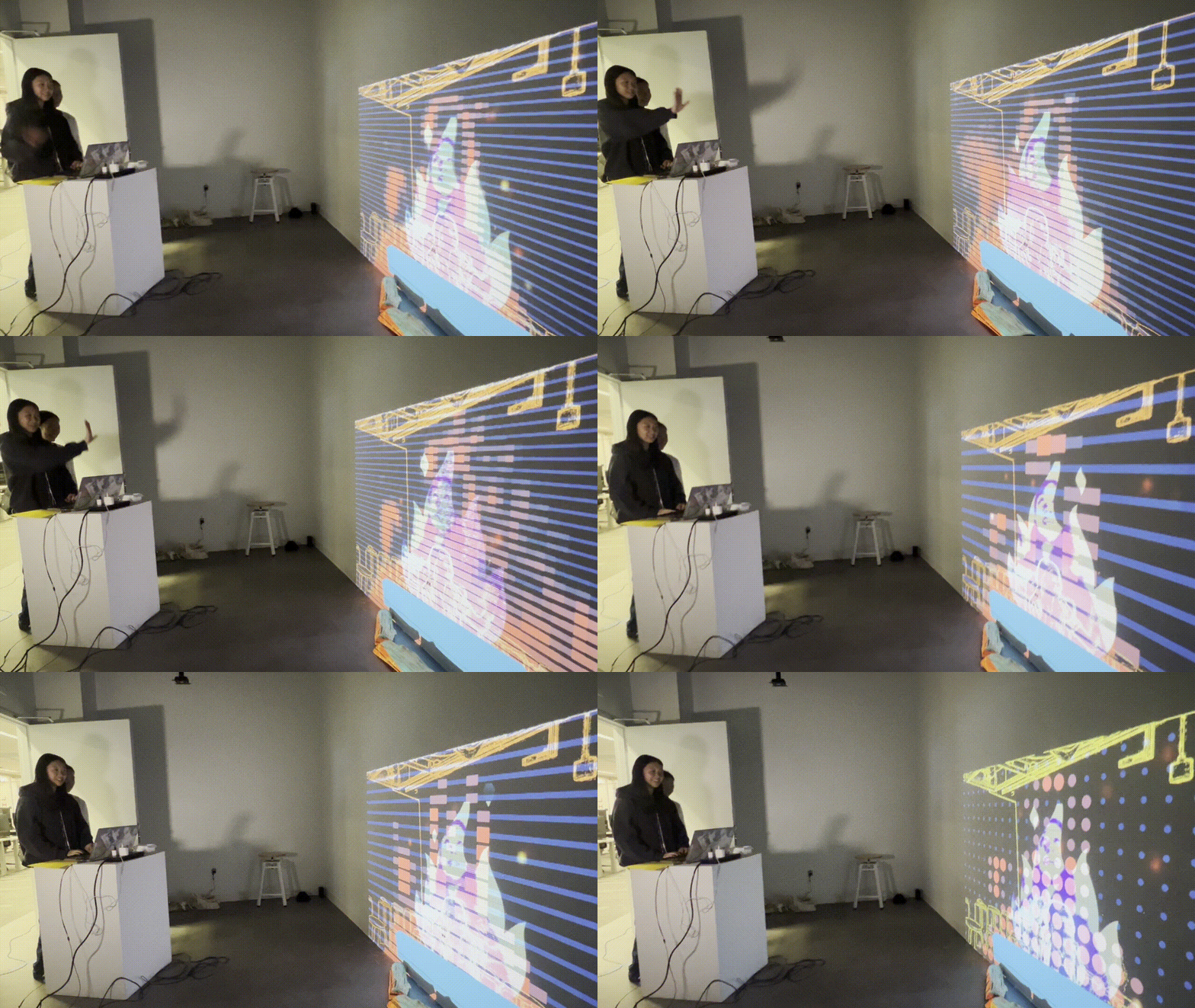
Interacting with the fire
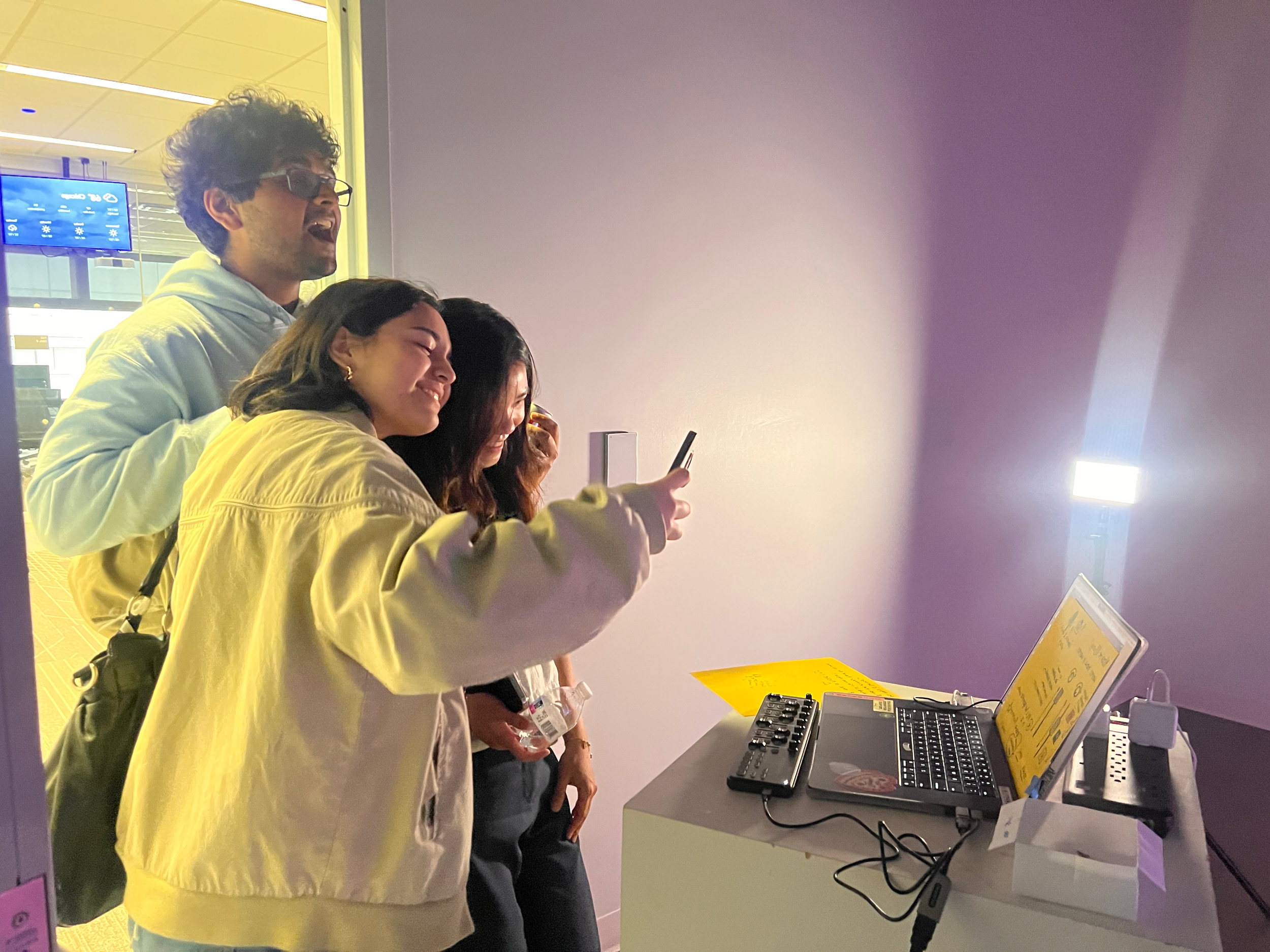
Fun imageries generated through co-creation
Co-creation
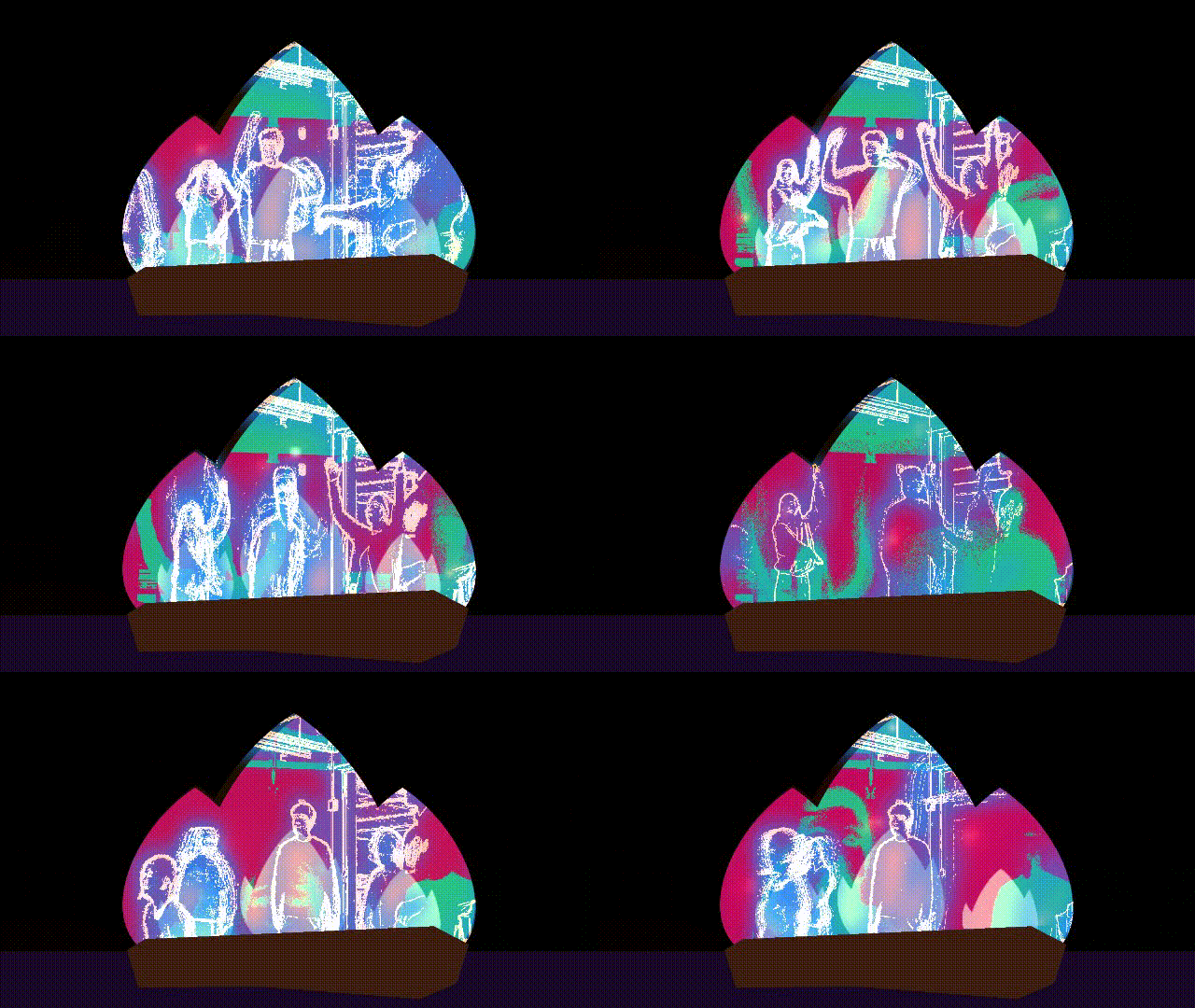
Csil user surprising the Arts Lab with a new fire form
Arts Lab & CSIL participants dancing together through the fire
CSIL user asking the Arts Lab user to dance with her
Users from both sides vibing with the music through the fire
Reflection
Wishes
Strengthen cross-space awareness: Make the presence of the CSIL side more immediately visible from the Arts Lab
Balance participation across both sides: Add richer Arts Lab inputs, such as gesture control, so both communities have equally meaningful influence
Design for long-term use: Explore how the installation could become permanent and evolve through continued community participation
What I learned
Human-centered iteration is essential: Smooth interactions emerge through repeated testing with the people who will actually engage with the experience
Changing user behavior requires clear motivation: Design can disrupt existing spatial habits, but users need clear, attractive incentive and visible reward
Real time feedback motivates engagement: Real-time responses incentivize more and longer engagement because it makes interactions feel understandable and rewarding