Project Haven
Immersive Interactive Visual Novel
Design an exciting and engaging text-adventure game to introduce incoming UChicago freshmen to its academic culture and facilitate connection making.
Challenge
Sole designer on a 20 people cross-functional team
Game UI/UX designer
Game system designer
Illustrator
Roles
Overcome functional limitations through creative design solutions
Game system design to constantly drive player retention and boost motivation
Collaborate and facilitate a cross-functional team to produce outcome in fast-paced environment
Storytell and branding using UI/UX Design
Personal goals
Timeline
2 Months
Player interaction system design
Game flow wire framing & prototyping
Interface design
Graphic design & illustration
Testing
Responsibilities
Figma
Procreate
Adobe illustrator
Html/Css/Javascript
Tools
Project background:
Project Haven is a multimedia role-playing game with 1000+ active players created to introduce incoming UChicago freshman to the university’s core academic culture while helping them connect before arriving on campus.
The challenge:
Haven combines multimedia text-adventure games like Twine and puzzle mini games spanning four islands and five chapters - a structure whose mechanics change with every chapter, from solo exploration to multiplayer puzzles to social features. The core challenge is to create a navigation system that is adaptable across all chapters while keeping it intuitive for players to interact with.
Outcome:
As the sole UI/UX designer on a 20-person cross-functional team, I shipped 50+ adaptive interfaces and visual assets. I designed a centralized system that streamlined the experience: an in-world "notebook" that gets unlocked chapter by chapter so players don’t have to relearn navigation. I mapped each chapter's player goals against required features, designed a narrative interface system that was optimized for visual engagement and text display with constant iteration with the engineers to optimize implementation. Seeing friction points in puzzle completion due to motivation drop, I built a sticker reward feature that was reported by the players as one of the most liked feature during and after gameplay.
Project Summary
Understanding the narrative and requirements:
A game that changes as players progress
Game background & World building
Project Haven takes players across four islands, each representing a different academic discipline. Over five chapters, the experience expands from narrative onboarding and solo exploration of one allocated island to multiplayer puzzles, free island exploration, social interaction, and reflection.
Together, the goal is to create an interconnected system that encourages students to engage with multiple disciplines rather than remaining confined to one.


To design the interaction experience systematically, it is important to ensure that it is an adaptable system that can work across all game structure.
Working with the PM and narrative lead, I mapped each chapter’s player goal, interaction type, and required features. The experience grew progressively more complex, from orientation and exploration to puzzle solving, collaboration and reflection
MAPPING THE EVOLVING GAME SYSTEM
Working with limitations: requirements, functions & constraints
Product Logic Map

Understanding our player needs
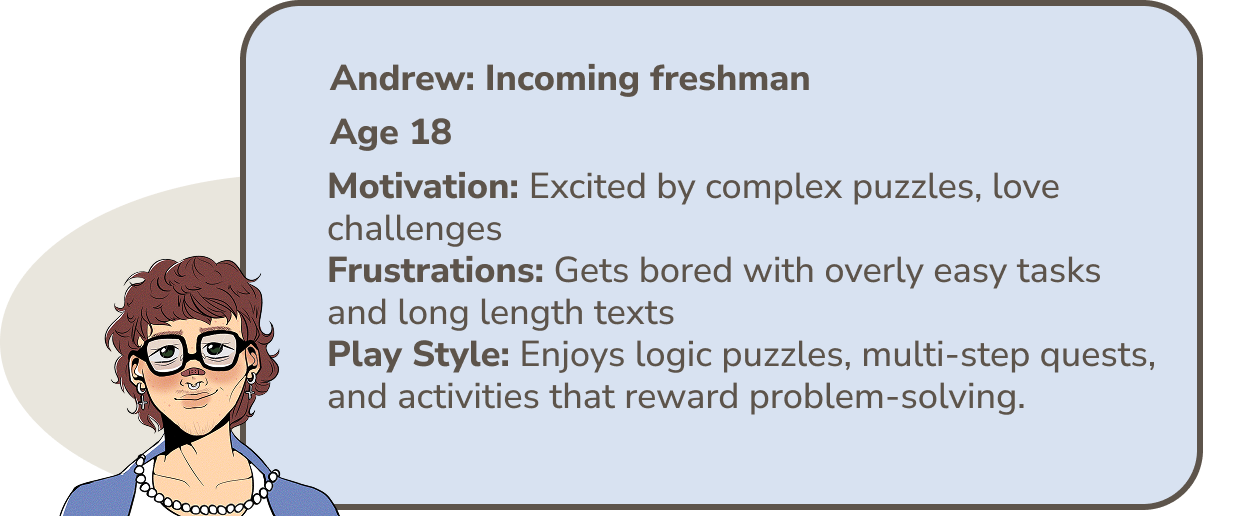
After clarifying the game structure, I interviewed a few incoming students to understand what would make the experience inviting and worth playing.
2 constrasting player types
Interviews revealed two contrasting player types. The experience needed to remain approachable for casual players with engaging narrative without limiting those seek depth in puzzle solving and game play
Puzzle lover
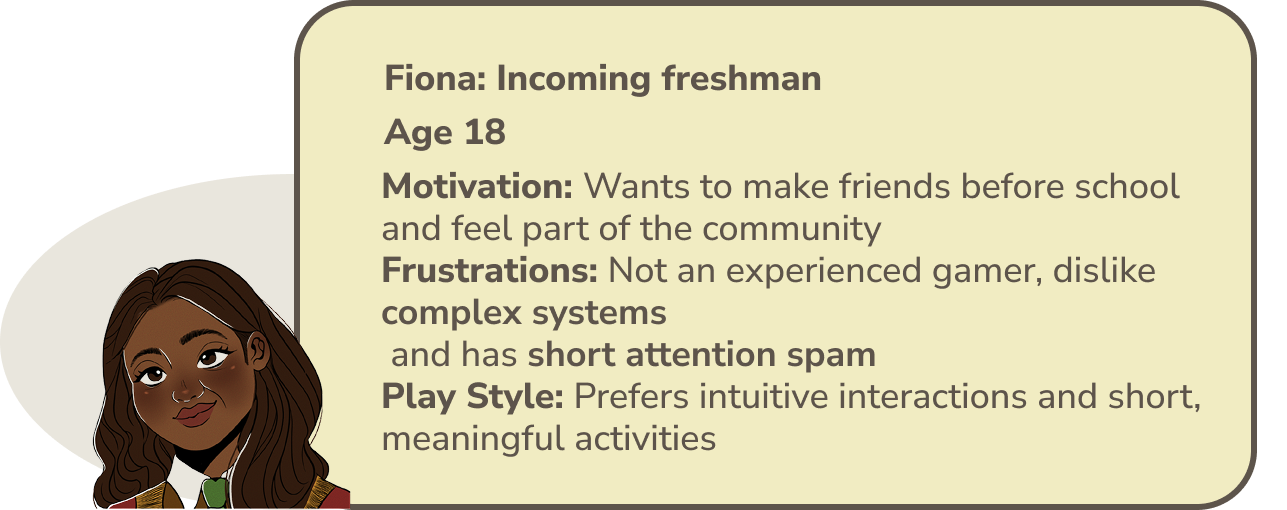
Social player
The system needs to offer both gameplay depth and frictionless game navigation and social interactions!
Design Synthesis
Combining user pain points, feature requirements and project constraints, I listed out my specific design goals as a game UX designer
The interaction system has to:
Flexible
Adapt across chapters with new mechanism without forcing players to relearn the game systemIntuitive
Make progress, available activities and next steps immediately understandableMotivating
Reward exploration and puzzle completion to encourage continuous gameplayVisually clear & cohesive
Give each island a distinct identity while maintaining clear narrative & puzzle layouts
Ideation
Wire framing & Iterative design
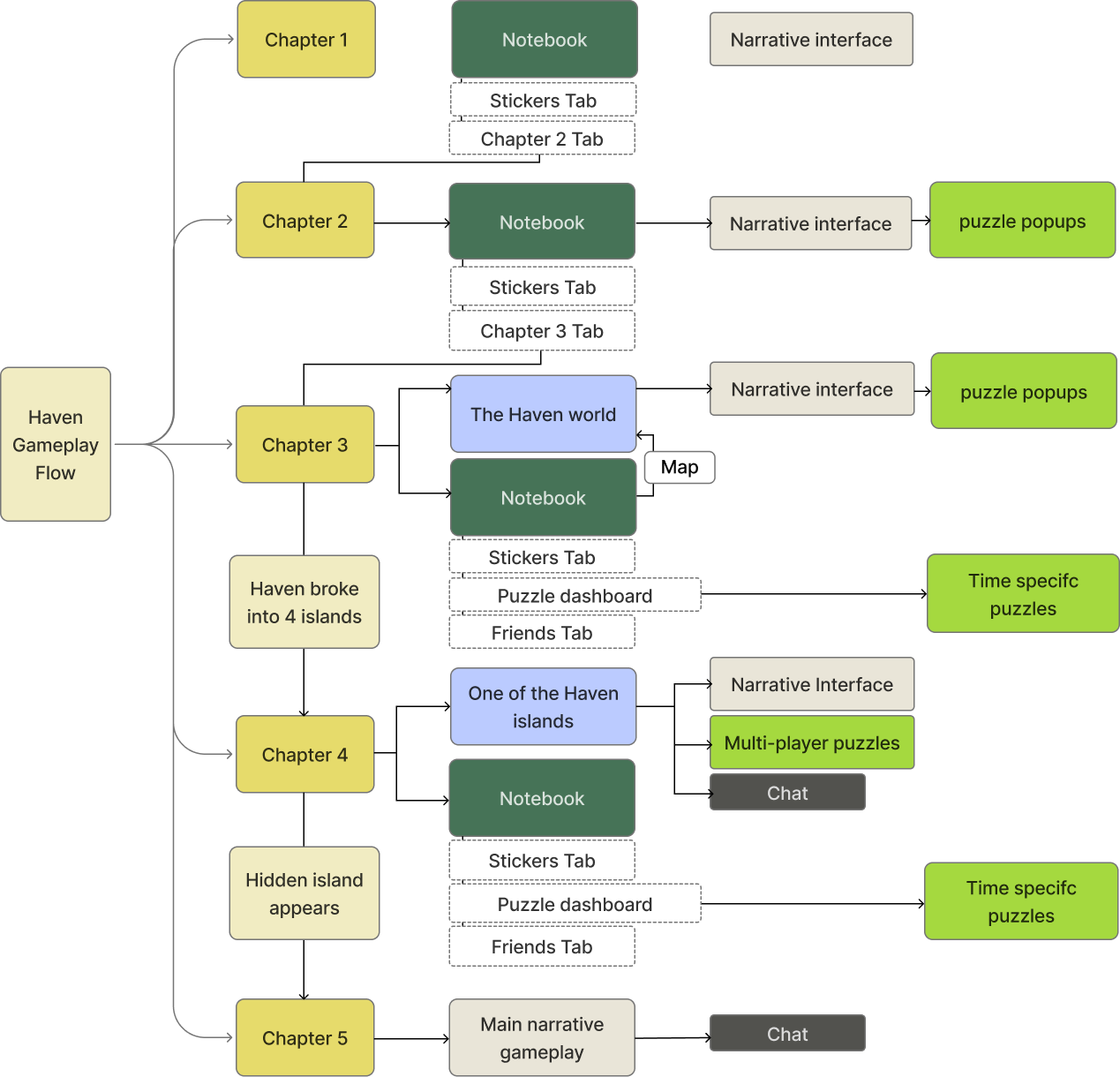
I map the game structure to the notebook system to explore how the notebook could scale with the game.
Chapter 1-2 introduced onboarding, chapter tabs, and rewards
Chapter 3-5 added maps, time-sensitive puzzles, friends, and multiplayer tools
Designing the game flow
Challenge: Each chapter introduced new goals and mechanics, but players still needed one familiar place to understand what was available and what to do next.
Solution:
THE NOTEBOOK concept: ONE SYSTEM THAT EVOLVES WITH THE GAME
Inspired by the idea of a “student notebook”, I created an in-world central hub that expands with the game, from onboarding and chapter navigation to puzzle access, friends, progress, and rewards.
The notebook offers:
Familiarity: The notebook metaphor feels immediately understandable to students
Flexibility: New tabs and functions can appear as the game becomes more complex.
Immersion: The system is very cohesive with the academic theme narratively
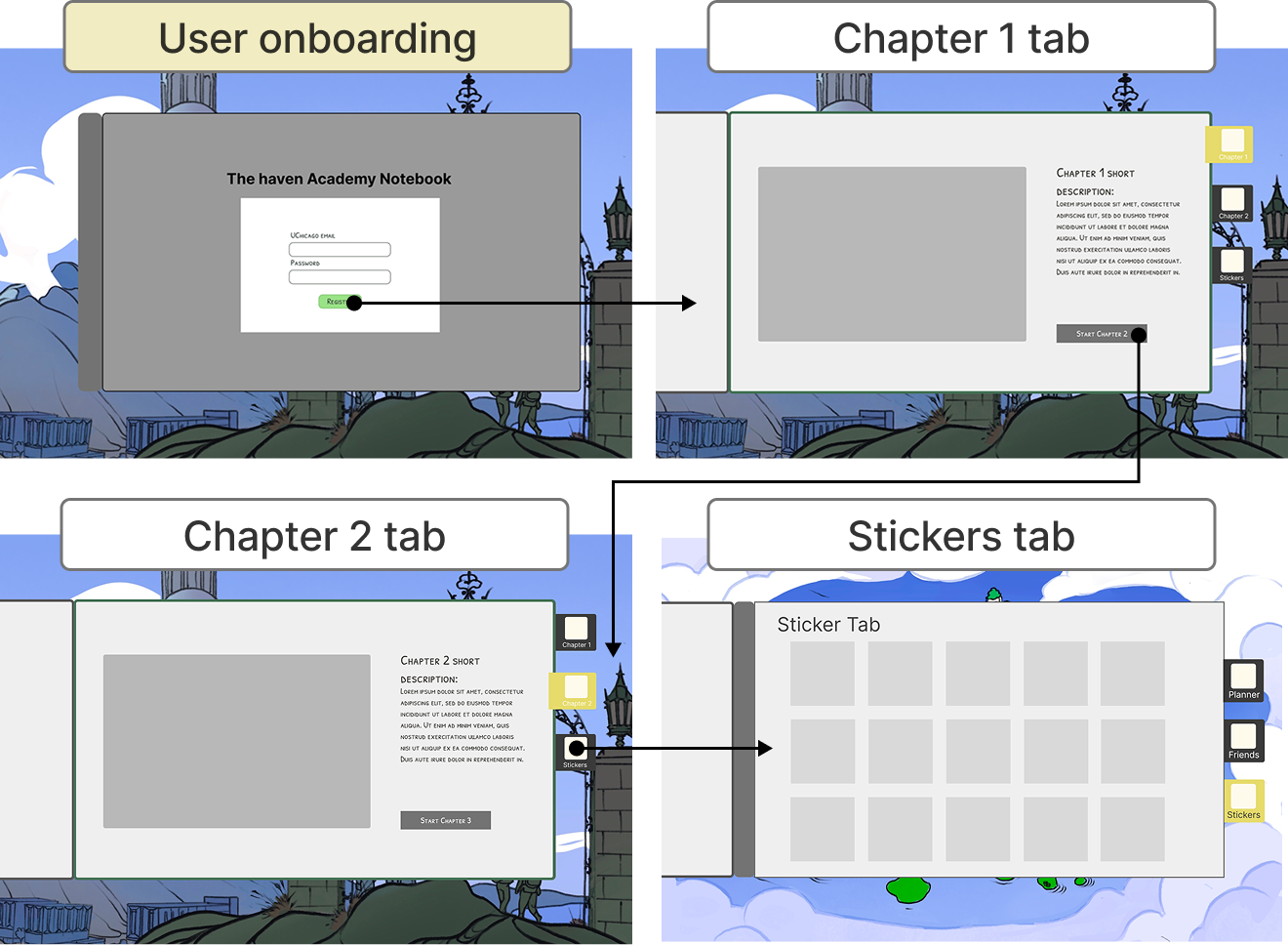
Chapter 1 & 2
Chapter 3 & 4
Creating prototypes allowed me to recognize inefficient flows within the interface and systems.Through iterative design, we recognized specific player pain points and significantly enhanced the gameplay experience.
Example:
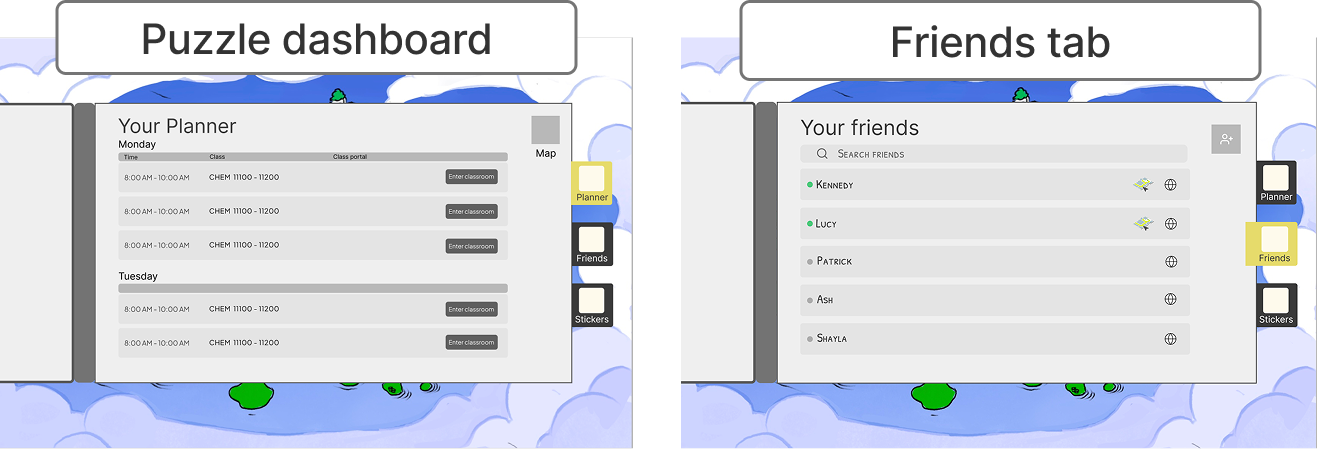
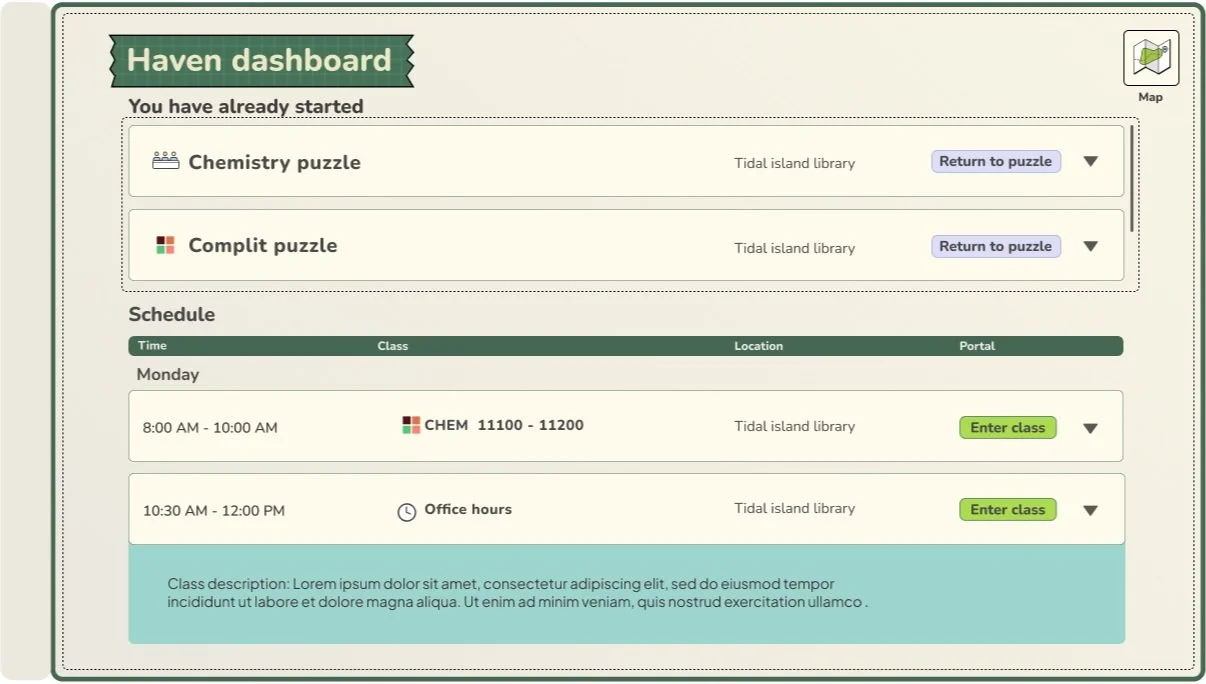
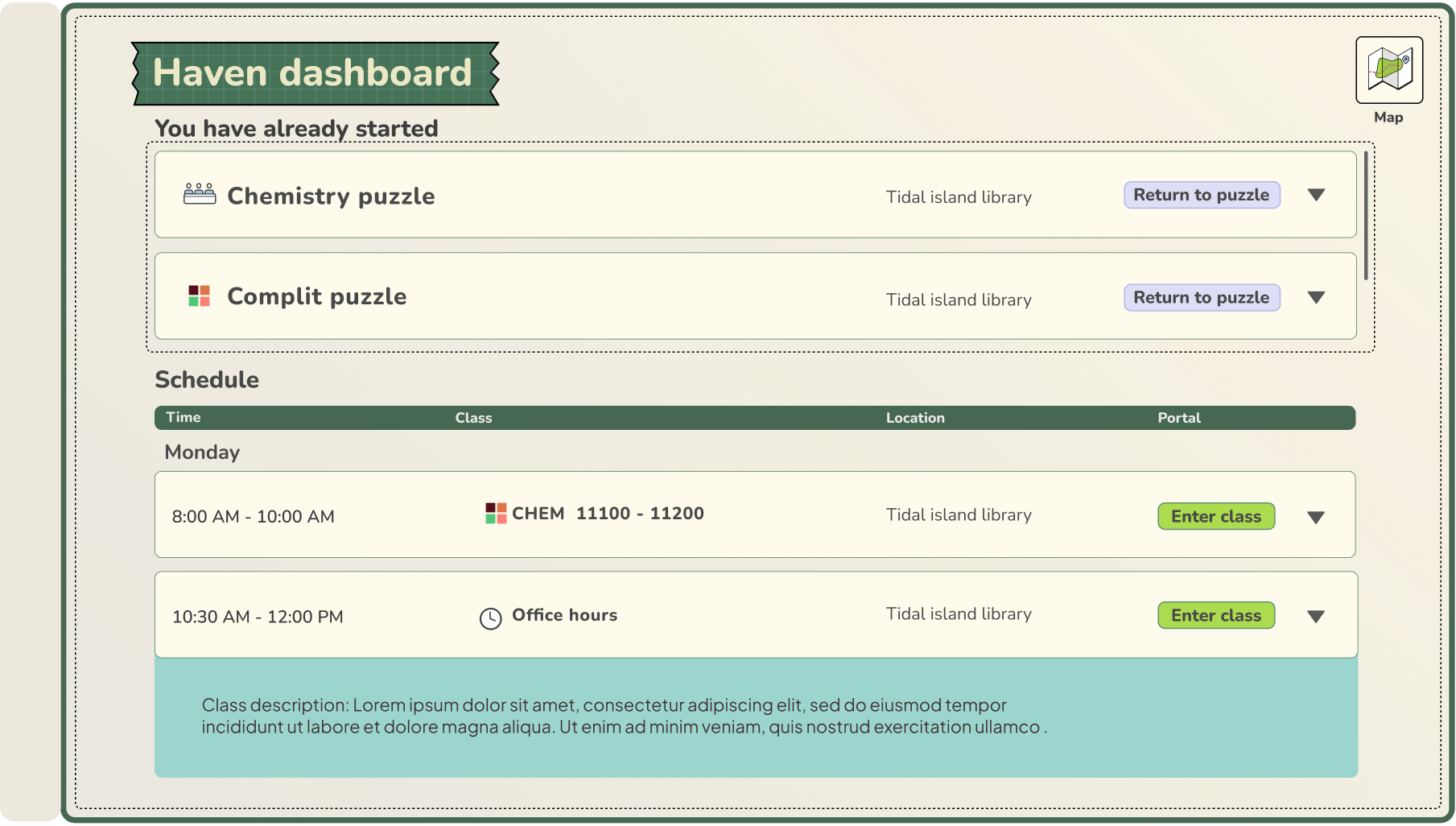
After navigating through the prototype, we identified a navigation gap within the planner system because players couldn’t easily access puzzles they have opened which increased friction and decreased puzzle motivation.
Iteration:
I redesigned the planner as a dashboard that pinned the opened puzzles to allow quick access
Additionally, to improve game information clarity, I used different icons to visually differentiate any time sensitive activities in the game
Players can now quickly access unfinished activities without navigating backward through the islands and have a clear overview of all available time sensitive tasks.
Iterative design

Before
After
Building one visual language across four worlds
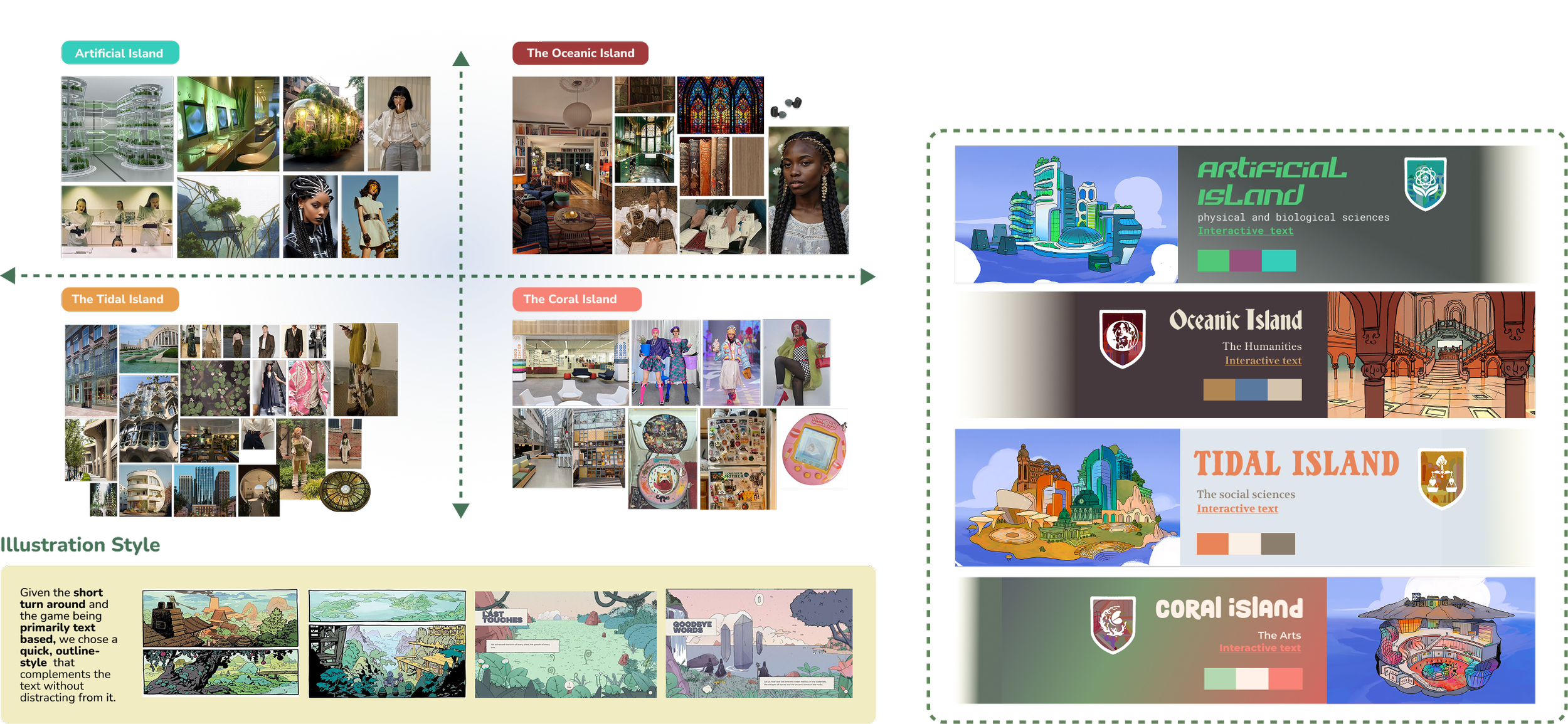
I worked with the character designer and illustration team to establish shared visual guidelines for color, typography, illustration, and interface
What drove our decision:
For the players: We selected a clean, semi-illustrative stylesuited for college students (in comparison to eg. overly stylized, decorative or childish styles)
For the team: We chose a style combination based on the tight turn around and one that can be adapted well cross both illustrations and interfaces
The system ensures that the art team can work simultaneously to create cohesive game visuals and allowed me to prototype Hi-fi interfaces quickly
Designing the narrative interface
How could the interface support long-form narrative without hiding the world players were exploring?
The core challenge for designing the narrative interface is that it needed to support 50–100 words of text while preserving the environmental artwork that made each island feel immersive
I tested three layouts to find the clearest balance between readability and visual visibility
Another essential part of my role in the project is designing visually attractive interface that allows each island to feel distinct while ensuring a cohesive game identity

Optimizing text box layout
The majority background is covered up and the text became less readable

The background can be seen but the text box cannot support longer texts

Has a dedicated reading area while keeping the game world continuously visible
Final Outcome
final Narrative interface
After standardizing the basic layout, I designed high-fidelity narrative interfaces reflecting each island's distinct characteristics, following design guidelines shown earlier.
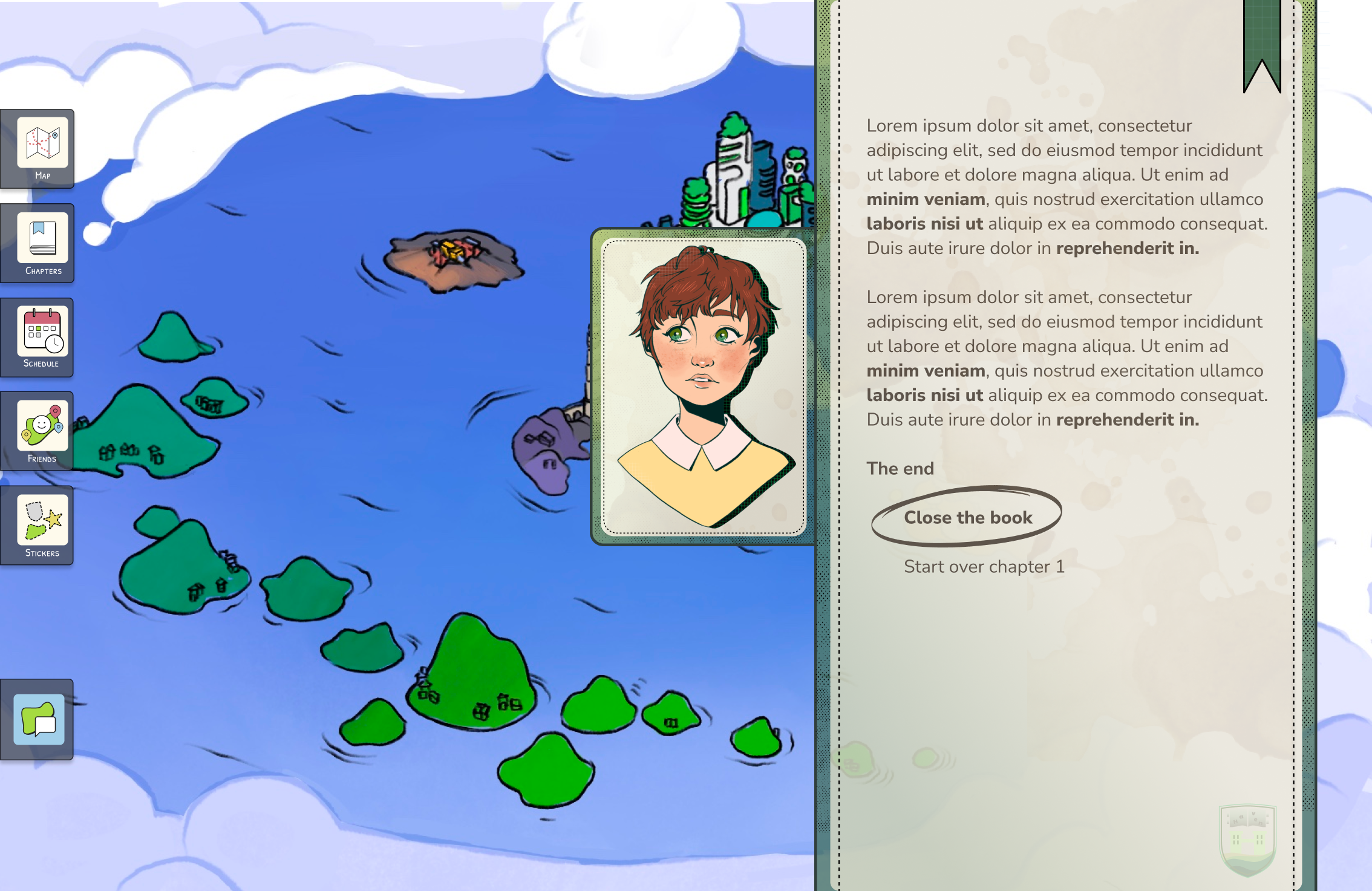
For Chapters 1 and 2 for instance, I incorporated notebook-inspired elements like ink splashes and bookmarks to reinforce the narrative of the island’s academic and notebook theme.
Hi-Fidelity: The notebook
Chapter 1&2 notebook system - Game introduction & Orientatioin (Sound on for some ASMR!)
The notebook in chapter 1 & 2 acts as a platform that allows users to set up their profile, fostering a sense of personalization & facilitate Chapter transition.
Chapter 3 & 4- Puzzle Solving and Exploration
The notebook expands into a central toolkit for navigating islands, resuming puzzles, tracking schedules, and connecting with other players
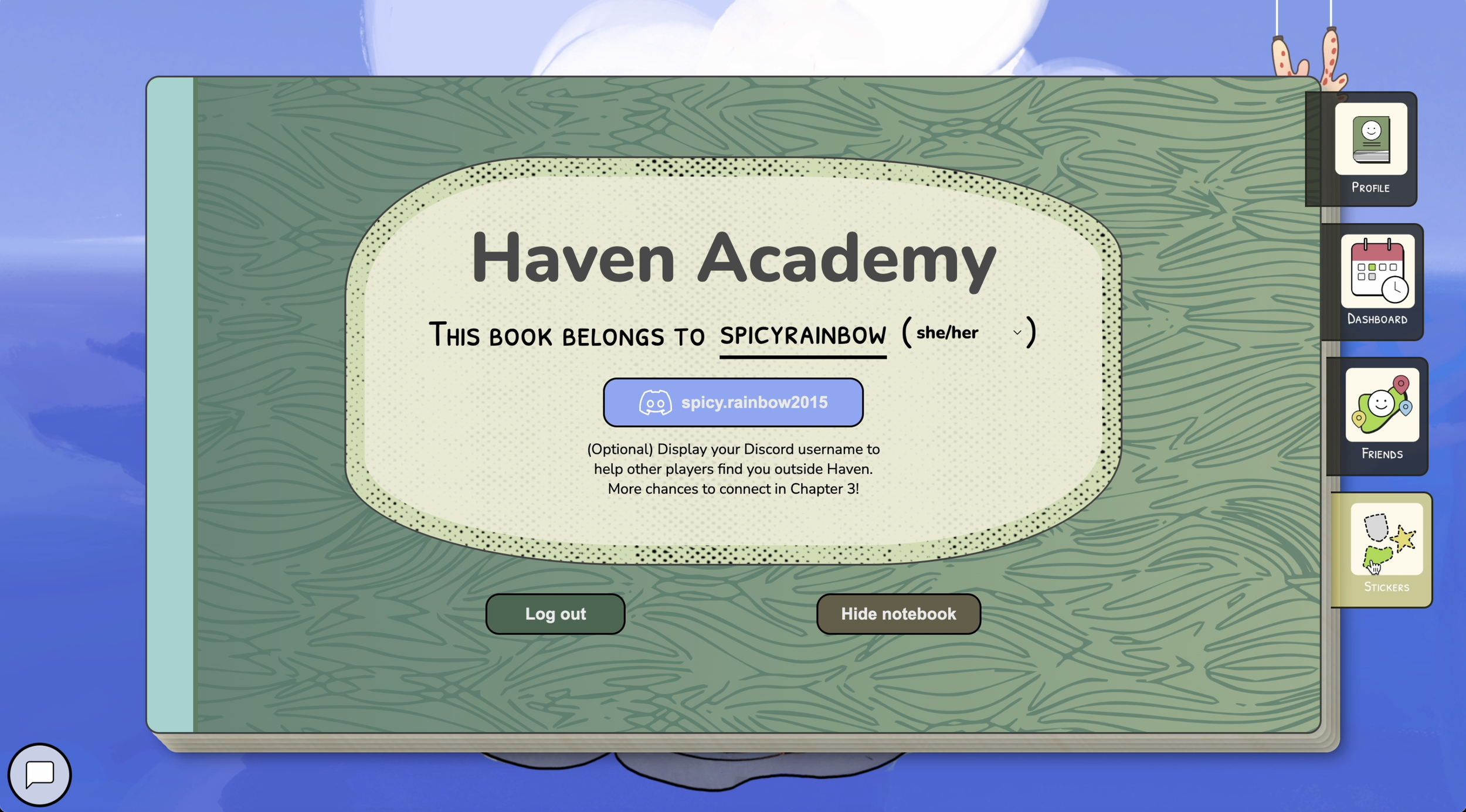

Notebook highlight: MAKING PROGRESS COLLECTIBLE
While the rest of the notebook enables navigation and functionalities, I designed the sticker tab to give players a reason to stay and keep playing.
Players earned stickers by completing puzzles and key narratives. Locked silhouettes previewed future rewards, while the growing collection visualizes progress.
The sticker system

The sticker system targets the player’s curiosity by displaying the silhouette of the sticker, making continued game play more rewarding.
Display of progress boosts completionist drive, enhances puzzle solving motive.
*This was proven effective as we saw continuous collection of stickers across 1000+ players and from direct player feedback we’ve received
I designed and optimized the narrative and puzzle interfaces to align with the game illustrators' style, while reflecting each island's unique characteristics and narrative.
high-fidelity Interface highlights

Coral Island-The Arts
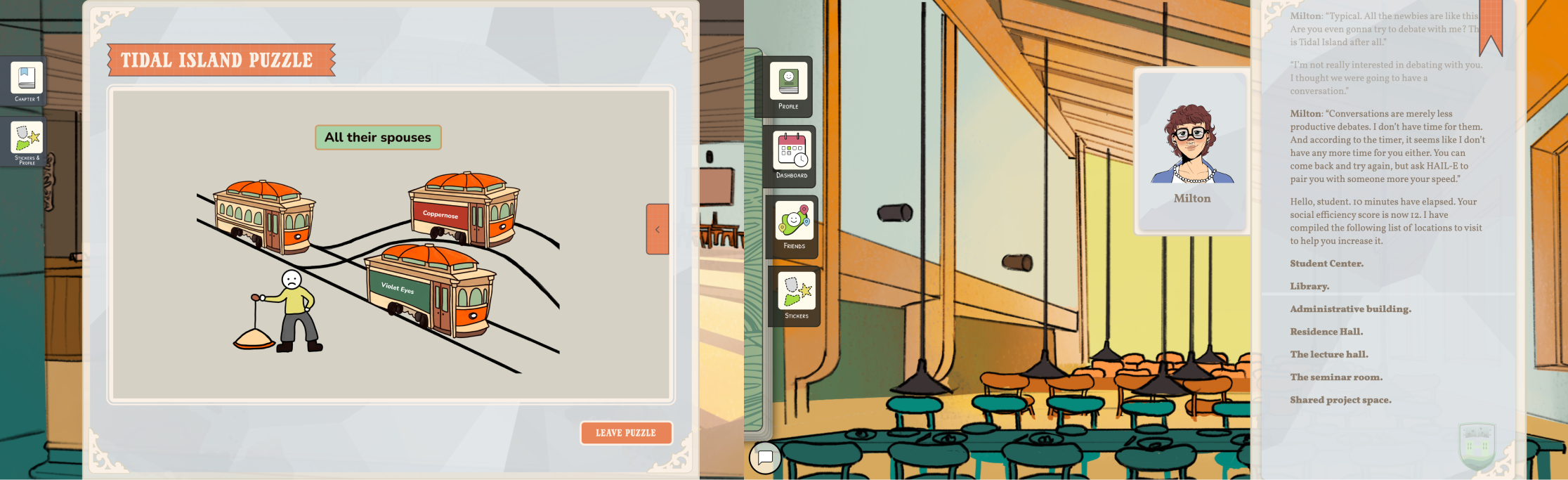
Tidal Island-The Social Sciences

Artificial Island-The Math & Sciences

Oceanic Island-The Humanities

Beyond interface designs, I also illustrated a series of art and puzzle assets:
Outcome
Project Haven successfully launched under 2 months and gained 1,000+ active players. The final game system gave players one consistent place to navigate chapters, access puzzles, connect with peers, and motivated continous gameplay. Students came back to campus asking for the physcial stickers from the sticker tab. Additionaly, the interface designs gained positive reviews across faculty and students.
Key Takeaways
Worked closely with a cross-functional team to align narrative, product, and design goals, navigating technical constraints through clear, collaborative communication.
Learned to deliver clear and adaptive design specs and formating to support smooth implementation when working with engineers.
Designed interfaces that go beyond function, using interaction to tell stories and strengthen brand identity.
Led multiple user testing rounds and developed a sharp eye for iterating based on feedback.
Met some super talented teammates and mentors and had so much fun!
Wishes
Design more detailed UI/UX for the mini games
Extend play tests to analyze specific game points that diminishes player motivation and implement specific solutions and adjustments to tackle them